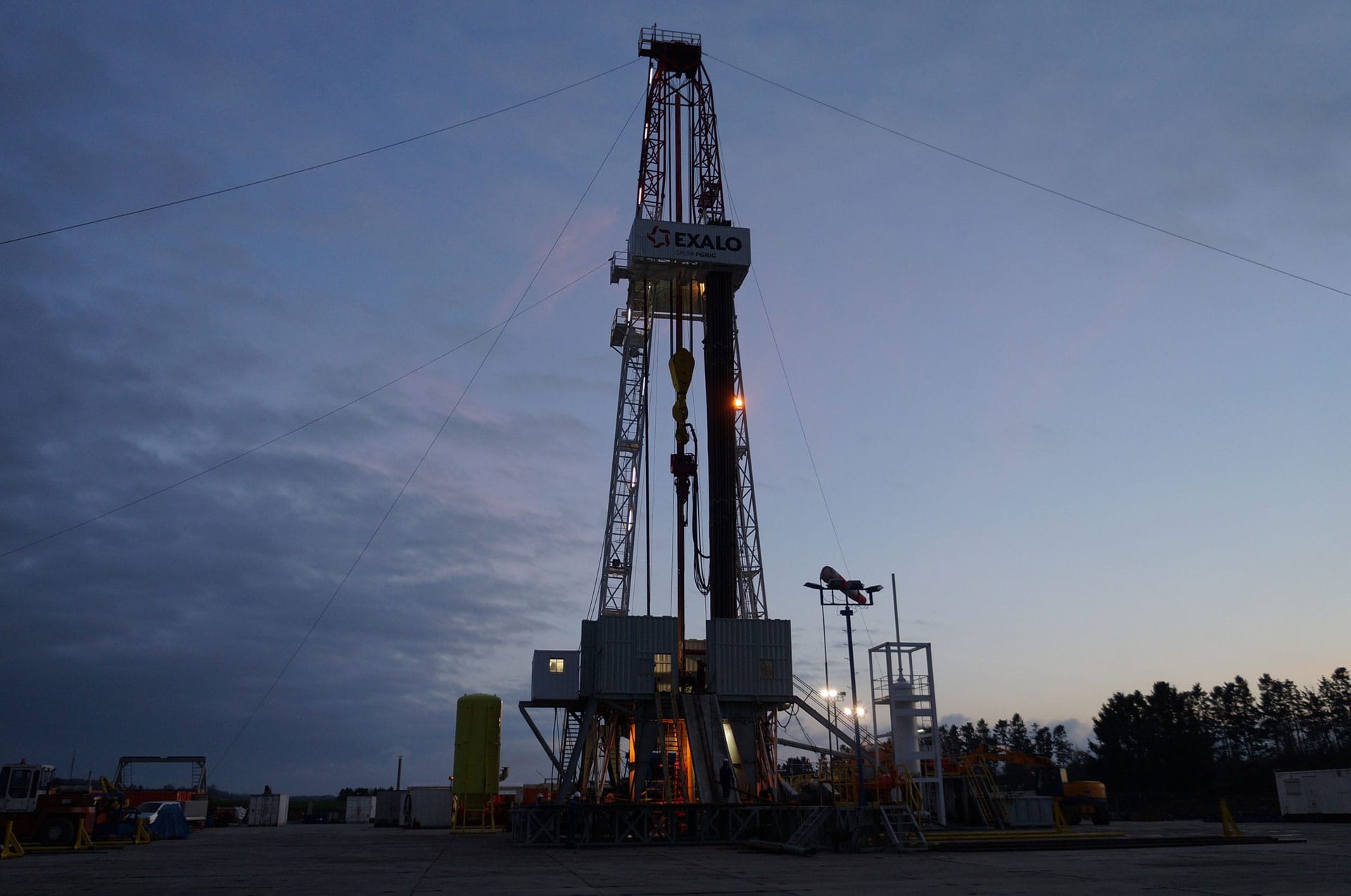
When people think about Alberta oil production, the oil sands around Fort McMurray usually receive most of the attention.
But another important oil story has been developing farther south and west.
The Clearwater Formation has emerged as a major source of heavy oil production in Alberta, particularly through the use of unconventional multilateral horizontal wells.
Unlike an oil sands mine, Clearwater development can have a relatively modest surface presence. Unlike many modern unconventional wells, some of the most successful Clearwater developments do not depend on large hydraulic fracturing programs.
The combination has helped turn the Clearwater into one of the fastest growing oil plays in Canada.
For Alberta oilfield workers, service companies, landowners and anyone following where new investment is occurring in the province, the Clearwater is a region worth understanding.
What Is the Clearwater Formation?
The Clearwater Formation is an underground geological formation found across a large portion of Alberta.
It has been known to the petroleum industry for decades and is associated with both conventional heavy oil and oil sands development.
What has changed is the way portions of the resource can be developed.
Improvements in horizontal drilling have allowed producers to target certain Clearwater heavy oil reservoirs using multilateral wells.
The Alberta Geological Survey specifically identifies heavy oil development using multilateral wells as an important modern application in the Clearwater.
This has opened opportunities in areas where the economics can look very different from traditional oil sands development.
What Is a Multilateral Oil Well?
A multilateral well has more than one horizontal branch extending underground from a main wellbore.
Imagine the underground portion of the well spreading outward through the reservoir rather than following only one horizontal path.
This allows a producer to contact more oil bearing rock from a concentrated surface location.
The concept is particularly interesting in the Clearwater because producers have developed multilateral configurations specifically suited to the characteristics of these heavy oil reservoirs.
Horizontal drilling itself is not new to Alberta.
What has evolved is the ability to drill increasingly complex underground well patterns accurately and economically.
That technology is changing how some of Alberta’s heavy oil can be developed.
Why Is the Clearwater Different From the Montney?
The Clearwater and Montney are sometimes discussed together because both have benefited from advances in horizontal drilling.
But they are very different resources.
The Montney is primarily associated with natural gas, condensate and natural gas liquids. Modern Montney development commonly involves horizontal wells followed by large hydraulic fracturing operations.
The emerging Clearwater heavy oil developments target oil.
More importantly, some Clearwater multilateral wells can produce commercially without the extensive hydraulic fracturing programs commonly associated with other unconventional resource plays.
That creates a very different development model.
The drilling operation itself becomes especially important because the underground well configuration provides much of the reservoir contact needed to produce the oil.
Is Clearwater Oil Produced With Steam?
This is an area where terminology can become confusing.
The Clearwater Formation is also a target for thermal oil sands development in the Cold Lake region. However, the newer multilateral heavy oil developments receiving significant industry attention are not simply another version of a large steam assisted oil sands project.
The Alberta Energy Regulator distinguishes significant nonthermal heavy oil production from the Clearwater from its thermal development.
That means someone researching the Clearwater should not assume that every project uses the same production method.
The appropriate recovery technique depends on the reservoir and location.
This distinction is important because the cost, infrastructure and surface requirements of a nonthermal multilateral development can be very different from those of a large thermal oil sands facility.
How Fast Has Clearwater Production Grown?
The Alberta Energy Regulator’s latest resource assessment illustrates why the play has attracted so much attention.
Production associated with Clearwater multilateral development increased dramatically after commercial activity began expanding in the late 2010s.
By the middle of this decade, production from these developments had reached hundreds of thousands of barrels per day.
The regulator has described the Clearwater as Canada’s fastest growing oil resource play based on the assessment used in its Alberta Energy Outlook.
That is a significant development for a resource that receives much less public attention than the oil sands.
It also demonstrates how quickly new drilling techniques can change the importance of an existing geological formation.
Where Is Clearwater Development Happening?
Clearwater development covers several parts of northern and north central Alberta rather than one single oilfield.
Marten Hills has become one of the best known names associated with the play.
Other areas of development extend across portions of northern Alberta where the Clearwater resource can be economically accessed.
This creates activity outside the province’s most internationally recognized energy centres.
The result is work for oilfield businesses operating from communities that may not receive the same attention as Fort McMurray or Grande Prairie.
Road construction, drilling, trucking, production operations and other services are required to support development.
Calgary remains closely connected as well because many companies involved in Alberta exploration and production maintain corporate and technical operations in the city.
Why Has the Clearwater Attracted So Much Industry Interest?
Economics are a major reason.
Large oil sands projects can require enormous investments before meaningful production begins.
A drilling based development can be approached differently.
Producers can drill wells incrementally as economic conditions justify additional investment.
If commodity prices weaken, drilling programs can potentially be adjusted more quickly than construction of a massive industrial project.
Existing infrastructure can also improve economics where roads, pipelines and oilfield services are already available.
The ability to develop the resource through repeatable drilling programs has therefore attracted considerable industry attention.
The Wells Can Have a Smaller Surface Footprint Than Their Underground Reach Suggests
One of the advantages of horizontal and multilateral drilling is that the amount of reservoir contacted underground can be much larger than the surface location suggests.
Instead of constructing an individual surface location directly above every part of the reservoir, multiple underground branches can extend outward from a concentrated drilling location.
That does not mean development has no surface effects.
Roads, production equipment, pipelines and other infrastructure are still required.
But the relationship between underground development and surface disturbance is very different from the traditional image of individual vertical wells spread evenly across a field.
This is a broader trend throughout Alberta.
What happens underground is becoming increasingly complex while companies attempt to make more efficient use of surface locations.
Clearwater Development Creates Different Opportunities for Oilfield Service Companies
The Clearwater also matters because its development model creates a particular mix of service requirements.
Drilling expertise is especially important.
Companies need directional drilling capabilities capable of placing multiple underground branches accurately within the target reservoir.
Drilling fluids, wellsite services, trucking and equipment support are also required.
Once production begins, wells and associated infrastructure need to be operated and maintained.
Eventually those wells will require closure and reclamation like other Alberta energy infrastructure.
The service opportunities therefore extend beyond the initial drilling operation.
Why Calgary Should Pay Attention
The Clearwater may be geographically removed from downtown Calgary, but that does not make it irrelevant to the city.
Calgary remains the corporate centre of Alberta’s petroleum industry.
Reservoir analysis, geology, engineering, financing, land management and investment decisions associated with developments across northern Alberta can all involve professionals working in Calgary.
The emergence of a successful new oil play can also influence acquisitions.
When companies demonstrate that an area can support economic repeatable drilling, surrounding mineral rights and existing producing assets can become more strategically important.
That can generate corporate activity in Calgary even while the actual wells are being drilled hundreds of kilometres away.
Clearwater Is Another Example of Alberta’s Changing Oil Industry
Alberta’s petroleum industry is sometimes portrayed as though its future depends entirely on constructing new oil sands megaprojects.
The Clearwater shows why that picture is incomplete.
Production growth can also come from applying new technology to resources that have been known about for decades.
Better horizontal drilling can change the economics of a reservoir.
Multilateral wells can increase underground reservoir contact.
Existing infrastructure can make previously marginal areas more attractive.
Companies can then develop the resource through a continuing drilling program rather than one enormous construction decision.
This is a very different model from building an oil sands mine.
Why the Clearwater Is Worth Watching
The Clearwater demonstrates one of the most important characteristics of Alberta’s energy industry.
The province is not dependent on a single type of oil development.
Alberta has oil sands mines.
It has thermal projects.
It has conventional oil fields.
It has natural gas and condensate development in the west.
And it has emerging heavy oil developments where increasingly sophisticated horizontal drilling is changing what can be economically produced.
The Clearwater has moved from being a relatively specialized industry story to becoming a meaningful contributor to Alberta oil production.
Its future will still depend on geology, oil prices, drilling economics, infrastructure and the performance of individual wells.
But the broader lesson is already clear.
Some of Alberta’s most interesting oil growth is not coming from a giant new project visible from kilometres away.
It is coming from increasingly sophisticated wells beneath northern Alberta, where advances in drilling are allowing producers to develop heavy oil in ways that were far less practical only a decade ago.