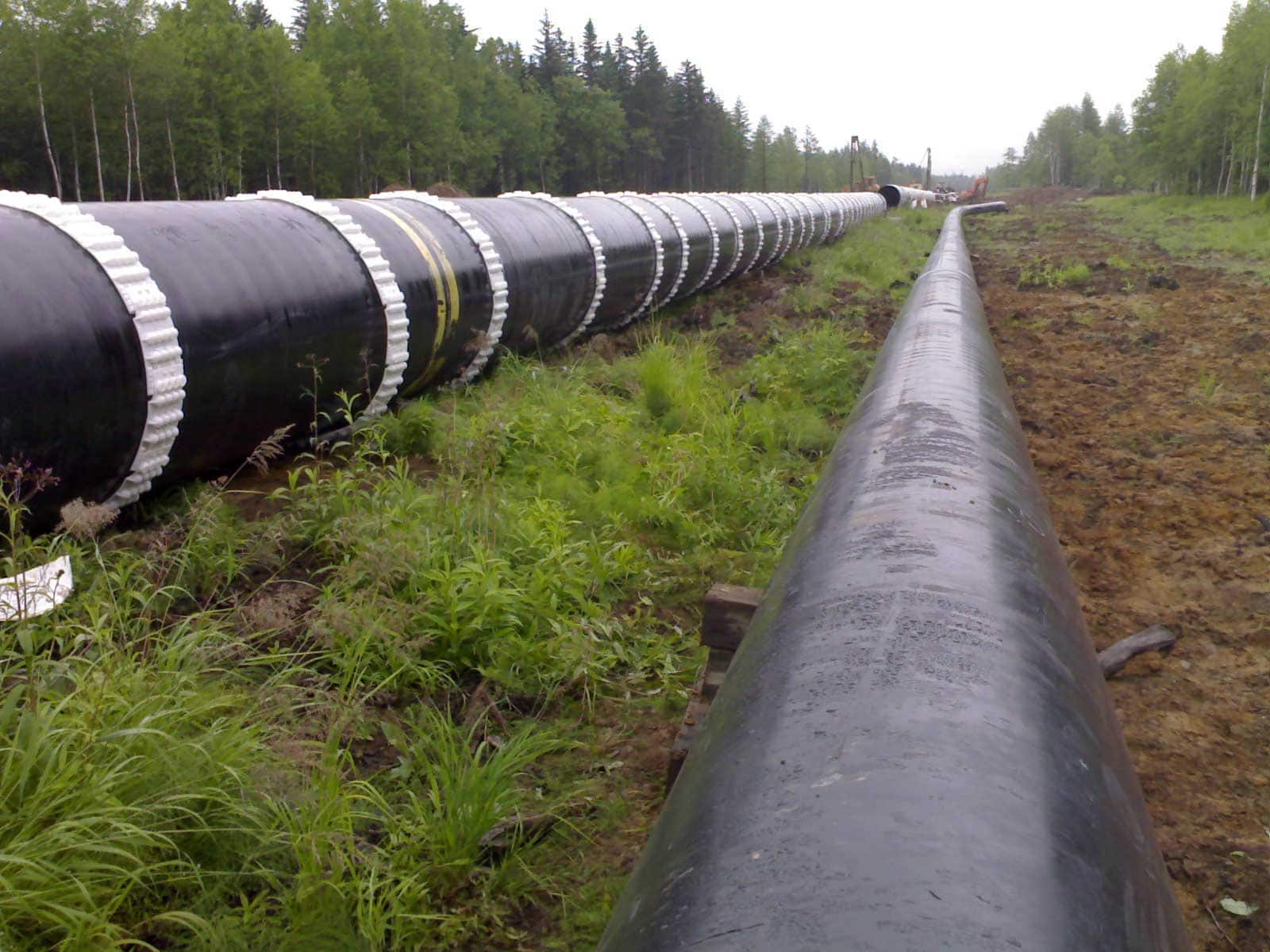
When people hear the word pipeline in Alberta, they often think about enormous projects carrying crude oil across provincial or international borders.
Those pipelines are important, but they represent only one part of Alberta’s pipeline system.
Across the province, a much larger network of smaller pipelines connects oil wells, natural gas wells, batteries, processing plants, water systems and other energy facilities.
These lines can be found around Grande Prairie, Red Deer, Lloydminster, Medicine Hat, central Alberta and many other producing regions.
For someone unfamiliar with the industry, the number of pipelines can be surprising. The Alberta Energy Regulator currently oversees a pipeline network extending for hundreds of thousands of kilometres.
Most of those lines are not giant export pipelines.
They are the local infrastructure that allows Alberta’s oil and gas fields to function.
What Is a Gathering Pipeline?
A gathering pipeline generally performs the first part of the transportation process.
Imagine a natural gas well located outside Grande Prairie.
Once the well begins producing, the gas needs somewhere to go. It cannot simply remain at the wellhead.
A smaller pipeline can connect the well or production site with other infrastructure. Production from several wells can eventually be gathered together and transported toward a processing facility.
This is why these systems are often called gathering systems.
They collect production from the field.
Without gathering infrastructure, many wells would have no practical way to deliver their production to the next stage of the energy system.
Most Alberta Pipelines Are Relatively Small
The pipeline infrastructure visible in major national debates can create a misleading impression of what a typical Alberta pipeline looks like.
According to the Alberta Energy Regulator, most pipelines under its jurisdiction have relatively small diameters.
These smaller lines are particularly important in producing areas because they connect individual wells and facilities with nearby infrastructure.
Large transmission pipelines serve a different purpose.
They move much greater volumes over longer distances.
A useful way to think about the system is similar to Alberta’s road network.
A rural road connects a farm to a highway. The highway then connects communities and larger transportation routes.
Oil and gas infrastructure works in a somewhat similar way.
Smaller gathering lines connect individual producing locations with larger systems.
Natural Gas Makes Up a Large Part of Alberta’s Pipeline Network
Alberta is not only an oil producing province.
It is also one of Canada’s most important natural gas producing regions.
That is reflected in the province’s pipeline infrastructure.
Natural gas pipelines account for a large portion of the network regulated by the Alberta Energy Regulator.
This becomes especially apparent in western Alberta.
Around Grande Prairie and other natural gas producing areas, wells are connected to an extensive system of gathering pipelines and processing facilities.
The network can become increasingly complex as development expands.
A modern drilling pad may contain multiple wells.
Those wells produce into surface equipment.
Production then enters gathering infrastructure and moves toward a gas plant.
After processing, the marketable natural gas can enter larger transmission systems.
What Is an Oil Well Effluent Pipeline?
Not every pipeline leaving an oil well carries clean crude oil.
Production from a well can contain a mixture of hydrocarbons and water.
This combined production stream is sometimes referred to as well effluent.
A pipeline can transport that mixture from the well site to a battery or other facility where the different components are separated and measured.
Oil can then continue toward market.
Natural gas can enter an appropriate gathering system.
Produced water can be handled separately.
This is why understanding Alberta pipelines requires understanding the facilities connected to them.
A pipeline is usually one component of a much larger production system.
Why Does Alberta Have Produced Water Pipelines?
Water is an unavoidable part of many oil and gas operations.
Some wells produce substantial quantities of water along with hydrocarbons.
That water must be properly managed.
In certain operations, pipelines are used to transport produced water between wells, batteries, treatment facilities, disposal wells or enhanced recovery operations.
Moving water by pipeline can reduce the need for continuous truck transportation where appropriate infrastructure exists.
Water infrastructure can therefore become an important part of a mature Alberta oilfield.
A person looking at a pipeline crossing rural land should not automatically assume that it contains oil or natural gas.
It may be carrying water associated with energy production.
What Are Sour Gas Pipelines?
Some Alberta natural gas contains hydrogen sulphide.
Gas containing hydrogen sulphide above the applicable threshold is commonly referred to as sour gas.
Alberta has a long history of sour gas development, particularly in western portions of the province.
Hydrogen sulphide is hazardous, so sour gas production requires specific engineering, operating and emergency response measures.
Sour gas pipelines transport production toward facilities capable of processing it.
At a gas plant, unwanted components can be removed so that the natural gas meets specifications for further transportation and sale.
This is another reason gas processing infrastructure is so important to Alberta.
The natural gas coming directly from a well can be very different from the gas ultimately delivered to customers.
What Happens at a Gas Plant?
A gas plant receives production and prepares it for further transportation or sale.
The exact process depends on the composition of the incoming gas.
Processing can involve removing water and separating other components from the natural gas stream.
Some facilities also recover valuable natural gas liquids.
Once the gas meets the required specifications, it can move into larger pipeline systems.
The Alberta Energy Regulator maintains current information on gas processing plants throughout the province, reflecting how widespread this infrastructure is.
For natural gas producing regions, the processing plant can function as a critical hub connecting numerous surrounding wells.
Why Are Pipelines Often Better Than Trucking Production?
Without pipelines, much more oilfield material would need to move by truck.
Trucks remain essential to Alberta’s oil and gas industry, but using them for every movement of produced oil, gas or water would create obvious challenges.
Continuous trucking means more vehicle traffic, fuel consumption, road use and loading operations.
A pipeline can move material continuously without requiring a truck for every load.
That does not mean pipelines require no maintenance or have no environmental risks.
They require inspection, integrity management and appropriate operating practices throughout their useful lives.
But their ability to move large volumes continuously makes them fundamental to Alberta’s energy industry.
Who Operates Alberta’s Smaller Pipelines?
There is no single company responsible for Alberta’s field pipeline network.
The Alberta Energy Regulator reports that hundreds of companies operate pipelines under its jurisdiction.
Many are oil and natural gas producers.
This makes sense because producers frequently own infrastructure connecting their wells and facilities.
Midstream and pipeline companies also operate important systems.
The ownership structure can change over time as energy properties are bought and sold.
When a producing asset changes ownership, associated wells, facilities and pipelines can also be transferred subject to regulatory requirements.
What Happens When a Pipeline Is No Longer Needed?
Pipelines do not operate forever.
An oilfield can reach the end of its economic life.
A gas well can stop producing.
A company can replace an older pipeline with newer infrastructure.
When a line is no longer required for active service, it can move through different regulatory stages.
The Alberta Energy Regulator distinguishes between operating, discontinued and abandoned pipelines.
A discontinued pipeline is not the same thing as an abandoned pipeline.
Discontinuation generally involves taking a pipeline out of active service while maintaining the possibility that it could potentially be returned to service if regulatory requirements are satisfied.
Abandonment represents permanent removal from service.
The AER reports that a substantial portion of Alberta’s regulated pipeline inventory is now either discontinued or abandoned.
That reflects both the age of some producing regions and the increasing importance of managing inactive infrastructure.
Pipeline Closure Is Becoming an Important Alberta Business
The growth of inactive infrastructure creates work.
Pipelines need to be assessed and properly managed when they are removed from service.
Associated facilities may also require decommissioning.
Environmental work can be necessary depending on site conditions.
This creates opportunities for Alberta companies involved in pipeline services, excavation, environmental assessment, remediation, reclamation and integrity work.
The province’s energy service industry therefore supports both sides of the infrastructure life cycle.
Companies build pipelines when new fields are developed.
Other companies help maintain those pipelines during operation.
Eventually, contractors are needed to help close infrastructure that is no longer required.
Why Grande Prairie Has So Many Pipeline Companies
Grande Prairie is a good example of how pipeline infrastructure follows drilling activity.
Northwestern Alberta contains major natural gas and liquids development.
Every new group of wells creates potential demand for gathering infrastructure.
Additional production can require new connections to processing facilities.
Growing processing capacity can require additional connections to larger transmission systems.
That creates ongoing work for pipeline construction companies, welders, equipment operators, inspectors and maintenance contractors.
This is why Grande Prairie has developed such a large concentration of oilfield service businesses.
The drilling rig is only the beginning of the development process.
Once the well is successful, infrastructure needs to connect it with the rest of the energy system.
Calgary’s Pipeline Industry Looks Different
Calgary’s connection to pipelines is less visible but equally important.
The city is home to producers, pipeline operators, engineering companies and other businesses involved in designing and managing energy infrastructure.
A gathering pipeline may physically exist hundreds of kilometres from Calgary while engineering, regulatory, financial and commercial work associated with the project takes place in the city.
This relationship helps explain why Calgary remains such an important energy centre even though most physical oil and gas infrastructure is located elsewhere in Alberta.
Alberta’s Pipeline Network Is Much More Than Export Pipelines
Major export pipelines receive attention because they influence how Alberta oil and natural gas reach distant markets.
But they cannot perform that role without the enormous network feeding them.
Before natural gas can travel across the country, it must leave the well.
Before crude oil can enter a major transportation system, it must be gathered, separated and moved from the producing field.
Before produced water can be managed, it needs appropriate transportation and handling infrastructure.
Thousands of smaller systems make those processes possible across Alberta every day.
Understanding them changes the way Alberta’s energy industry looks.
The province is not simply a collection of wells connected to a handful of giant pipelines.
It is an interconnected network of wells, gathering lines, batteries, gas plants, water systems and larger transmission infrastructure.
The major pipeline may carry Alberta’s energy to market.
But the smaller pipelines are what allow much of that energy to reach the major pipeline in the first place.