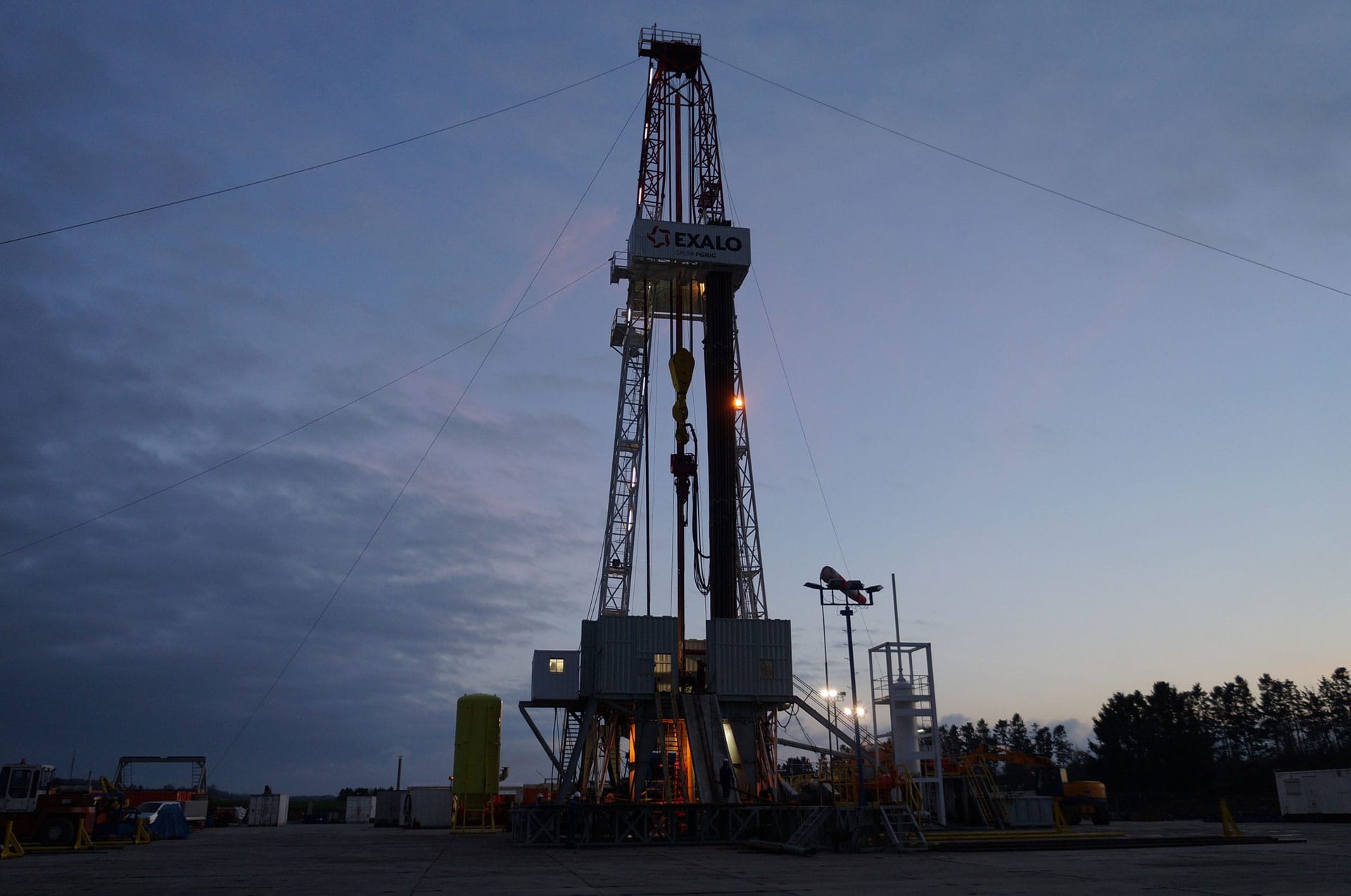
Anyone looking at oil and gas jobs in Alberta will eventually encounter two terms that sound very similar: drilling rig and service rig.
They are not the same thing.
Both types of rigs work on oil and natural gas wells, and some of the job titles overlap. However, they generally arrive at very different stages in the life of a well.
Understanding the difference is useful if you are considering an oilfield career, trying to understand activity near your property or simply want to know what all the equipment moving along Alberta highways actually does.
What Does a Drilling Rig Do?
A drilling rig creates the wellbore.
Before oil or natural gas can be produced, a pathway must be drilled from the surface into the underground formation containing the resource.
That is the primary job of the drilling rig.
The rig drills downward and, for many modern Alberta wells, eventually turns the well horizontally through the target formation.
This type of drilling is particularly important in areas such as northwestern Alberta, where producers develop natural gas and liquids resources using long horizontal wells.
Once the required drilling work has been completed, the drilling rig can be dismantled and moved to another location.
The well remains behind.
Other equipment and crews can then perform the work required before production begins.
What Does a Service Rig Do?
A service rig generally works on a well after the initial drilling stage.
The Government of Alberta describes service rigs as mobile units used to maintain, complete and abandon wells.
That gives service rigs an important role throughout much of a well’s life.
A producing well can remain in service for years. During that time, equipment inside the well may need to be repaired or replaced.
A service rig can be brought to the location to perform that work.
Later, when the well reaches the end of its useful life, a service rig can also be involved in permanent abandonment operations.
This means drilling rigs are strongly associated with creating wells, while service rigs are closely associated with working on wells that already exist.
What Happens After the Drilling Rig Leaves?
A common misconception is that drilling a well means the well is immediately ready to produce.
The actual process can involve several stages.
After drilling is completed, the well may require completion work before commercial production can begin.
What happens next depends heavily on the type of well and the geological formation.
A modern horizontal natural gas well in western Alberta may require an extensive completion program.
Other wells may have very different requirements.
Once the well has been completed and connected to the necessary surface infrastructure, it can potentially begin producing.
Years later, service work may be required to keep the well operating.
Why Are Service Rigs Mobile?
Service rigs frequently move from one existing well to another.
Unlike a drilling rig that may remain on a location while a new well is being created, a service rig can perform a particular job and then travel to another site requiring work.
This mobility is particularly important in mature Alberta oilfields.
A service company may have customers with wells scattered across a broad geographic region.
The rig and supporting vehicles therefore travel between locations as work is scheduled.
The Alberta government’s occupational information notes that service rig crews often travel daily within the region surrounding their contractor’s base.
That is one reason communities located near mature producing areas can support substantial well servicing industries even when relatively little new drilling is occurring nearby.
Where Are Drilling and Service Rigs Used in Alberta?
The answer changes with industry activity.
Grande Prairie and northwestern Alberta are important areas for drilling because of continuing development of natural gas, condensate and oil resources.
Central Alberta also has extensive oil and gas infrastructure and a long history of drilling.
Lloydminster and surrounding areas have significant heavy oil activity.
Service rigs can be required almost anywhere producing wells already exist.
This creates a much broader potential market because Alberta has developed oil and natural gas for generations.
Even an area experiencing relatively little new drilling can still require substantial servicing work on existing wells.
What Jobs Are Available on a Drilling Rig?
Alberta drilling rigs have a clear crew structure.
Workers entering the industry can begin in positions such as leasehand or floorhand.
As employees gain experience, they can progress into more responsible positions.
A drilling rig crew can include floorhands, motorhands, derrickhands and a driller.
The responsibilities become increasingly technical as workers progress.
A floorhand performs physical work around the rig floor and assists with equipment and pipe handling.
A motorhand has additional responsibility for mechanical equipment and maintenance.
A derrickhand performs specialized duties involving drilling fluids and equipment while also working high on the derrick during certain operations.
The driller operates major rig equipment and supervises the crew.
Advancement generally comes through experience and workplace training rather than simply moving directly into a senior position.
What Jobs Are Available on a Service Rig?
Some service rig job titles look almost identical.
Service rig crews can include floorhands, derrickhands and an operator or driller.
But the actual work reflects the different purpose of the rig.
Instead of creating an entirely new wellbore, the crew is generally working with an existing well.
Service rig derrickhands, for example, can work with tubing, rods and servicing tools as equipment is moved into or out of the well.
The operator controls hoisting equipment and supervises the operation.
This is why previous drilling rig experience can be relevant to service work while the two jobs still require different knowledge.
Which Is Better for Someone With No Oilfield Experience?
Neither is automatically better.
The right choice depends on the type of work and lifestyle you want.
Alberta’s official occupational information indicates that entry level drilling and service rig jobs can have relatively modest formal educational requirements and that much of the knowledge is acquired through workplace training.
Employers still establish their own hiring standards.
Applicants also need to meet applicable safety and certification requirements.
The work itself is physically demanding.
Workers spend significant time outdoors and can encounter extreme Alberta weather, noise, heavy equipment and remote locations.
Someone attracted only by stories about oilfield wages should understand this before applying.
Rig work is not easy money.
What Safety Training Do Alberta Rig Workers Need?
Requirements vary by position and employer, but Alberta’s occupational information identifies first aid with CPR and H2S Alive among the certifications employers require for drilling and service rig personnel.
Additional workplace training can include WHMIS, Transportation of Dangerous Goods, fall protection and other safety programs relevant to the work.
A valid driver’s licence is also important for many positions.
Rather than purchasing every oilfield course available before applying, job seekers should review current openings from legitimate Alberta employers and identify the requirements appearing consistently for the positions they want.
Are Drilling Rigs and Service Rigs Regulated Differently?
Alberta’s regulatory framework recognizes an important distinction between drilling and servicing operations.
The Alberta Energy Regulator maintains requirements covering drilling operations as well as requirements applicable to service rig and well servicing work.
Interestingly, the equipment itself does not always determine how an operation is classified.
The AER specifically addresses situations where a service rig performs certain drilling work or where a drilling rig is used for servicing activities.
In those situations, the nature of the operation can determine which requirements apply.
That technical distinction reinforces the basic concept.
A drilling rig and service rig are different, but what matters from a regulatory perspective is also what work is actually being performed on the well.
Service Rigs Are Important to Alberta’s Mature Oilfields
New drilling receives most of the attention because it represents new investment and potentially new production.
But Alberta also has an enormous inventory of existing wells.
Those wells require work throughout their operating lives.
Mechanical problems can occur.
Production equipment can require replacement.
Tubing may need to be pulled.
Wells may require workovers.
Eventually, wells that are no longer required must be permanently closed.
This gives service rigs an important role even during periods when drilling activity slows.
A mature petroleum province does not only need companies capable of drilling wells.
It needs companies capable of maintaining and eventually closing them.
Service Rigs Also Play a Role in Well Abandonment
Alberta’s growing focus on oil and gas liabilities makes the service side of the industry particularly important.
When a well reaches the end of its life, it must be properly abandoned.
In Alberta regulatory terminology, abandonment does not mean simply walking away from the well.
It involves permanently decommissioning it according to applicable requirements.
Service rigs can be involved in this work.
That means Alberta’s well closure activity can create demand for experienced servicing crews even though the work does not create new production.
This is a part of the oilfield economy that is likely to remain relevant because every producing well eventually reaches the end of its useful life.
Why Rig Activity Changes During the Year
Alberta weather has a major influence on oilfield activity.
Winter can be an important working season because frozen ground can improve access to certain locations.
Spring creates different challenges.
As the ground thaws, road restrictions and difficult surface conditions can limit movement of heavy equipment in some regions.
This period is commonly known in the industry as spring breakup.
Activity does not stop everywhere at the same time, but seasonality can affect both employment and equipment utilization.
Someone considering a rig career should therefore understand that oilfield employment can be less predictable than a conventional job in Calgary or Edmonton.
Drilling Rig vs Service Rig: The Simple Explanation
The easiest way to remember the difference is to think about the life of the well.
A drilling rig is primarily there to create the well.
A service rig primarily works on the well after it has been drilled.
The drilling rig arrives near the beginning.
The service rig can return at different points throughout the well’s productive life and can be involved again when the well is permanently closed.
Both are essential parts of Alberta’s oil and gas industry.
And for someone considering an Alberta oilfield career, understanding the difference can help narrow down which employers, locations and positions are actually worth pursuing.