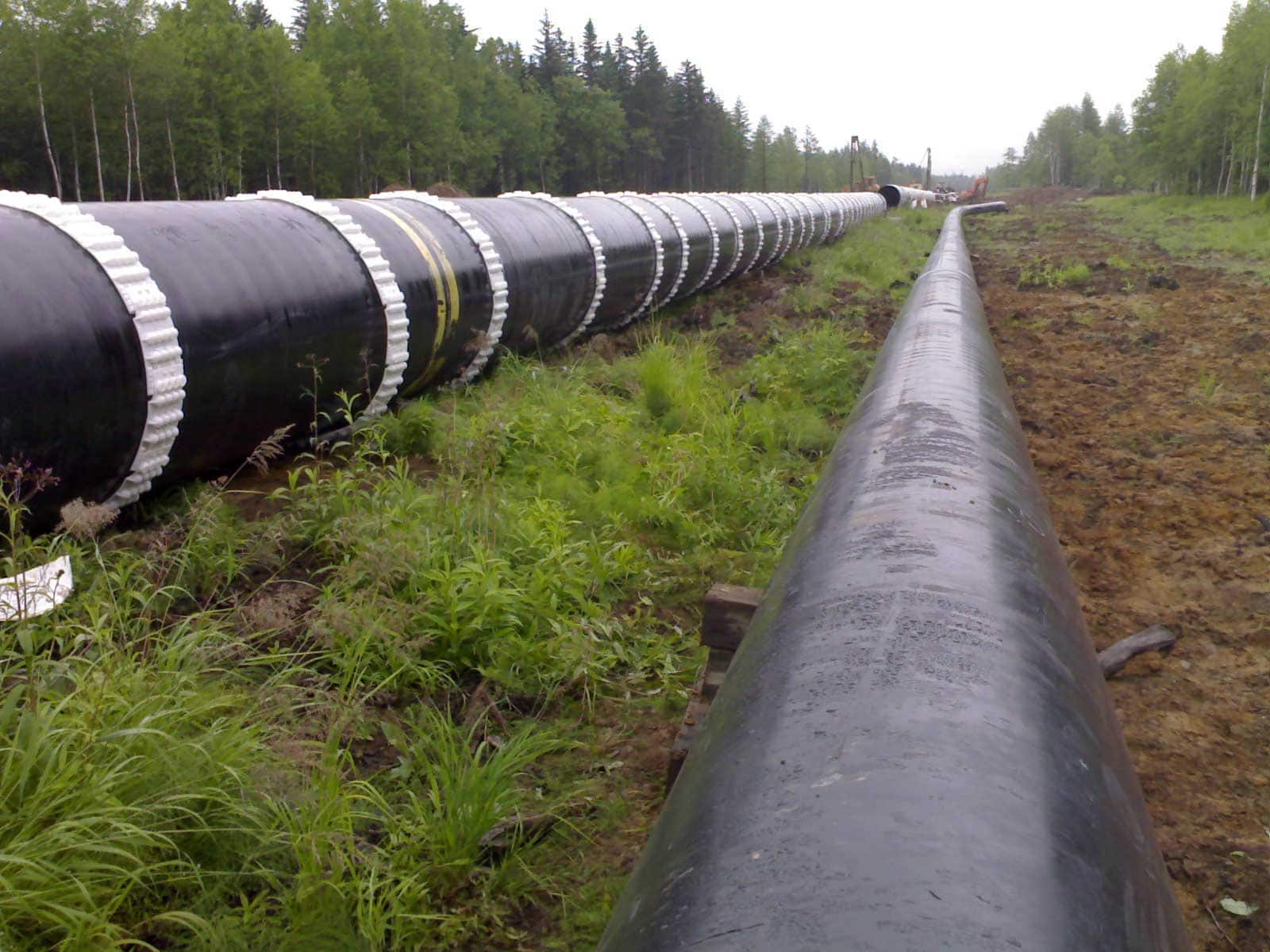
One of Alberta’s largest new energy infrastructure projects is moving forward.
The Yellowhead Mainline natural gas pipeline has received the major provincial approval needed to proceed, clearing the way for construction of a roughly $2.9 billion project across central Alberta.
For Alberta’s oil and gas industry, the project is significant for several reasons. It will create new natural gas transportation capacity, support industrial growth around the Edmonton and Fort Saskatchewan region and generate construction work for contractors and skilled trades across the province.
Unlike some of the much larger pipeline proposals currently being discussed in Canada, the Yellowhead project is considerably further along. Major contracts have already been awarded and construction preparations are underway.
What Is the Yellowhead Mainline?
The Yellowhead Mainline is a new natural gas transmission pipeline being developed by Canadian Utilities, part of Calgary based ATCO.
The project will run approximately 235 kilometres across central Alberta.
It will begin near Peers in west central Alberta and extend east toward the Fort Saskatchewan area northeast of Edmonton.
The pipeline is designed to transport more than 1.1 billion cubic feet of natural gas per day.
That represents a substantial addition to Alberta’s internal natural gas transportation infrastructure.
Rather than primarily serving as an export pipeline, Yellowhead is designed to move natural gas to Alberta customers and industrial facilities.
Why Fort Saskatchewan Matters
The eastern end of the project is particularly important.
Fort Saskatchewan and Alberta’s Industrial Heartland form one of Canada’s largest concentrations of energy processing, petrochemical and industrial facilities.
The region contains refineries, petrochemical plants, natural gas processing infrastructure, storage facilities and other major industrial operations.
Many of these facilities require reliable supplies of natural gas.
Natural gas is not used only for heating. Large industrial operations can use it as an energy source and as a feedstock for manufacturing other products.
Additional pipeline capacity therefore has the potential to support future industrial development throughout the region.
About 2,000 Construction Jobs Are Expected
For Alberta workers and service companies, one of the most important aspects of the Yellowhead project is the construction activity it will generate.
Approximately 2,000 direct construction jobs are expected during development.
A pipeline project of this size requires much more than pipe.
Construction can create demand for equipment operators, welders, truck drivers, inspectors, environmental specialists, survey crews, mechanics and numerous other trades and professions.
Businesses supplying equipment, accommodations, transportation and other services can also benefit.
For communities along the approximately 235 kilometre route, that can translate into meaningful economic activity during construction.
Major Contracts Have Already Been Awarded
Canadian Utilities has said that major pipeline and compressor contracts, including materials and supply agreements, have been awarded.
That is an important distinction when evaluating energy project announcements.
Alberta regularly sees proposed projects that remain years away from construction and still face significant regulatory or financing uncertainty.
Yellowhead has moved beyond many of those early stages.
With regulatory approval received and major contracts awarded, the project is transitioning from planning toward physical construction.
Why Alberta Needs More Natural Gas Infrastructure
Alberta is one of North America’s largest natural gas producing regions, but producing gas is only part of the energy system.
Natural gas must be transported from producing areas to processing plants, industrial customers, power generation facilities and larger pipeline networks.
Northwestern and west central Alberta contain significant natural gas resources.
At the same time, industrial demand around Edmonton and Fort Saskatchewan continues to create a major market for energy.
Yellowhead is designed to strengthen the connection between supply and demand inside the province.
This could become increasingly important as Alberta attracts additional petrochemical, data centre, power generation and other energy intensive projects.
The Project Is Important for Calgary Too
Although most of the physical pipeline will be constructed outside Calgary, the project has a significant Calgary connection.
ATCO and Canadian Utilities are headquartered in Calgary.
The city is also home to a large concentration of engineering companies, pipeline specialists, environmental consultants, project managers, financial professionals and equipment suppliers supporting major infrastructure development across Alberta.
This illustrates an important feature of Alberta’s energy economy.
A pipeline can be constructed hundreds of kilometres away while still generating corporate, engineering and professional work in Calgary.
The same relationship exists throughout Alberta’s oil and gas industry, where field operations and corporate decision making are often located in different communities.
Yellowhead Is Different From the Proposed West Coast Oil Pipeline
It is important not to confuse Yellowhead with Alberta’s proposed new oil pipeline to the British Columbia coast.
They are completely different projects.
Yellowhead transports natural gas within Alberta.
The proposed West Coast Oil Pipeline would transport crude oil from Alberta toward the Pacific Coast for access to international markets.
The West Coast project remains in the development and government review process.
Yellowhead, by comparison, has received its major provincial approval and is moving into construction.
That makes it one of the more immediate infrastructure developments for Alberta contractors and workers to watch.
Natural Gas Is Becoming Increasingly Important to Alberta
Oil sands production attracts much of the attention when people discuss Alberta’s energy industry, but natural gas remains enormously important to the province.
Alberta gas supplies residential and commercial customers, electricity generation and major industrial facilities.
It is also the foundation of numerous petrochemical manufacturing processes.
At the same time, development of major natural gas formations in western Alberta continues to create new supplies.
Infrastructure connecting those producing regions with customers will therefore remain an important part of Alberta’s energy investment landscape.
What the Yellowhead Pipeline Could Mean for Alberta Businesses
For companies listed in Alberta’s energy service sector, the opportunity extends beyond construction of the actual pipeline.
Large infrastructure projects require extensive supply chains.
Potential areas of activity include equipment rentals, trucking, welding, inspection, environmental services, surveying, safety services, fabrication, camp services, maintenance and specialized engineering.
Once the pipeline enters service, ongoing inspection and maintenance will also be required.
That means the economic impact does not necessarily end when construction crews leave.
ATCO Calls It Its Largest Energy Infrastructure Project
The scale of Yellowhead is notable even for a company with a long history of building Alberta energy infrastructure.
ATCO has described Yellowhead as its largest energy infrastructure project.
That provides some perspective on the size of the investment.
A $2.9 billion project stretching approximately 235 kilometres and capable of transporting more than 1.1 billion cubic feet of natural gas every day represents a major addition to Alberta’s energy network.
Why This Project Matters
Yellowhead may not receive the same national attention as a new crude oil export pipeline, but its economic importance to Alberta should not be underestimated.
It connects producing regions with one of the province’s most important industrial areas.
It represents approximately $2.9 billion of investment.
It is expected to create approximately 2,000 direct construction jobs.
It will add more than 1.1 billion cubic feet per day of natural gas transportation capacity.
Most importantly, it is moving beyond the announcement stage.
For Alberta’s energy industry, that makes Yellowhead one of the infrastructure projects worth watching closely as construction progresses.
The project also demonstrates that Alberta’s next period of energy investment will not be defined solely by producing more oil and natural gas.
The province also needs the pipelines, processing facilities and industrial infrastructure required to move those resources to customers and turn them into higher value products.
Yellowhead is a major piece of that infrastructure, and its construction should create opportunities for businesses and workers from west central Alberta to the Edmonton region and Calgary.