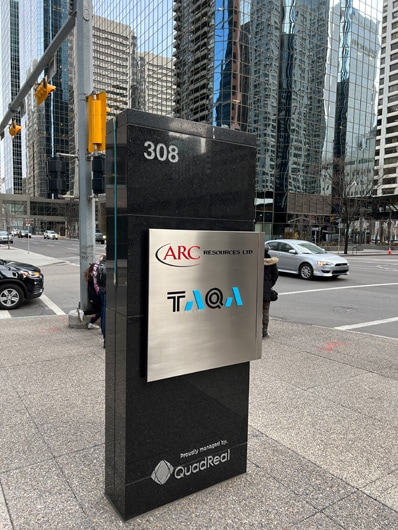
One of the biggest transactions involving a Calgary energy company in recent years is moving toward creating a much larger Canadian natural gas business.
Shell has agreed to acquire Calgary based ARC Resources, a major producer with extensive operations in the Montney formation of Alberta and British Columbia.
The transaction is important well beyond the two companies involved.
It demonstrates how valuable Western Canada’s natural gas resources have become as new LNG export capacity creates opportunities to connect Canadian production with customers outside North America.
For Calgary, the deal is another reminder that the city remains at the centre of some of Canada’s largest energy transactions.
Who Is ARC Resources?
ARC Resources has grown into one of Canada’s major natural gas and liquids producers.
The company is headquartered in Calgary and has concentrated much of its development activity in the Montney.
Its portfolio includes major producing areas in northeastern British Columbia as well as Alberta operations.
ARC’s strategy has increasingly focused on large, long life Montney assets capable of supporting decades of future drilling.
That resource base is a major reason Shell wants to acquire the company.
Shell announced the definitive agreement in April 2026.
According to Shell, acquiring ARC would immediately add approximately 370,000 barrels of oil equivalent per day of liquids and natural gas production to its portfolio.
That is substantial production even by the standards of the global energy industry.
Why Shell Wants More Canadian Natural Gas
The acquisition makes considerably more sense when viewed alongside Canada’s growing LNG industry.
Canada historically produced enormous quantities of natural gas but had limited ability to export that gas directly to overseas customers.
Most Western Canadian natural gas therefore flowed into the North American market.
LNG export facilities on Canada’s Pacific Coast are changing that equation.
Natural gas produced in Western Canada can now be transported west, converted into liquefied natural gas and shipped to international customers.
That makes large, low cost natural gas resources in the Montney strategically more valuable.
Shell already has a major position in Canadian LNG.
The company holds a 40 percent interest in LNG Canada in Kitimat, British Columbia.
Adding ARC’s production would strengthen Shell’s upstream natural gas position while increasing its exposure to the same Western Canadian resource base that can help supply LNG facilities.
Alberta’s Montney Is Part of the Story
Although much of ARC’s Montney production is located in British Columbia, Alberta is also an important part of the company’s portfolio.
ARC operates in the Kakwa area of west central Alberta.
Kakwa is a liquids rich Montney development producing natural gas along with condensate and other liquids.
This type of production can be particularly attractive because companies are not dependent entirely on natural gas prices.
Condensate has significant value within Alberta because it is used as a diluent for transporting heavy crude oil and bitumen through pipelines.
That combination of natural gas and liquids helps explain why the Montney has attracted so much investment.
Why the Montney Is Attracting Global Companies
The Montney is no longer simply a regional Western Canadian natural gas play.
It has become a resource of international importance.
The formation stretches across northwestern Alberta and northeastern British Columbia and contains enormous quantities of natural gas and liquids.
Modern horizontal drilling and hydraulic fracturing allow producers to develop these resources using large multiwell drilling programs.
Companies can drill numerous wells from centralized surface locations and connect production to existing processing and pipeline infrastructure.
For a global company such as Shell, acquiring an established Montney producer provides something particularly valuable: a large inventory of future drilling opportunities.
Instead of spending years assembling individual land positions and building a new operating business, Shell can acquire an existing producer with established assets, employees, infrastructure and development plans.
The Transaction Shows How Canadian Natural Gas Is Changing
For years, one of the biggest challenges facing Western Canadian natural gas producers was limited market access.
Alberta and British Columbia could produce huge volumes of gas, but producers competed primarily for customers within Canada and the United States.
That contributed to periods when Western Canadian natural gas prices traded at significant discounts.
LNG changes the long term opportunity.
Pacific Coast export terminals provide another potential destination for Western Canadian production.
Natural gas can effectively move from wells in Alberta and British Columbia into the global LNG market.
That does not guarantee permanently higher natural gas prices.
Commodity markets remain volatile and LNG projects require enormous amounts of capital.
But greater access to international markets changes the strategic value of large Western Canadian natural gas reserves.
What Could the Acquisition Mean for Calgary?
The transaction also matters because ARC is deeply connected to Calgary’s corporate energy sector.
Calgary is home to ARC’s head office and a large concentration of employees working in engineering, geology, finance, land management, regulatory affairs and corporate operations.
Shell also has a major presence in Calgary.
Large corporate acquisitions can create both opportunities and uncertainty.
Combining companies can eliminate duplicated corporate functions. At the same time, a larger Canadian business can support continued investment in drilling, infrastructure and development.
The ultimate employment effects will depend on how Shell integrates ARC following completion of the transaction.
What is already clear is that Calgary remains an important location for international companies seeking access to Canada’s energy resources.
The Deal Is Bigger Than One Company
The Shell and ARC transaction also sends a broader signal to Alberta’s natural gas industry.
Global energy companies are looking seriously at Western Canadian gas.
That matters for producers operating throughout the Montney and other major Alberta natural gas regions.
Companies including Tourmaline Oil, Canadian Natural Resources, Whitecap Resources and other producers control significant natural gas resources across the province.
If LNG export capacity continues expanding, those resources could become increasingly connected to international energy markets.
That could influence drilling budgets, acquisitions, processing infrastructure and pipeline investment across Alberta.
Service Companies Could Benefit From Continued Montney Investment
The effects of Montney development extend far beyond producers.
Drilling programs require rigs, hydraulic fracturing crews, directional drilling specialists, trucking companies, water management services, pipeline contractors and equipment suppliers.
Natural gas production also requires processing plants, gathering pipelines and compression infrastructure.
Much of that work supports businesses located in Calgary, Grande Prairie and communities throughout western Alberta.
A sustained period of Montney investment could therefore create opportunities throughout Alberta’s oilfield service industry.
Why Kakwa Is Worth Watching
For Alberta specifically, ARC’s Kakwa operations deserve attention.
The area is part of a broader liquids rich natural gas region west of Edmonton and south of Grande Prairie.
Development there demonstrates that Alberta’s energy industry is not defined only by the oil sands.
Natural gas and condensate production from western Alberta represents another major component of the province’s energy economy.
As LNG exports grow, areas capable of producing large quantities of competitive natural gas could receive greater investment.
Kakwa is one of those areas.
The Transaction Still Has to Be Completed
It is important to distinguish between an announced acquisition and a completed acquisition.
Shell and ARC entered into a definitive agreement, but transactions of this size require the necessary shareholder and regulatory approvals before closing.
Until the transaction is completed, ARC remains a separate company.
That distinction is particularly important when discussing major corporate acquisitions because closing conditions and regulatory reviews can affect timing.
What Alberta Should Watch Next
The Shell and ARC transaction is worth watching for reasons that extend beyond the acquisition itself.
It provides another indication that the strategic importance of Western Canadian natural gas is increasing.
Alberta has enormous natural gas resources, established processing infrastructure, an experienced workforce and decades of drilling expertise.
Canada now also has something the industry lacked for many years: direct LNG export access to overseas markets from the Pacific Coast.
Connecting those pieces could create a new period of investment across Western Canada’s natural gas industry.
For Calgary, that means continued corporate activity.
For Grande Prairie and western Alberta, it could mean additional drilling and infrastructure development.
For oilfield service companies, it could create demand for everything from drilling rigs to pipeline construction.
Shell’s proposed acquisition of ARC Resources is therefore much more than another Calgary corporate transaction.
It is a major international energy company making a significant investment in Western Canadian natural gas at a time when Canada’s connection to global LNG markets is becoming increasingly important.
And for Alberta, the most interesting part of the story may be what happens next.