A discussion gaining attention among Alberta Reddit users highlights a question that matters particularly to Calgary and other energy communities across the province.
If Alberta is producing record amounts of oil, why does it sometimes feel as though the oil and gas industry is becoming a smaller employer?
The concern is not simply anecdotal.
Statistics Canada reported that Canadian crude oil and equivalent production reached a new annual record in 2025, increasing 4.0 percent from 2024. Alberta was a major driver of that increase, with oil sands production rising 3.9 percent to 203.1 million cubic metres.
At the same time, Alberta’s oil and gas industry reportedly eliminated approximately 10,000 jobs during 2025.
That apparent contradiction generated significant discussion on Reddit’s Alberta community earlier this year and points toward one of the biggest structural changes occurring inside Canada’s energy industry.
Alberta can now produce considerably more energy without requiring the same number of workers it once did.
Source: Statistics Canada, June 2, 2026
Alberta Oil Production Continues to Grow
The production side of the story is remarkably strong.
Statistics Canada says Canadian crude oil and equivalent production reached 310.9 million cubic metres in 2025, the fifth consecutive annual increase.
Oil sands production remained the largest component of Canadian output.
Crude bitumen production alone increased 4.6 percent to 127.1 million cubic metres during the year.
Statistics Canada specifically identified increased Alberta production and the first full year of operation of the Trans Mountain expansion as important factors behind the increase.
The additional pipeline capacity reduced an export bottleneck and provided Canadian producers with greater access to markets outside the traditional North American system.
From a production perspective, Alberta’s petroleum industry is clearly not disappearing.
Source: Statistics Canada, Canadian Crude Oil Reaches New Heights in 2025, June 2, 2026
So Why Are Oil and Gas Jobs Being Lost?
The answer is largely productivity.
Modern oil and gas companies have spent years finding ways to produce more hydrocarbons with fewer people.
Automation is one part of that transformation.
Remote monitoring allows employees to supervise equipment and production from centralized locations. Digital sensors can continuously collect information that previously required workers to inspect equipment manually.
Predictive maintenance systems can identify potential equipment problems before a failure occurs.
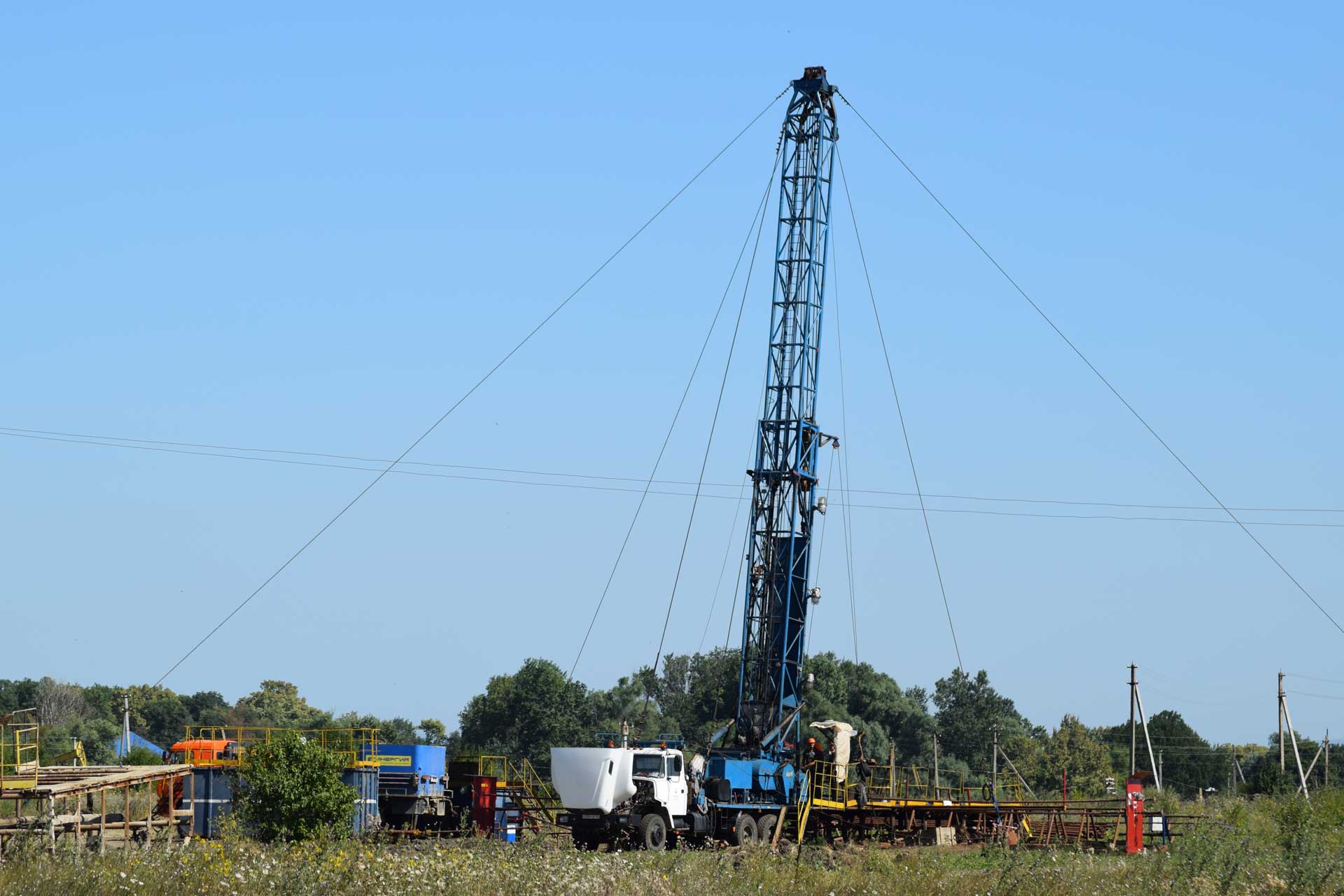
Drilling companies have also become substantially more efficient.
Longer horizontal wells allow producers to access larger underground areas from fewer surface locations. Multiwell drilling pads allow numerous wells to be developed from a centralized site.
Improvements in drilling equipment, geological modelling and completion technology also allow companies to develop resources faster.
The result is an industry capable of increasing production without increasing employment at the same rate.
Reddit Users Are Noticing the Change
A January discussion on Reddit’s Alberta community about oilpatch employment attracted hundreds of comments.
One highly rated observation summarized the issue particularly well: oil production does not necessarily equal employment.
The commenter pointed out that large construction projects require substantial workforces while they are being built, but significantly fewer employees may be required once the facilities enter normal operations.
That distinction is extremely important when discussing Alberta energy employment.
A new oil sands development, pipeline, processing plant or major expansion can require large numbers of construction workers, engineers, equipment operators and contractors.
Once construction is finished, the permanent workforce can be considerably smaller.
Reddit should not be treated as an authoritative statistical source. However, conversations like this are useful because they reveal what Alberta workers themselves are discussing.
The employment concern visible on Reddit is supported by broader industry data.
Calgary Feels This Change Differently
The transformation is particularly important for Calgary.
Calgary remains Canada’s largest corporate energy centre and is home to major producers including Canadian Natural Resources, Suncor Energy, Cenovus Energy, Tourmaline Oil, ARC Resources and Whitecap Resources.
But corporate consolidation and technology can reduce the number of people required in downtown offices as well.
When two energy companies combine, they generally do not need two complete accounting departments, two investor relations departments, two executive teams and two sets of administrative operations.
Duplicated positions can disappear.
Technology can also automate portions of financial analysis, engineering, geological interpretation, reporting and administrative work.
The result is that Calgary can remain extremely important to Canada’s petroleum industry even if the industry’s corporate workforce does not return to the size seen during previous energy booms.
Recent Calgary Layoffs Have Added to the Concern
A separate Calgary Reddit discussion attracted considerable attention in April following reports of layoffs at Ovintiv.
Reddit users claiming to work for the company discussed reductions affecting corporate offices, including Calgary.
Those individual comments should be treated as personal accounts rather than verified company statements, but the discussion illustrates the uncertainty some Calgary energy workers continue to experience.
Earlier employment reductions at other major energy companies have contributed to similar concerns.
The important point is that strong production and strong corporate profitability do not automatically guarantee increasing employment.
Those measurements describe different parts of the business.
Oilfield Jobs Have Not Disappeared
None of this means Alberta’s oil and gas labour market has vanished.
Companies continue recruiting workers for drilling and field operations.
Alberta’s ALIS employment service recently displayed oil and gas drilling positions in Calgary, Grande Prairie, Nisku and Lloydminster.
Recent postings included positions for drillers, derrickhands and motorhands.
Some advertised hourly wages exceeded $50 for experienced drilling positions.
This demonstrates an important distinction.
The industry still requires skilled workers.
What is changing is how many workers are required for each barrel of production and which skills employers need.
Source: Government of Alberta, ALIS Alberta Job Postings, 2026
Major New Projects Could Still Create Significant Employment
There is another side to the story.
Alberta could experience substantial employment growth if another major investment cycle begins.
Canadian Natural Resources, for example, is considering several potential oil sands expansions.
Its Jackfish expansion could add approximately 30,000 barrels per day.
Pike 2 could potentially add approximately 70,000 barrels per day.
The proposed Jackpine mine expansion could add approximately 150,000 barrels per day.
Those projects have not received final investment decisions and should not be treated as guaranteed developments.
However, projects of that scale could create substantial demand for engineering, construction, fabrication, transportation, environmental services and specialized contractors if they proceed.
That is why future investment decisions by Calgary’s largest producers matter to workers throughout Alberta.
Construction May Be More Important Than Production Growth
This leads to one of the most important lessons from the Reddit discussion.
For employment, the number of barrels produced is not necessarily the most useful measurement.
Investment activity may matter more.
An existing oil sands facility can increase output through optimization without requiring thousands of additional workers.
Building a new facility is different.
New construction creates demand throughout Alberta’s industrial supply chain.
Engineering firms receive work.
Fabrication shops receive orders.
Heavy equipment is required.
Construction crews are hired.
Hotels and restaurants in nearby communities can benefit.
Transportation companies move equipment and materials.
That economic activity can spread far beyond the energy producer itself.
Alberta’s Oil Industry Is Becoming More Productive
The bigger story is not simply that oil and gas employment is declining.
It is that Alberta’s energy industry has become dramatically more productive.
Reddit, r/Calgary discussion regarding Ovintiv layoffs, April 2026.
Companies have spent decades improving drilling technology, facility reliability, automation and reservoir management.
That productivity makes Alberta more competitive because producers can generate more output while controlling costs.
For companies and shareholders, that can be positive.
For workers, the consequences are more complicated.
The industry increasingly rewards specialized technical skills while requiring fewer people to produce each barrel.
What This Means for Alberta
The old assumption that higher oil production automatically produces proportionally more jobs no longer works.
Alberta could continue setting production records without recreating the employment conditions associated with earlier oil booms.
That does not make oil and gas less important to the province.
Energy production continues generating exports, corporate activity, investment, royalties, taxes and demand for thousands of Alberta businesses.
But the relationship between production and employment is changing.
For Calgary, Grande Prairie, Fort McMurray, Red Deer, Lloydminster and other communities connected to the industry, the next major employment opportunity may depend less on simply producing more from existing assets and more on whether companies approve new projects and expansions.
That is why Alberta workers should watch capital spending and project approvals alongside production numbers and oil prices.
The province may be producing more oil than ever.
The more important employment question is how much new infrastructure Alberta will need to build to produce the next barrel.
Sources:
Statistics Canada, Canadian Crude Oil Reaches New Heights in 2025, June 2, 2026.
Statistics Canada, Employment by Industry, 2026.
Government of Alberta, ALIS Alberta Job Postings, 2026.
Reddit, r/Alberta discussion on Alberta oilpatch employment, January 2026.