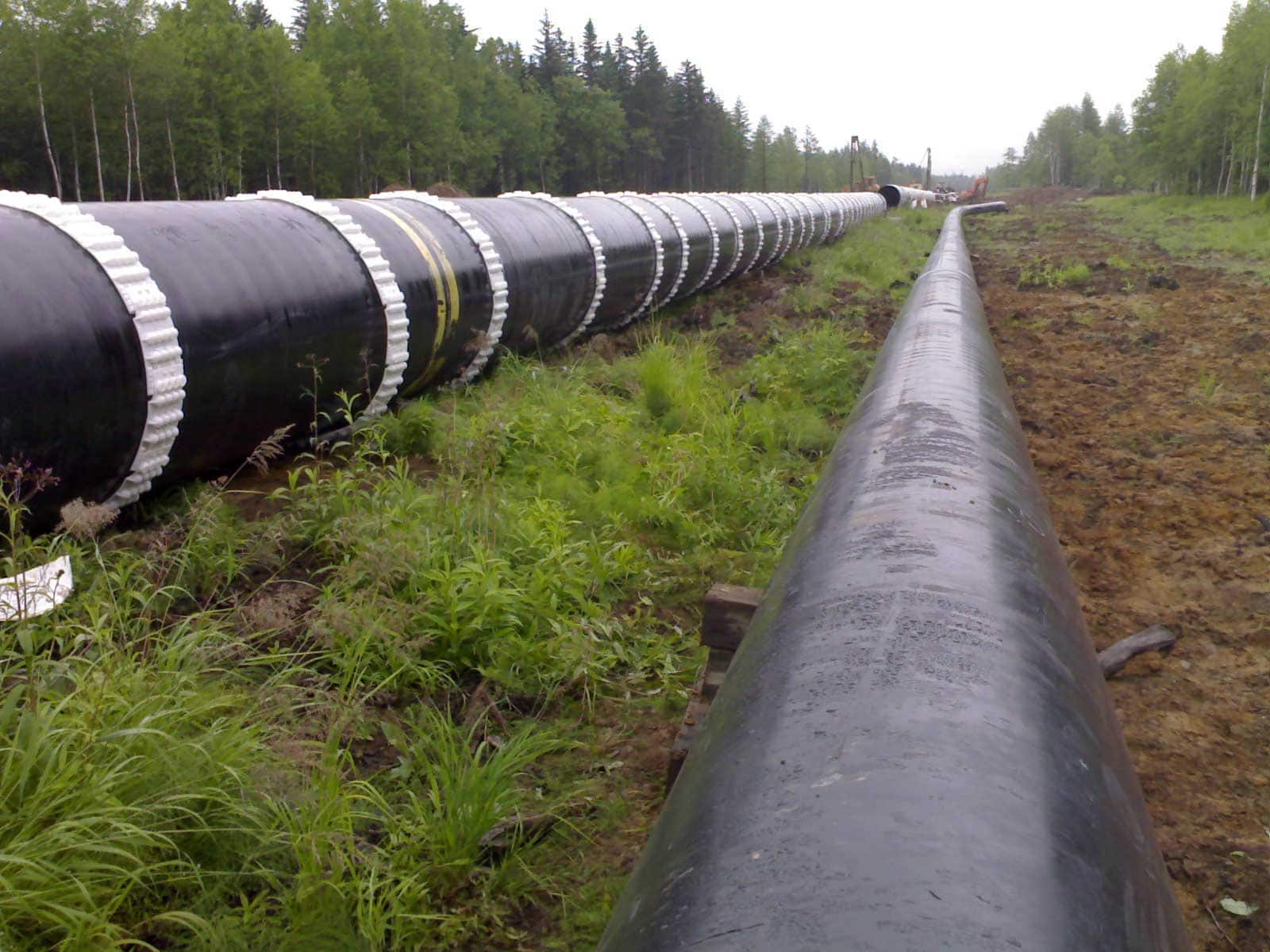
Keystone XL is suddenly part of the Alberta energy conversation again.
United States President Donald Trump has recently raised the possibility of reviving the long cancelled pipeline as trade tensions between Canada and the United States intensify.
For Alberta, the attention is understandable.
Keystone XL was designed to move Alberta crude south into the United States. A project of that scale would affect producers, pipeline contractors, engineering companies and potentially future oil sands investment.
But there is an important distinction that Alberta workers and businesses should understand.
Keystone XL has not suddenly become a construction project.
What is happening right now is a renewed political discussion about moving more Canadian oil south, while the energy industry is simultaneously considering a different pipeline proposal that could accomplish some of the same commercial objectives.
That difference matters.
Why Is Keystone XL Being Discussed Again?
Keystone XL was originally proposed as an expansion of the pipeline network connecting Western Canadian crude with the United States.
The project became one of the most politically controversial pipelines in North America.
It was rejected, revived and eventually cancelled after the United States presidential permit required for the project was revoked in 2021.
For several years, that appeared to be the end of the story.
Now the political environment has changed again.
President Trump has publicly discussed bringing Keystone XL back as Canada and the United States deal with a much broader dispute involving trade and tariffs.
That has pushed an old Alberta pipeline story back into current headlines.
The important question is whether the renewed political interest will translate into an actual investment.
At the moment, that remains uncertain.
The Industry Is Looking at a Different Project
While politicians are talking about Keystone XL, a separate proposal deserves close attention.
South Bow and Bridger Pipeline have been developing a project called Prairie Connector.
South Bow is the Calgary based company that now operates the former TC Energy liquids pipeline business, including the existing Keystone system.
Prairie Connector is not simply the original Keystone XL project under construction again.
The proposed system would use a combination of existing infrastructure and new connections to create additional transportation capacity for Western Canadian crude moving toward major United States refining markets.
The project is still being developed.
A final investment decision has not yet been made.
That distinction should be kept in mind whenever headlines suggest that a major new Alberta pipeline is about to be built.
There is renewed momentum around pipeline discussions.
There is not yet certainty that Prairie Connector or a revived Keystone XL will proceed.
Why Alberta Still Wants More Pipeline Capacity
The reason these discussions continue returning is fairly simple.
Alberta is producing a tremendous amount of oil.
Production during the first half of this year reached record levels, according to industry data reported this month.
Existing pipeline expansions have helped accommodate that growth.
The Trans Mountain Expansion has been particularly important because it increased Alberta’s access to Canada’s Pacific Coast and gave producers greater ability to reach overseas markets.
But oil production does not remain static.
If Alberta producers continue increasing output over the coming years, additional transportation capacity could eventually become valuable.
That is why several different pipeline concepts are now being discussed.
The question is no longer simply whether Alberta needs another pipeline.
It is where that pipeline should go and whether producers are prepared to commit enough future production to justify building it.
Alberta Is Also Looking West
This is where the current pipeline story becomes particularly interesting.
Canada and Alberta are also advancing work on a potential new oil pipeline toward the British Columbia coast.
The federal and Alberta governments announced an agreement in July to advance that proposal alongside the Pathways carbon capture project.
The west coast concept is strategically different from additional capacity into the United States.
A pipeline south strengthens Alberta’s connection with American refiners.
A pipeline west potentially strengthens Alberta’s connection with international customers across the Pacific.
Both could provide value.
But they solve somewhat different problems.
The current trade dispute with the United States makes that distinction more important.
For decades, the United States has been the dominant foreign customer for Canadian crude.
Greater Pacific access could give Alberta producers more options.
The Trade Dispute Changes the Conversation
Canada and the United States are currently dealing with another period of significant trade tension.
Alberta Premier Danielle Smith has called for renewed negotiations before additional Canadian counter tariffs take effect.
Former Alberta premier Jason Kenney has also argued publicly this week that energy should be considered as part of Canada’s response to the United States.
Regardless of whether one agrees with that approach, the debate illustrates how important Alberta oil has become to the broader Canada United States economic relationship.
Canada supplies enormous quantities of crude oil to American refineries.
Many of those refineries are specifically configured to process heavier grades similar to the crude produced in Alberta.
That relationship cannot be easily replaced overnight.
At the same time, Alberta cannot quickly replace the United States as its largest customer.
The infrastructure connecting the two countries has been built over decades.
That mutual dependence is one reason pipeline discussions are now becoming intertwined with trade negotiations.
What Does This Mean for Alberta Oilfield Workers?
For someone working on a drilling rig near Grande Prairie or servicing wells around Lloydminster, political arguments about international trade can seem far removed from everyday work.
But the connection is real.
Pipeline capacity influences the long term economics of producing additional oil.
If producers believe they will have reliable access to customers at competitive transportation costs, they have a stronger reason to invest in production.
More upstream investment can eventually mean more drilling.
More drilling creates demand for rigs, cementing, directional drilling, trucking, hydraulic fracturing and other services.
Additional production also requires pipelines, facilities, maintenance and eventually well servicing.
However, workers should be cautious about assuming that every pipeline announcement immediately creates jobs.
Large infrastructure projects can spend years in planning, regulatory review and commercial negotiations before major construction begins.
Alberta Is Hiring in the Oilfield Right Now
The current employment picture is more useful than speculation about jobs from a pipeline that has not been approved.
Recent Alberta job postings show employers seeking drillers, derrickhands and other oilfield workers in several parts of the province.
Current postings include positions connected to Grande Prairie, Nisku, Edmonton and Lloydminster.
Well servicing companies are also recruiting workers in Alberta locations including Grande Prairie, Blackfalds and Lloydminster.
This tells us something important about the current industry.
There is real field activity and real hiring taking place even without a new export pipeline under construction.
The opportunities are simply distributed unevenly.
But Alberta’s Rig Activity Deserves Attention
There is another side to the current picture.
Recent industry data indicate that Alberta’s drilling rig count this summer has been considerably below the unusually strong levels recorded during the same period last year.
That does not mean Alberta’s oil and gas industry is collapsing.
Rig counts can change for many reasons, including commodity prices, company drilling schedules, seasonal conditions and improvements in drilling efficiency.
A modern rig can also drill wells much faster and more effectively than equipment used during earlier periods of Alberta development.
Production and rig counts therefore do not move together perfectly.
Still, workers and service companies should watch drilling activity carefully.
Record oil production does not automatically mean every part of Alberta’s oilfield service industry is experiencing a boom.
This Is the Important Story for Alberta Workers
The current Alberta energy picture contains two realities at the same time.
Oil production is extremely strong.
But producers remain disciplined about spending.
That distinction is critical.
An existing oil sands operation can increase output through optimization without creating the enormous construction workforce associated with building an entirely new project.
A producer can drill longer horizontal wells and recover more hydrocarbons with fewer surface locations.
Companies can improve equipment reliability and reduce downtime.
The industry can therefore become more productive without employment increasing at the same rate.
For Alberta workers, the best indicator of future opportunity may not be production alone.
New capital investment matters enormously.
Pipeline Construction Would Create a Different Type of Activity
If one of the major proposed pipelines eventually receives a final investment decision, the employment effects would look very different from increasing production at an existing facility.
Pipeline construction requires engineering.
It requires surveying and environmental work.
It requires clearing and site preparation.
Pipe needs to be transported.
Welders, equipment operators and pipeline crews are needed.
Pump stations and related infrastructure must be constructed.
Hotels, restaurants, transportation businesses and equipment suppliers in communities along the route can also experience increased demand.
Calgary would likely see engineering, management, procurement and corporate activity connected with a major project.
That is why Alberta workers should pay attention to the pipeline discussion even though construction has not started.
Do Not Confuse Political Support With a Final Investment Decision
This may be the most important point in the entire current pipeline debate.
A politician saying that a pipeline should be built does not mean construction is beginning.
A government agreement to advance a proposal does not mean the project is fully approved.
A company studying a pipeline does not mean it has committed the capital required to build it.
Before treating a proposed project as a major source of future Alberta employment, several things should be watched.
Producers need to demonstrate commercial interest.
Transportation commitments may be required.
Regulatory processes need to advance.
Engineering and route planning need to be completed.
And ultimately, somebody must make a final investment decision.
Until those milestones occur, employment projections should be treated as potential outcomes rather than guaranteed jobs.
The Bigger Question Is Whether Alberta Will Need All This New Capacity
Canada is now considering several ways to increase oil transportation capacity.
That creates an interesting problem.
Pipelines need oil to fill them.
Building substantially more pipeline capacity only makes economic sense if Canadian production grows enough to support it.
Recent reporting has highlighted exactly this issue.
Oil sands companies continue to increase output, but many producers remain cautious about committing to enormous new projects.
The industry has spent years emphasizing capital discipline, shareholder returns and incremental expansions of existing operations.
For several new pipelines to proceed, producers may eventually need to become more aggressive about increasing production.
That would have much larger consequences for Alberta employment than the pipelines alone.
What Alberta Workers Should Watch Next
Instead of following every political statement about Keystone XL, Alberta workers and service companies should watch for concrete developments.
The most important signal will be whether pipeline companies secure enough commercial support from producers.
Another will be final investment decisions.
Oil sands expansion decisions are also important because additional pipelines become more valuable if companies commit to producing substantially more oil.
Current drilling activity should be watched as well, particularly in regions where conventional producers can adjust spending relatively quickly.
And the Canada United States trade relationship now deserves more attention from Alberta’s energy industry than it did only a few years ago.
Alberta’s Energy Opportunity Is Real, but It Is Not Guaranteed
There is a temptation during periods of intense pipeline discussion to assume another Alberta construction boom is around the corner.
The evidence does not support making that claim yet.
What Alberta has today is something more complicated.
The province is producing oil at very high levels.
New pipeline concepts are being actively discussed.
The United States is once again talking about additional Canadian oil infrastructure.
Canada and Alberta are advancing a potential west coast pipeline.
Oilfield companies are hiring for active positions across parts of the province.
At the same time, producers remain careful about major capital commitments and drilling activity is not uniformly stronger than last year.
For people working in Alberta, that makes the next stage particularly important.
The biggest employment story may not be whether politicians revive the name Keystone XL.
It will be whether the current political momentum results in companies actually committing billions of dollars to new pipelines, production expansions and field development.
That is the point when a political energy story becomes an Alberta jobs story.