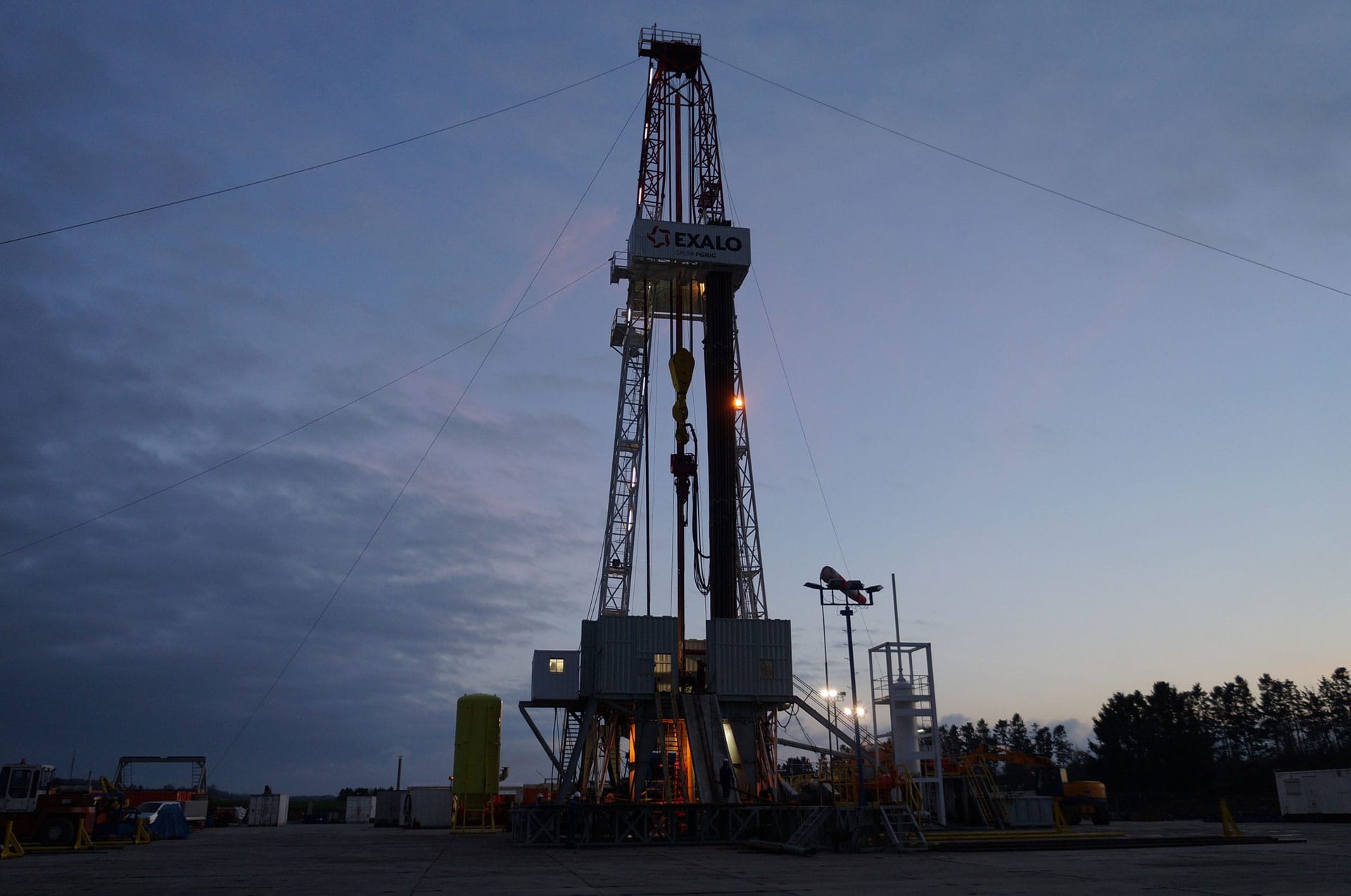
One of the most useful ways to understand Alberta’s oil and gas industry right now is to ignore the biggest political announcements for a moment and look at what companies are actually doing in the field.
In northwestern Alberta, that picture is becoming interesting.
Recent company updates show drilling continuing around the Grande Prairie region, new natural gas processing capacity being constructed and producers preparing additional Montney wells for the remainder of 2026.
This is important because it represents something more tangible than a proposed pipeline that may take years to reach construction.
Wells are being drilled now.
Facilities are being built now.
And that activity creates work for the network of contractors and employees supporting Alberta’s natural gas industry.
The Alberta Montney Is Moving Into Another Stage
The Montney has been one of Western Canada’s most important natural gas and liquids producing formations for years.
Much of the attention historically went to northeastern British Columbia.
But Alberta’s portion of the Montney is becoming increasingly important, particularly around Grande Prairie and areas farther west.
Recent operational updates provide evidence of continued investment.
Kelt Exploration reported this month that it had already drilled and completed a series of Montney wells in its Wembley and Pipestone area during 2026. Additional wells were being completed, with more drilling planned around La Glace during the remainder of the year.
Whitecap Resources has also been active in the Alberta Montney. The company reported that it increased its active drilling program after spring breakup and that construction of a new Montney facility at Lator was approaching completion during the second quarter.
These are separate development programs, but together they show why northwestern Alberta remains one of the most important areas to watch.
This Is Not Just a Drilling Story
A drilling rig is the most visible sign of oil and gas activity.
But it is only one part of the investment.
A successful Montney development eventually requires infrastructure capable of handling the production coming from those wells.
Natural gas needs gathering pipelines.
It generally needs processing before entering major transmission systems.
Liquids need to be separated and handled.
Water needs to be managed.
Compression may be required.
Facilities need electrical systems, instrumentation and ongoing maintenance.
This is where current developments become particularly relevant to Alberta workers.
Whitecap’s Lator facility is expected to support production from its Montney development once commissioned.
Elsewhere in Alberta’s Montney, another significant processing project is taking shape.
A New Gas Plant Is Being Built at Sinclair
Paramount Resources reported in August that construction work is progressing on its Sinclair natural gas plant.
The company said second quarter activity included earthworks, engineering and offsite module fabrication.
It also plans additional Montney drilling during the second half of 2026 while continuing construction of the plant and related infrastructure.
That combination is worth paying attention to.
When a producer moves beyond appraisal wells and begins investing in dedicated processing infrastructure, the development starts affecting a much broader portion of Alberta’s service industry.
The work is no longer limited to drilling crews.
It can involve earthworks contractors, module fabrication, trucking, pipeline construction, electrical work, instrumentation, engineering and eventually plant operations.
That is the type of activity that can have a more durable regional impact.
Why Gas Plants Matter So Much
Natural gas coming directly from a well is not necessarily ready to enter the large pipelines that ultimately deliver it to customers.
Depending on the reservoir, the production stream can contain water, liquids and other components that need to be separated or removed.
Processing facilities prepare the gas for transportation while potentially recovering valuable natural gas liquids.
This creates a basic relationship.
More successful wells can create demand for more processing capacity.
More processing capacity can make additional drilling possible.
The wells and infrastructure therefore develop together.
For workers, this matters because facility construction and operation require a different mix of skills from drilling.
Grande Prairie Is Becoming More Than a Rig Town
Grande Prairie has long been one of Alberta’s most important oilfield service centres.
But describing the region simply in terms of drilling rigs misses how the industry is changing.
Modern natural gas development increasingly involves large multiwell pads connected to substantial permanent infrastructure.
A drilling rig may leave after completing its work.
The infrastructure stays.
Gathering systems need inspection.
Compressors need maintenance.
Gas plants require operators.
Electrical and instrumentation systems need technicians.
Producing wells eventually require intervention.
This creates different types of employment over the life of a development.
A major natural gas producing region can therefore support both the highly cyclical drilling industry and a more permanent operations and maintenance economy.
The Current Hiring Market Shows Field Demand Has Not Disappeared
Current Alberta employment listings also provide some evidence of continued demand for field workers.
Federal Job Bank listings in August included drilling positions associated with Grande Prairie, along with positions in Nisku, Lloydminster, Edmonton and Calgary. Wireline positions have also appeared in Alberta listings this month.
These postings should not be interpreted as proof of an Alberta wide labour shortage.
A handful of advertisements cannot tell us that.
But they do confirm something more modest and useful.
Oilfield employers are actively recruiting for some field positions while development continues.
That is more meaningful for a job seeker than a general claim that Alberta’s energy industry is booming.
Weak Natural Gas Prices Make This Investment More Interesting
There is an important complication.
Alberta natural gas prices have been weak.
That would normally create concerns about whether producers will continue aggressively developing gas properties.
Yet companies are still investing in some of Alberta’s strongest resource areas.
Why?
One reason is that producers do not evaluate a major development based solely on today’s AECO price.
Some companies sell portions of their gas into markets outside Alberta.
Paramount, for example, expects a significant share of its remaining 2026 natural gas sales to be priced at diversified markets outside AECO.
Companies can also use hedging and transportation arrangements to manage price exposure.
Most importantly, a producing asset can operate for many years.
A company developing the Montney is making a long term decision rather than simply betting on next month’s natural gas price.
Good Wells Can Still Attract Investment
Geology also matters enormously.
A company is much more likely to continue investing during difficult commodity markets if its wells are performing strongly.
Paramount recently reported encouraging test results from appraisal wells at Sinclair.
The company cautioned that these were short duration test results and should not be interpreted as proof of long term well performance or ultimate recovery.
That warning is important.
Initial well tests can look impressive without necessarily predicting how a well will perform over its entire life.
But the results were strong enough that Paramount is continuing development work, including drilling and construction of associated infrastructure.
For Alberta contractors, the company’s spending decisions are ultimately more important than an individual well test.
Longer Development Programs Can Create Better Opportunities for Service Companies
There is a significant difference between drilling a few exploratory wells and developing a large resource position.
An exploratory program can disappear quickly if results disappoint.
A larger development program can create repeat business.
Pads need to be constructed.
Wells need to be drilled.
Completion crews follow.
Production equipment is installed.
Gathering lines connect the wells.
Processing infrastructure is expanded.
Then maintenance begins.
This progression is one reason service businesses watch producer development plans so carefully.
The best opportunity is not always the largest single contract.
Sometimes it is being positioned near a producing region where companies expect to drill repeatedly for years.
What Kind of Alberta Businesses Could Benefit?
Drilling contractors are an obvious example, but the list extends considerably further.
Directional drilling is essential for modern horizontal wells.
Completion programs require specialized equipment and crews.
Coiled tubing and wireline companies can become involved during completion and later intervention work.
Trucking companies move equipment and materials.
Construction contractors prepare sites.
Pipeline companies connect new production.
Fabrication shops build components used in processing facilities.
Electricians and instrumentation technicians work on increasingly sophisticated field infrastructure.
Environmental companies are involved throughout development.
The economic footprint of a Montney well therefore extends much farther than the drilling rig itself.
Nisku and Central Alberta Can Benefit From Northern Activity Too
Not every company supporting a Grande Prairie development needs to be based in Grande Prairie.
Nisku remains one of Western Canada’s most important concentrations of oilfield equipment and service businesses.
Red Deer and surrounding communities also contain substantial oilfield service capacity.
Equipment can be manufactured, repaired or prepared in central Alberta before travelling north.
Specialized crews can move between producing regions.
Calgary companies can provide engineering and corporate support.
This is why increased drilling in one part of Alberta can create work in several other parts of the province.
Calgary Gets a Different Type of Work
Calgary’s role is less visible from the highway.
Many companies developing Alberta resources maintain corporate operations in the city.
Geologists analyze the reservoir.
Engineers design wells and facilities.
Procurement teams contract services.
Marketing departments decide where production will be sold.
Financial teams determine whether another drilling program meets the company’s investment requirements.
Large field developments therefore support both blue collar work in producing regions and professional energy employment in Calgary.
That relationship is one of the reasons Calgary remains Canada’s major energy business centre even as drilling activity shifts geographically.
LNG Makes the Long Term Natural Gas Picture More Interesting
The development of Canada’s LNG export industry adds another reason to watch Alberta’s Montney.
Western Canadian natural gas historically depended heavily on Canadian and American customers.
Pacific LNG exports create an additional source of demand.
This does not mean every Alberta Montney producer automatically receives an international LNG price.
Pipeline transportation, contracts and marketing arrangements still determine what individual producers receive.
But additional demand can change the broader Western Canadian natural gas balance over time.
That matters if Alberta continues increasing production.
The province does not have a shortage of natural gas resources.
The challenge is ensuring enough economically attractive markets exist for that gas.
The Alberta Energy Regulator Is Still Recording Active Industry Development
Current Alberta Energy Regulator reporting also confirms that the province remains an active drilling jurisdiction.
The regulator updates well licence information daily and drilling progress information weekly, while its drilling activity statistics are updated on an ongoing basis. Its most recent monthly drilling statistics were updated at the end of July.
This is useful context because individual corporate announcements can sometimes make an industry appear busier or quieter than it really is.
No single producer represents Alberta.
The province contains numerous resource plays and development strategies operating simultaneously.
This Is the Type of Activity Alberta Workers Should Watch
Major pipeline proposals make better national headlines.
Political announcements receive more attention.
But for someone actually trying to find work or operate an oilfield service business in Alberta, developments like these can be more immediately relevant.
A producer drilling another pad creates work.
A processing facility under construction creates work.
A gathering system being expanded creates work.
A successful development program can create another round of wells.
These are concrete activities rather than possibilities dependent on a future political decision.
That does not mean every current Montney development will continue expanding indefinitely.
Natural gas prices can change.
Well performance can disappoint.
Capital budgets can be reduced.
Infrastructure constraints can emerge.
Companies can redirect investment elsewhere.
Those uncertainties are part of the oil and gas business.
Northwestern Alberta Is Worth Watching Through the Rest of 2026
The important point is that Alberta’s natural gas industry is not standing still while AECO prices remain weak.
Companies with attractive resource positions are continuing to drill.
Processing infrastructure is being constructed.
Existing Montney developments are being expanded.
And oilfield employers are still advertising positions in Alberta’s major service regions.
For Grande Prairie, this reinforces the city’s position as one of the most important places in Alberta’s current upstream economy.
For Calgary, it means continued engineering, corporate and commercial work connected with developments occurring hundreds of kilometres away.
For contractors across Alberta, it is another reminder that the most valuable indicator of future business is often not the daily commodity price.
It is where producers are actually committing money.
Right now, parts of northwestern Alberta continue to attract that investment.
And if the wells justify further development and new processing capacity comes online as planned, the work created by today’s construction could lead to another round of drilling and infrastructure spending in the years ahead.