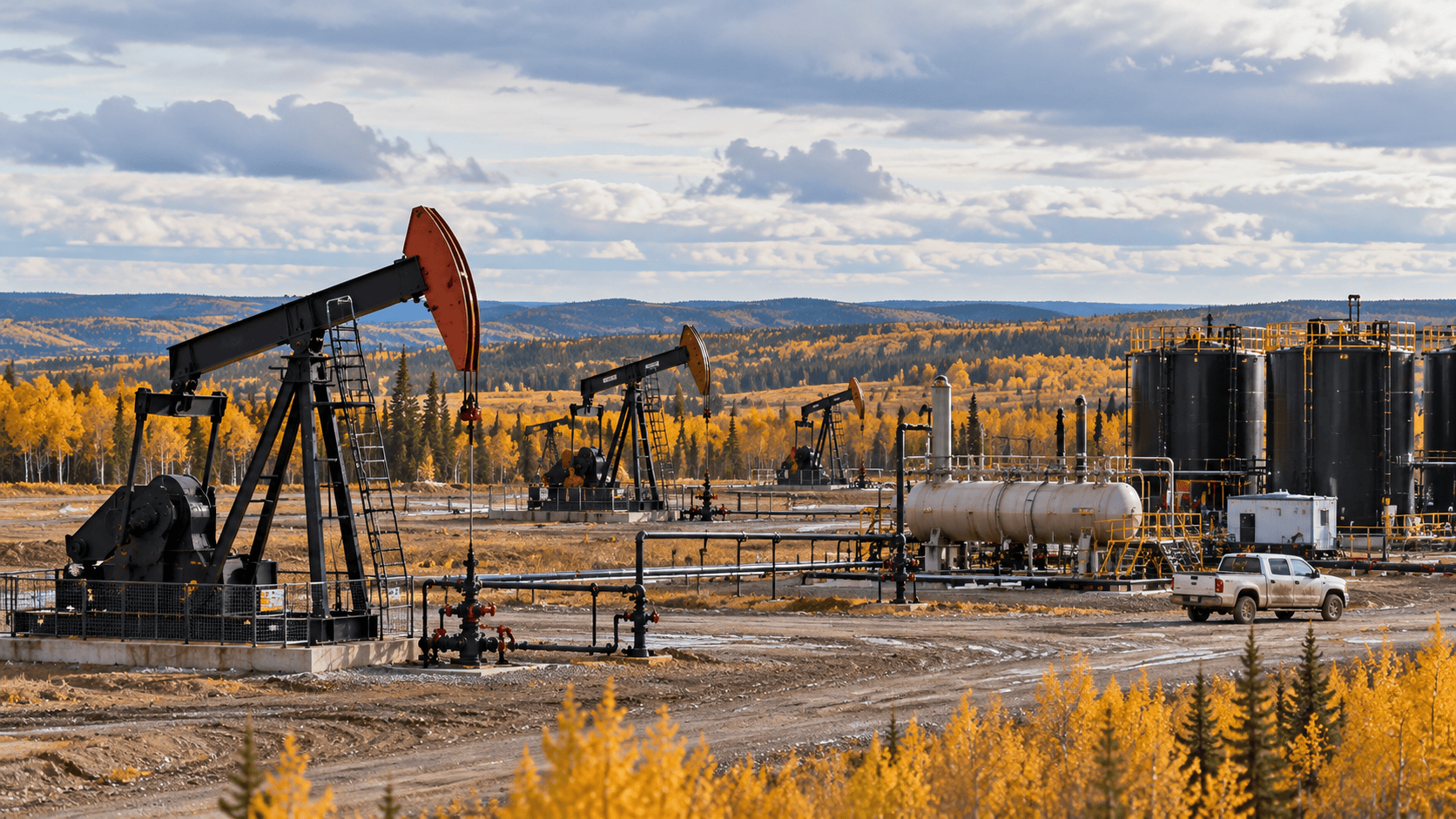
Heavy oil production is one of the most important parts of Alberta’s petroleum industry, but not every heavy oil producer operates the same way.
Some companies drill relatively shallow horizontal wells in the Clearwater formation near Slave Lake and Peace River. Others operate conventional heavy oil wells around Lloydminster and Wainwright. Larger producers use steam injection to recover bitumen from deep oil sands deposits near Cold Lake, Christina Lake and Fort McMurray.
These operations require very different equipment, infrastructure and technical expertise.
A Clearwater producer may rely on multilateral horizontal drilling, artificial lift and waterflooding. A thermal oil sands producer may operate large steam generation facilities, processing plants and extensive networks of horizontal well pairs.
The differences are important for understanding Alberta’s heavy oil industry and identifying the companies operating within it.
Major producers include Canadian Natural Resources, Cenovus Energy, Imperial Oil, Suncor Energy and Strathcona Resources.
Other companies, such as Baytex Energy, Tamarack Valley Energy, Headwater Exploration, Rubellite Energy and Obsidian Energy, have established substantial businesses producing heavy oil from northern and eastern Alberta.
The industry has also changed considerably through acquisitions and new development projects.
Cenovus completed its acquisition of MEG Energy in November 2025 and announced an agreement to acquire Athabasca Oil Corporation in October 2026. Tamarack Valley and Headwater announced a proposed combination in September 2026, while Greenfire Resources completed its acquisition of Connacher Oil and Gas in August.
These transactions are important because older lists of Alberta heavy oil companies may include businesses that no longer operate independently.
This guide profiles 16 companies involved in heavy oil and bitumen production in Alberta, including established oil sands operators, Clearwater developers, conventional heavy oil producers and companies expanding through new thermal projects.
The businesses are organized by production method and operating region rather than ranked by company size.
What Is Heavy Oil?
Heavy oil is crude petroleum with a relatively high density and low API gravity.
It generally flows less easily than light oil, although its exact characteristics vary considerably between reservoirs.
Bitumen is an even more viscous petroleum resource associated with Alberta’s oil sands deposits.
In its natural state, bitumen can be too thick to flow readily through a conventional producing well.
That is why different recovery methods are used.
Some Alberta heavy oil reservoirs can be produced without steam through conventional pumping or horizontal drilling. Other reservoirs require heating to make the bitumen mobile enough to recover.
For this article, heavy oil producers include companies producing conventional heavy crude, Clearwater heavy oil and oil sands bitumen.
However, conventional heavy oil production and oil sands bitumen production are not identical activities.
A company using steam assisted gravity drainage at Christina Lake has very different operational requirements from a company producing cold heavy oil near Lloydminster.
Understanding that distinction makes it easier to compare the companies involved.
Major Oil Sands and Thermal Heavy Oil Producers in Alberta
The following companies operate large bitumen production facilities or substantial conventional and thermal heavy oil businesses.
Their operations can include oil sands mining, steam injection, oil upgrading and other specialized recovery methods.
1. Cenovus Energy
Cenovus Energy is one of Canada’s largest oil sands and heavy oil producers.
The company is headquartered in Calgary and operates major thermal production facilities across Alberta.
Its principal oil sands projects include Christina Lake, Foster Creek and Sunrise.
Cenovus also operates conventional and thermal heavy oil assets around Lloydminster, including producing properties on both sides of the Alberta and Saskatchewan boundary.
Cenovus specializes in recovering bitumen through steam assisted gravity drainage, commonly called SAGD.
The process uses horizontal well pairs drilled into underground bitumen reservoirs.
Steam is injected through the upper well to heat the bitumen.
As the bitumen becomes less viscous, it drains toward the lower producing well and is brought to the surface.
Christina Lake and Foster Creek
Christina Lake is one of Cenovus’s largest producing assets.
The operation is located in northeastern Alberta, south of Fort McMurray.
Cenovus has continued developing the property through new well pads, facility improvements and production optimization.
Foster Creek is another major SAGD project located in the Cold Lake region.
The company completed a major optimization project at Foster Creek in 2025 that increased the facility’s production capability.
Cenovus also operates Sunrise, an oil sands development northeast of Fort McMurray.
During 2026, the company continued bringing new Sunrise well pads into production.
Cenovus Acquired MEG Energy
Cenovus completed its acquisition of MEG Energy on November 13, 2025.
MEG had operated the Christina Lake North thermal oil sands development.
The acquisition combined adjacent thermal production assets under Cenovus ownership.
The company is continuing work on the Christina Lake North expansion, which is expected to add production capacity if completed as planned.
MEG should therefore not be listed as an independent heavy oil producer today.
Proposed Athabasca Oil Acquisition
On October 5, 2026, Cenovus also announced an agreement to acquire Athabasca Oil Corporation.
The proposed transaction would add the Leismer and Hangingstone area thermal assets to Cenovus’s portfolio, including the Leismer operation and associated undeveloped resources.
However, the transaction is expected to close in December 2026 and remains subject to the required approvals and conditions.
Athabasca therefore remains a separate company pending completion.
Cenovus is an especially important customer for Alberta drilling contractors, thermal equipment suppliers, steam generation specialists, pipeline companies and industrial maintenance businesses.
2. Canadian Natural Resources
Canadian Natural Resources is a Calgary headquartered company and one of the largest oil and natural gas producers in Canada.
Its heavy oil operations extend across conventional producing fields, thermal oil sands projects and oil sands mining.
This combination makes Canadian Natural one of Alberta’s most diversified heavy oil producers.
Conventional Heavy Oil
Canadian Natural has extensive conventional heavy oil operations in Alberta.
These properties include producing areas around Lloydminster and other heavy oil regions.
The company uses a combination of conventional wells, horizontal drilling and enhanced recovery methods.
It has also expanded multilateral horizontal drilling in primary heavy oil development.
Multilateral wells can access several sections of a reservoir from the same main wellbore.
This can be valuable in formations where drilling several separate wells would be less economical.
Pelican Lake
Pelican Lake is another important producing area for Canadian Natural.
The property is known for heavy oil production and the use of enhanced recovery techniques.
Canadian Natural has extensive experience using polymer flooding and other reservoir management methods to improve recovery.
These techniques can help maintain production from reservoirs that have already undergone primary development.
Primrose, Wolf Lake and Kirby
Canadian Natural also operates thermal bitumen production facilities.
Primrose and Wolf Lake are located in the Cold Lake region.
These projects use cyclic steam stimulation and related thermal recovery techniques.
The company also operates SAGD projects at Kirby and Jackfish.
These operations require steam generation, water treatment, artificial lift, pipeline systems and processing equipment.
Oil Sands Mining
Canadian Natural operates Horizon and has major oil sands mining interests through the Athabasca Oil Sands Project.
Mining differs from conventional well production because oil sands material is excavated using large mining equipment.
The bitumen is then separated and, in some operations, upgraded into synthetic crude oil.
Canadian Natural’s 2026 plans also include continued primary heavy oil drilling and thermal development.
The company is particularly important because it operates across almost every major category of Alberta heavy oil production.
3. Imperial Oil
Imperial Oil is an established Canadian energy company with major oil sands and thermal heavy oil operations in Alberta.
Its most important heavy oil assets include Cold Lake and Kearl.
Imperial also has an ownership interest in Syncrude.
Cold Lake Thermal Production
The Cold Lake operation is one of Alberta’s largest and longest established thermal bitumen producing developments.
Imperial uses several recovery technologies, including cyclic steam stimulation and steam assisted gravity drainage.
Cyclic steam stimulation involves injecting steam into a well, allowing time for the reservoir to heat, and then producing the mobilized bitumen from the same well.
The process may be repeated over several cycles.
Imperial’s Cold Lake operations have continued evolving as the company introduces different recovery methods.
Grand Rapids and Leming
The Grand Rapids project uses a solvent assisted SAGD process.
The technology combines steam with a solvent to help mobilize bitumen and improve recovery under appropriate reservoir conditions.
Imperial has also developed the Leming SAGD project.
The company reported first oil from Leming during 2025.
These developments supported strong Cold Lake production through 2025 and into 2026.
Kearl Oil Sands Mine
Kearl is a major oil sands mining project northeast of Fort McMurray.
Imperial operates the mine and holds a majority ownership interest.
ExxonMobil Canada owns the remaining interest.
Kearl produces bitumen from mined oil sands material rather than relying on steam injection wells.
The operation requires heavy mining equipment, processing facilities, tailings management and extensive maintenance.
Imperial’s combination of Cold Lake thermal production and Kearl mining gives it exposure to two very different oil sands recovery methods.
4. Suncor Energy
Suncor Energy is another major Calgary headquartered oil sands producer.
The company operates mining and thermal bitumen production facilities around Fort McMurray.
Its operations include Firebag, MacKay River, Base Plant and Fort Hills.
Suncor also operates Syncrude on behalf of the Syncrude ownership group.
Firebag
Firebag is one of Suncor’s most important producing assets.
The project uses SAGD to recover bitumen from deep underground reservoirs northeast of Fort McMurray.
Firebag has developed into a large thermal production operation with extensive steam generation, processing and supporting infrastructure.
In 2025, Suncor reported record annual production at Firebag.
The company has also been evaluating further expansion and optimization opportunities.
MacKay River
MacKay River is another SAGD operation located northwest of Fort McMurray.
It produces bitumen using horizontal wells and steam injection.
The operation requires continuous management of steam generation, water recycling and well performance.
Oil Sands Mining
Suncor’s mining operations include Base Plant and Fort Hills.
The company also operates Syncrude’s mining and upgrading facilities.
These operations involve excavating oil sands, separating bitumen and, at certain facilities, upgrading it into synthetic crude oil.
Suncor has been reviewing the future balance between mining and thermal production.
In March 2026, the company outlined plans to increase the proportion of its bitumen produced through in situ methods over the longer term.
However, proposed expansions remain subject to investment decisions and applicable approvals.
Suncor is particularly important to Alberta’s industrial construction and maintenance sectors because of its large collection of operating facilities around Fort McMurray.
5. Strathcona Resources
Strathcona Resources is a Calgary based producer focused on heavy oil and thermal bitumen.
The company has grown through acquisitions and the consolidation of established producing assets.
In 2025, Strathcona completed the sale of its Montney business, increasing its concentration on heavy oil.
Its operations include thermal projects around Cold Lake and Lloydminster, along with heavy oil assets in Saskatchewan.
Cold Lake Thermal Operations
Strathcona’s Cold Lake assets include Lindbergh, Tucker and Orion.
These properties produce bitumen using steam based recovery methods.
The company has continued developing additional well pads and modifying existing facilities to improve production performance.
At Lindbergh, new well pairs contributed to increased production during the second quarter of 2026.
The company also completed repairs to a fuel gas supply line that had interrupted steam generation earlier in the year.
These developments illustrate how thermal heavy oil production depends on reliable supporting infrastructure.
A problem affecting steam generation can directly reduce the amount of bitumen that can be recovered.
Lloydminster Thermal Production
Strathcona also operates thermal heavy oil projects in the Lloydminster region.
Its Meota Central project achieved first steam in June 2026 and first oil in July.
Production was continuing to increase during the second half of the year.
The company also acquired the Vawn thermal project and additional undeveloped lands from Cenovus in late 2025.
Vawn is located in Saskatchewan near existing Strathcona operations.
It should not be counted as an Alberta production site simply because Strathcona has its headquarters in Calgary.
Strathcona remains a major company in the broader Western Canadian heavy oil industry, with established thermal assets in both Alberta and Saskatchewan.
6. Athabasca Oil Corporation
Athabasca Oil Corporation is a Calgary headquartered company with thermal oil sands assets in northeastern Alberta.
The company also has an interest in a separate light oil business, but its thermal bitumen assets are the main reason it belongs in this guide.
Athabasca’s principal thermal project is Leismer.
Leismer
Leismer is located south of Fort McMurray in the Athabasca oil sands region.
The project uses SAGD to recover bitumen.
Athabasca has invested in well pads, facility improvements and production optimization at Leismer.
The company also holds undeveloped thermal oil sands resources, including the Corner property.
These assets provide possible future development opportunities.
However, undeveloped resources should not be treated as current production.
Pending Cenovus Acquisition
On October 5, 2026, Cenovus announced an agreement to acquire Athabasca Oil Corporation.
The transaction would bring Leismer and Athabasca’s other assets into the Cenovus portfolio.
As of October 19, the transaction had not been announced as completed.
Athabasca therefore remains a separately identifiable producer while the acquisition process continues.
If the deal closes, future heavy oil company comparisons will need to reflect the new ownership.
7. Greenfire Resources
Greenfire Resources is a Calgary based thermal oil sands producer operating in northeastern Alberta.
The company focuses on SAGD production.
Its main operations include the Hangingstone facilities south of Fort McMurray.
Greenfire holds interests in the Hangingstone Expansion and Demonstration facilities.
These projects use steam injection to recover bitumen from the McMurray formation.
Hangingstone Operations
Hangingstone produces bitumen from deep oil sands reservoirs.
Greenfire’s business includes operating the wells, processing produced fluids and managing the infrastructure required for steam generation.
The company has concentrated on improving production performance and using existing facilities efficiently.
Greenfire Acquired Connacher
On August 5, 2026, Greenfire completed the acquisition of Connacher Oil and Gas.
The acquisition added the Great Divide oil sands project to Greenfire’s operations.
Great Divide is located adjacent to Greenfire’s existing Hangingstone properties.
The acquired operations include thermal bitumen production facilities associated with Connacher’s historical business.
This gives Greenfire a larger collection of neighbouring SAGD assets.
The properties share certain transportation and infrastructure characteristics, which may create opportunities for operating efficiencies.
Connacher should therefore not be counted as an independent current heavy oil producer following the acquisition.
The Connacher name remains useful for identifying the historical Great Divide assets, but Greenfire now owns the business.
8. International Petroleum Corporation
International Petroleum Corporation, commonly called IPC, is an international oil and gas producer with a major Canadian thermal oil sands development.
Its principal Alberta project is Blackrod.
Blackrod is located in Lac La Biche County in northeastern Alberta.
The project uses SAGD to produce bitumen.
Blackrod Began Producing in 2026
Blackrod is one of the most important recent additions to Alberta’s thermal heavy oil industry.
The company began steam injection at the development in December 2025.
On May 31, 2026, the first well pairs began producing oil.
IPC announced the achievement of first oil in June.
The initial project includes a central processing facility connected to multiple production well pads.
As additional well pairs complete their initial heating period, they can be converted to production.
IPC has forecast that the first development phase could reach approximately 30,000 barrels per day by late 2027.
That is a future production target, not the volume the project was producing when first oil was achieved.
Blackrod provides a clear example of how thermal oil sands developments require significant construction and preparation before production begins.
The company invested in wells, steam facilities, water handling, processing equipment and supporting infrastructure.
IPC’s project creates a new operating centre for thermal bitumen production in the Lac La Biche region.
Clearwater and Cold Heavy Oil Producers in Alberta
Not all heavy oil production requires steam.
A growing portion of Alberta’s heavy oil drilling activity involves formations that can produce through primary recovery methods.
The Clearwater is particularly important.
Modern multilateral horizontal wells have allowed producers to access heavy oil in formations that previously received less attention.
The following companies operate in the Clearwater or other conventional heavy oil producing regions.
9. Tamarack Valley Energy
Tamarack Valley Energy is a Calgary headquartered oil producer with substantial heavy oil operations in northern Alberta.
The company has developed a major position in the Clearwater.
Its operating areas include Nipisi, Marten Hills, West Marten and other parts of the Clearwater fairway.
Tamarack uses horizontal and multilateral drilling to develop heavy oil reservoirs.
The company has also invested heavily in waterflooding.
Clearwater Waterflood Development
Waterflooding involves injecting water into a suitable reservoir to support pressure and improve oil recovery.
Tamarack has expanded injection infrastructure across its Clearwater properties.
The company reported significant growth in its waterflood program during 2025 and continued investing in additional injection capacity during 2026.
The purpose is to improve recovery and reduce the production declines associated with primary heavy oil development.
Waterflooding can also require significant infrastructure, including water handling, injection equipment and gathering pipelines.
Tamarack and Headwater Merger
On September 8, 2026, Tamarack announced an agreement to combine with Headwater Exploration.
The proposed transaction is valued at approximately $10 billion and would bring together two major Clearwater producers.
The combined business would have extensive operations around Marten Hills, Nipisi and other northern Alberta producing areas.
The companies expect the merger to close during the fourth quarter of 2026, subject to the necessary approvals and closing conditions.
Until the transaction closes, Tamarack and Headwater should be considered separate existing producers with a proposed combination.
10. Headwater Exploration
Headwater Exploration is a Calgary based heavy oil producer focused on northern Alberta.
The company has become strongly associated with Clearwater multilateral drilling.
Its main development areas include Marten Hills, Marten Hills West and the Greater Pelican region.
Headwater produces heavy oil primarily through horizontal wells.
Marten Hills Clearwater Production
Marten Hills is one of Headwater’s established producing areas.
The company has drilled numerous multilateral wells and constructed supporting production infrastructure.
A multilateral well can have several horizontal branches extending from a main wellbore.
This allows the operator to reach more of the reservoir while using fewer individual surface well locations.
Headwater has also expanded waterflooding and other secondary recovery projects.
Marten Hills West
Marten Hills West has become another important development area.
Headwater has targeted the Clearwater sandstone, Clearwater E and Grand Rapids formations.
During 2026, the company continued delineation drilling and increased the number of wells supported by secondary recovery.
This work requires drilling contractors, artificial lift equipment, pumping systems and water handling infrastructure.
Proposed Combination With Tamarack
Headwater announced its proposed merger with Tamarack Valley in September 2026.
If the transaction is completed, its core Clearwater producing properties would become part of the combined business.
Until then, Headwater remains a separate producer.
Its existing operations are particularly important to oilfield service activity near Slave Lake and the broader Marten Hills region.
11. Baytex Energy
Baytex Energy is a Calgary headquartered oil producer with significant heavy oil operations in Alberta.
The company is also involved in light oil development, including the Pembina Duvernay.
However, heavy oil remains an important part of its business.
Its principal heavy oil areas include Peace River, Peavine and Lloydminster.
Peace River
Baytex has a long history of heavy oil production in the Peace River region.
Its properties include the Seal area, where the company has used polymer flooding to improve recovery.
Polymer flooding involves injecting water containing selected polymers to modify the fluid’s flow characteristics.
Under suitable reservoir conditions, the method can improve displacement of oil.
Baytex also uses horizontal drilling to develop additional reserves.
Peavine Clearwater
Peavine has become an important Clearwater development area for Baytex.
The company has a partnership with the Peavine Métis Settlement associated with its operations.
Baytex uses multilateral horizontal wells to access the reservoir.
The company has also been evaluating waterflooding in the area.
Lloydminster Heavy Oil
Baytex produces heavy oil from Mannville formations in the Lloydminster region.
Its operations target several sandstone intervals, including Sparky, Waseca and related producing formations.
Some wells use conventional completion and artificial lift methods, while other developments involve horizontal drilling.
Baytex’s 2026 plans include continued heavy oil drilling across its northern Alberta and Lloydminster properties.
The company’s broad regional exposure makes it an established producer across several distinct Alberta heavy oil plays.
12. Obsidian Energy
Obsidian Energy is a Calgary headquartered producer with significant heavy oil operations in the Peace River region.
The company also develops light oil properties in Central Alberta.
Its main heavy oil development areas include Dawson, West Dawson, Nampa, Cadotte and Harmon Valley.
Obsidian produces heavy oil from the Clearwater and Bluesky formations.
Clearwater Development
The company uses horizontal drilling and multilateral well designs to develop the Clearwater.
During 2026, Obsidian continued drilling heavy oil wells while expanding waterflood projects.
The company brought additional injection infrastructure into service at Dawson, West Dawson and Nampa.
These projects are intended to improve oil recovery and support production from existing developments.
Bluesky Production
Obsidian also operates Bluesky heavy oil properties around Peace River.
The Bluesky formation has different geological and production characteristics from the Clearwater.
The company has continued evaluating and drilling wells in both formations.
Obsidian’s heavy oil business requires road construction, artificial lift, water handling and production facilities.
Its Peace River operations are separate from the company’s light oil developments around Willesden Green.
That distinction matters because not all of Obsidian’s production is heavy oil.
13. Rubellite Energy
Rubellite Energy is a Calgary headquartered company focused on heavy oil development in Alberta.
Its main producing properties include Figure Lake, Marten Hills, Frog Lake and Ukalta.
The company concentrates on the Clearwater and other formations within the Mannville group.
Figure Lake and Marten Hills
Rubellite has been developing heavy oil through multilateral horizontal wells.
Figure Lake is one of its important development areas.
The company has continued drilling and evaluating wells while expanding the productive extent of the reservoir.
Rubellite also holds interests in the Marten Hills Clearwater development.
In June 2026, the company completed an asset transaction that increased its working interest in its Marten Hills properties.
Frog Lake
Frog Lake is another important area for Rubellite.
The company develops heavy oil from the Waseca formation and evaluates additional Mannville intervals.
This creates opportunities for wells targeting different producing zones within the same broader area.
Rubellite’s business is more narrowly focused on heavy oil than many diversified Alberta producers.
Its development strategy depends heavily on identifying productive geological intervals and using horizontal drilling effectively.
14. Spur Petroleum
Spur Petroleum is a privately owned oil and natural gas producer headquartered in Calgary.
The company focuses on the Clearwater heavy oil play in northern Alberta.
Spur operates producing properties and has been involved in acquiring and developing heavy oil assets.
Its operations include conventional Clearwater production using horizontal wells.
McMullen Thermal Pilot Proposal
Spur has also proposed developing a thermal pilot project at McMullen, northeast of Slave Lake.
The property was previously associated with Husky Energy and subsequently Cenovus.
Spur acquired the asset from Cenovus in 2024.
The company submitted applications to the Alberta Energy Regulator relating to the proposed McMullen Thermal Pilot Project.
The proposal involves recovering bitumen through thermal methods, including cyclic steam stimulation.
This is a different approach from the cold heavy oil drilling commonly associated with parts of the Clearwater.
The McMullen project is a regulatory proposal and should not be described as an approved, operating new thermal development.
The outcome depends on regulatory decisions and subsequent project execution.
Spur’s existing Clearwater operations and proposed thermal development illustrate how producers are evaluating different recovery methods across northern Alberta.
15. Cardinal Energy
Cardinal Energy is a Calgary based oil producer with operations in Alberta and Saskatchewan.
The company concentrates on mature, relatively low decline oil properties.
Some of its Alberta fields produce significant quantities of conventional heavy oil.
Wainwright and Central Alberta
Cardinal operates heavy oil properties around Wainwright, Chauvin, Hayter and other parts of east central Alberta.
The company’s production comes from Mannville formations, including the Sparky.
These producing areas have extensive historical development and established infrastructure.
Cardinal uses conventional wells, horizontal drilling and enhanced recovery methods.
Waterflooding is important in several of its producing properties.
Buffalo Clearwater
Cardinal also has development interests in the Clearwater around Buffalo in northeastern Alberta.
The company has been expanding its understanding of the reservoir and evaluating additional drilling opportunities.
Its operations include both mature conventional fields and newer horizontal heavy oil projects.
Cardinal is also developing the Reford thermal project in Saskatchewan.
Reford is an important part of Cardinal’s broader heavy oil portfolio, but it is located outside Alberta.
The distinction is important when identifying the company’s Alberta production.
16. Lycos Energy
Lycos Energy is a Calgary based oil producer focusing on underdeveloped and overlooked oil properties.
The company has operations in Alberta and uses specialized horizontal drilling designs to develop petroleum reservoirs.
Lycos has significant activity in eastern Alberta.
Its producing areas include Moonshine, Wildmere and properties around the Greater Provost region.
Moonshine Development
Moonshine has become an important producing property for Lycos.
The company has drilled horizontal wells targeting several intervals within the Mannville group.
These include the General Petroleum and Sparky formations.
Lycos has also developed specialized completion and production methods suited to the oil characteristics encountered in the area.
The company uses pad drilling and horizontal well designs to access the reservoir.
Greater Provost and Wildmere
Lycos expanded its operations through acquisitions around Greater Provost.
It also continued drilling in the Wildmere region during 2026.
The company’s second quarter operating update described production growth associated with new development and acquired properties.
Lycos differs from the large oil sands companies because it focuses on smaller producing assets where horizontal drilling and active production management can improve the economics.
Its business supports drilling, well servicing and production work across eastern Alberta.
Where Is Heavy Oil Produced in Alberta?
Alberta’s heavy oil industry extends across several producing regions.
The geography matters because different reservoirs require different recovery methods.
Fort McMurray and Athabasca Oil Sands
Fort McMurray is the centre of Alberta’s largest oil sands mining operations.
Major companies include Suncor, Canadian Natural and Imperial.
Thermal operations in the broader Athabasca region include projects operated by Cenovus, Greenfire, IPC and other producers.
The area contains large industrial facilities, mining operations and extensive transportation infrastructure.
Oil sands mining is concentrated where deposits are sufficiently close to the surface.
Thermal production is used in deeper deposits where mining is not appropriate.
Cold Lake and Bonnyville
Cold Lake is one of Alberta’s most important thermal heavy oil producing regions.
Imperial, Canadian Natural, Strathcona and Cenovus operate thermal assets associated with northeastern Alberta.
The region has a long history of steam injection and heavy oil production.
These operations require drilling, steam generation, water treatment, artificial lift and specialized maintenance.
Peace River
The Peace River region contains extensive heavy oil resources.
Baytex and Obsidian are important producers.
Other businesses also operate in the region, depending on the geological formation and development area.
The Clearwater and Bluesky formations are important.
Production methods include horizontal drilling, artificial lift and waterflooding.
Slave Lake and Marten Hills
Slave Lake has become increasingly important because of Clearwater development.
Tamarack, Headwater, Rubellite and other producers have substantial operations in the broader region.
Multilateral drilling has been an important factor in the growth of the play.
Waterflood projects are also becoming more common as operators work to improve recovery from existing fields.
Lloydminster and Wainwright
Lloydminster is a major centre for conventional heavy oil production.
Cenovus, Baytex and other companies operate producing properties in the region.
The petroleum industry extends across the Alberta and Saskatchewan border.
Wainwright and surrounding east central Alberta communities also contain significant heavy oil fields.
Cardinal and Lycos are among the companies associated with this broader producing region.
Many wells rely on artificial lift and require ongoing mechanical maintenance.
How Do Alberta Heavy Oil Companies Recover Oil?
Different recovery methods are used according to the reservoir.
Understanding these methods helps explain why producers use different equipment and service companies.
Primary Heavy Oil Production
Primary production relies on the energy already present in the reservoir and the use of suitable artificial lift systems.
Some wells initially flow naturally.
Others require pumps to bring oil to the surface.
Primary production is common in parts of the Clearwater and conventional Lloydminster heavy oil fields.
Multilateral Horizontal Drilling
Multilateral wells contain more than one branch extending from a main wellbore.
The branches can reach additional sections of a reservoir.
This method has become important in the Clearwater.
Tamarack, Headwater, Baytex, Rubellite, Obsidian and other companies use multilateral drilling in suitable formations.
The exact well design varies by reservoir and producer.
Waterflooding
Waterflooding involves injecting water into a reservoir to improve oil recovery.
The process can help maintain pressure and move oil toward producing wells.
Several Clearwater producers have expanded waterflooding during recent years.
The method requires injection wells, pumps, water treatment and monitoring.
Not every heavy oil reservoir is suitable for waterflooding.
Polymer Flooding
Polymer flooding involves adding polymers to injected water to change how the fluid moves through the reservoir.
Under suitable conditions, it can improve oil displacement.
Baytex and Canadian Natural have experience with enhanced oil recovery using polymer systems.
The results depend on reservoir geology, fluid characteristics and project design.
Steam Assisted Gravity Drainage
SAGD uses horizontal injection and production well pairs.
Steam heats the bitumen so it can move toward the producing well.
Companies such as Cenovus, Imperial, Suncor, Greenfire and IPC use SAGD.
The method requires substantial facilities and steam generation capacity.
Cyclic Steam Stimulation
Cyclic steam stimulation uses the same well for steam injection and subsequent production.
Steam is injected, the reservoir is allowed to heat, and the well is then placed on production.
The process may be repeated.
Imperial, Canadian Natural and other thermal producers use this method in suitable reservoirs.
What Services Do Heavy Oil Producers Need?
Heavy oil production creates demand for a wide range of Alberta oilfield businesses.
The type of work depends on the recovery method.
Drilling Contractors
Clearwater and conventional heavy oil producers hire drilling companies to construct new wells.
Modern development can involve multiple horizontal wells from a single pad.
Thermal producers also require specialized drilling equipment for steam injection and production wells.
Service Rig Companies
Heavy oil wells require maintenance throughout their operating lives.
Service rigs are used to retrieve tubing, replace pumps, repair equipment and perform workovers.
This creates ongoing employment for service rig crews even when new drilling slows.
Artificial Lift Companies
Many heavy oil wells require artificial lift.
These systems can include progressive cavity pumps, rod pumps and electric submersible pumps.
The appropriate system depends on fluid viscosity, well design and production conditions.
Pipeline and Fluid Handling Contractors
Produced heavy oil must be collected, handled and transported.
Some projects require diluent to reduce viscosity for transportation.
Operators may also need tanks, gathering pipelines, pumps and truck loading facilities.
Water Treatment Companies
Water management is important in both thermal and conventional heavy oil operations.
Thermal projects require water treatment for steam generation.
Waterflood operations require injection water management.
Produced water must also be handled according to the applicable requirements.
Thermal Equipment Suppliers
SAGD and cyclic steam projects require boilers, once through steam generators, heat exchangers, pumps and other specialized equipment.
These systems require ongoing inspection and maintenance.
Environmental and Reclamation Contractors
Heavy oil producers are responsible for managing their operating sites and meeting applicable environmental requirements.
Work can include spill response, waste management, groundwater monitoring, well abandonment and reclamation.
These services remain important throughout the life of a development.
What Makes Heavy Oil Production More Expensive?
Heavy oil production can involve additional costs compared with certain light oil operations.
The reasons depend on the type of reservoir.
Thermal projects require energy to generate steam.
That can create substantial fuel, water treatment and facility operating costs.
Cold heavy oil operations may avoid steam generation but require extensive artificial lift, fluid handling and well maintenance.
Heavy oil transportation can also create additional expenses.
Some crude must be blended with a lighter hydrocarbon before it can be transported through conventional pipelines.
The amount of diluent required depends on the crude properties and transportation specifications.
Market prices also matter.
Canadian heavy crude is often priced relative to benchmarks such as Western Canadian Select.
Heavy oil price differentials can change according to transportation capacity, refinery demand, crude quality and broader oil market conditions.
A company may produce large quantities of heavy oil but receive a lower price per barrel than a producer selling light crude.
That does not automatically make the project uneconomic.
The full operating cost, transportation arrangement, royalty obligations and expected recovery must be considered.
Frequently Asked Questions About Heavy Oil Producers in Alberta
What Are the Major Heavy Oil Companies in Alberta?
Major producers include Canadian Natural Resources, Cenovus Energy, Imperial Oil, Suncor Energy and Strathcona Resources.
Other significant companies include Athabasca Oil Corporation, Greenfire Resources, International Petroleum Corporation, Tamarack Valley, Headwater, Baytex and Obsidian Energy.
Which Companies Produce Heavy Oil Near Slave Lake?
Tamarack Valley, Headwater, Rubellite and Spur are among the producers associated with the broader Clearwater region.
Other companies also develop heavy oil properties across northern Alberta.
Who Produces Heavy Oil in Peace River?
Baytex Energy and Obsidian Energy are important producers in the Peace River area.
Their operations include heavy oil production from formations such as the Bluesky and Clearwater.
Which Companies Produce Heavy Oil in Cold Lake?
Imperial, Canadian Natural, Strathcona and Cenovus have major thermal operations associated with the Cold Lake region.
The projects use different steam recovery technologies.
Which Companies Produce Heavy Oil Around Lloydminster?
Cenovus, Baytex and other producers have conventional or thermal heavy oil operations around Lloydminster.
Cardinal and Lycos operate farther south and east in Alberta’s conventional oil producing regions.
What Companies Are Active in the Clearwater?
Tamarack Valley, Headwater, Baytex, Obsidian, Rubellite, Spur and Cardinal are among the companies with Clearwater producing or development assets.
Their properties are located in different parts of northern and central Alberta.
Does Clearwater Heavy Oil Require Steam?
Not always.
Much of the Clearwater’s recent development has used cold primary production through horizontal wells.
Some operators also use waterflooding to improve recovery.
Thermal recovery may be considered for particular reservoirs, but the method depends on geology and project economics.
Is MEG Energy Still a Separate Company?
No.
Cenovus completed its acquisition of MEG Energy in November 2025.
MEG’s former Christina Lake North operation is now part of Cenovus.
Who Owns Connacher Oil and Gas?
Greenfire Resources completed its acquisition of Connacher Oil and Gas in August 2026.
Connacher’s Great Divide thermal oil sands assets are now part of Greenfire.
Has Cenovus Acquired Athabasca Oil Corporation?
Cenovus announced an agreement to acquire Athabasca on October 5, 2026.
The acquisition was expected to close in December, subject to approvals and other conditions.
It had not been confirmed as completed by October 19, 2026.
Have Tamarack Valley and Headwater Merged?
The companies announced a proposed merger in September 2026.
The transaction was expected to close during the fourth quarter of 2026, subject to the required approvals and closing conditions.
Until completed, they remain separate companies.
Which Alberta Heavy Oil Producers Are Using Waterflooding?
Tamarack, Headwater, Obsidian, Baytex, Cardinal and other producers use or evaluate waterflooding in suitable reservoirs.
The method can help improve recovery and manage production declines.
Which Companies Operate SAGD Projects in Alberta?
Cenovus, Imperial, Suncor, Canadian Natural, Strathcona, Athabasca, Greenfire and International Petroleum Corporation are among the companies operating thermal projects that use SAGD.
Some companies also use cyclic steam stimulation or other thermal methods.
Are Heavy Oil Companies Hiring in Alberta?
Heavy oil companies and their contractors employ drilling crews, operators, mechanics, electricians, welders, instrumentation technicians, pipeline workers, engineers and other specialists.
Hiring depends on current production activity, maintenance schedules and approved development projects.
A planned expansion does not necessarily mean construction or hiring has already begun.
Alberta’s Heavy Oil Industry Is Changing
Heavy oil remains one of Alberta’s most important petroleum resources, but the companies producing it are changing.
Large oil sands producers continue operating substantial thermal and mining facilities.
At the same time, smaller and intermediate producers are developing heavy oil through multilateral drilling and enhanced recovery.
The Clearwater has become particularly important because improvements in drilling technology have made some reservoirs more attractive to develop.
Companies such as Tamarack, Headwater, Baytex, Obsidian and Rubellite have invested in horizontal wells, waterflood projects and supporting infrastructure.
Thermal developments are also evolving.
International Petroleum Corporation began production at Blackrod in 2026.
Greenfire expanded through its acquisition of Connacher.
Strathcona brought its Meota Central development into production.
Cenovus continues developing its thermal assets and is pursuing another major acquisition.
These activities provide work for a broad range of Alberta businesses, from drilling and service rig contractors to pump manufacturers, pipeline companies, civil construction businesses and industrial maintenance crews.
However, the outlook is not the same for every producer.
Commodity prices, heavy oil differentials, steam generation costs, drilling economics and transportation capacity influence decisions.
Proposed projects also face investment and regulatory requirements before construction or production can begin.
For Alberta’s producing communities, understanding where companies are actively investing is more useful than simply looking at the total amount of oil underground.
Marten Hills and Slave Lake support a growing network of cold heavy oil drilling and production operations.
Peace River remains important for Clearwater and Bluesky development.
Lloydminster and Wainwright support conventional heavy oil production and ongoing well servicing.
Cold Lake is a major centre for thermal bitumen recovery.
The Athabasca region around Fort McMurray supports mining and large thermal oil sands facilities.
These producing regions represent different parts of the same industry.
Alberta’s heavy oil producers may use very different recovery methods, but together they operate one of Canada’s most extensive networks of petroleum wells, processing facilities, pipelines and industrial infrastructure.
For oilfield workers, contractors and equipment suppliers, that diversity creates opportunities across drilling, production maintenance, enhanced recovery, facility construction and eventual well closure.
And as ownership changes and new technologies continue reshaping the industry, the companies operating Alberta’s heavy oil resources will remain central to the province’s energy economy.