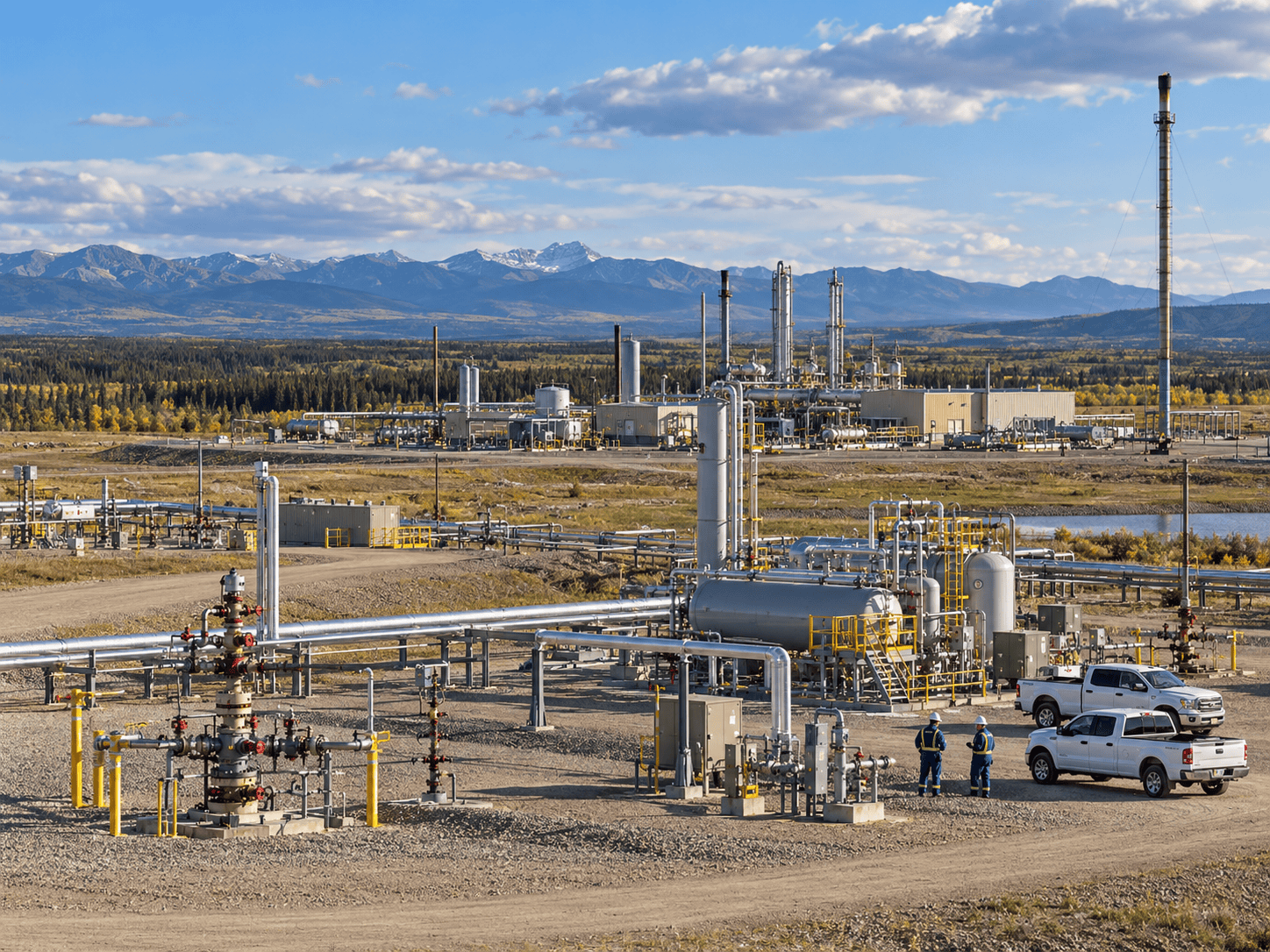
Natural gas production is a major part of Alberta’s energy industry, supporting drilling activity, gas processing plants, pipelines, industrial facilities and thousands of jobs throughout the province.
While Alberta is widely associated with oil sands production, the province is also Canada’s largest natural gas producing region.
According to the Alberta Energy Regulator, Alberta produced approximately 11.5 billion cubic feet of marketable natural gas per day in 2025. Production increased from the previous year, supported by continued development in northwestern Alberta, the Foothills and unconventional natural gas formations.
Much of the industry’s recent growth has come from horizontal wells drilled into formations such as the Montney and Duvernay.
However, these are not the only areas producing natural gas.
Alberta also has extensive conventional gas production in the Deep Basin, around Edson and Whitecourt, across Central Alberta and throughout the southern part of the province.
Different types of natural gas producers operate in these regions.
Some companies focus primarily on natural gas. Others produce significant volumes of condensate, natural gas liquids and crude oil alongside their gas production.
Large producers such as Tourmaline Oil, Shell, Ovintiv, Whitecap Resources and Canadian Natural Resources operate alongside specialized companies such as Peyto Exploration, Birchcliff Energy, Advantage Energy and Pine Cliff Energy.
Privately owned businesses also play an important role in maintaining production from Alberta’s mature natural gas fields.
This guide profiles 20 companies producing natural gas in Alberta, explains their principal operating areas and examines the different types of gas development taking place across the province.
The companies are grouped by the nature of their operations rather than ranked by production volume. Their production figures are not directly comparable in every case because some businesses report Canadian production across multiple provinces.
The information also reflects important ownership changes completed through October 2026, including Shell’s acquisition of ARC Resources and Ovintiv’s acquisition of NuVista Energy.
Major Natural Gas Producing Companies in Alberta
Alberta’s largest natural gas producers operate extensive networks of producing wells, pipelines, compressors and gas processing facilities.
Many have substantial drilling inventories and operate across several geological formations.
These companies can support large development programs involving multiple drilling rigs and well completion crews.
1. Tourmaline Oil
Tourmaline Oil is one of Canada’s most important natural gas producers and is headquartered in Calgary.
The company describes itself as Canada’s largest natural gas producer.
Tourmaline operates across Western Canada, with a particularly significant position in Alberta’s Deep Basin.
Its producing areas include parts of west central Alberta and the broader Foothills region.
The company also has substantial Montney operations in northeastern British Columbia.
Natural gas represents the majority of Tourmaline’s production, although the company also produces condensate, crude oil and natural gas liquids.
Tourmaline’s Alberta Deep Basin Operations
The Alberta Deep Basin is one of Tourmaline’s most important operating regions.
The company produces natural gas from several stacked geological formations, including sandstone reservoirs that can contain natural gas and associated liquids.
These formations allow Tourmaline to target different producing intervals using horizontal drilling.
The company also operates an extensive gas processing network.
Tourmaline reports ownership interests in numerous natural gas plants throughout the Alberta Deep Basin, including facilities it owns and operates independently.
This infrastructure is important because natural gas must often be processed before entering major transportation pipelines.
Raw production can contain natural gas liquids, water and other substances requiring removal or treatment.
Having access to its own processing infrastructure gives Tourmaline greater control over certain operating costs and production schedules.
Tourmaline has also expanded through acquisitions, including its purchase of Bonavista Energy in 2023.
Bonavista’s former properties should therefore be considered within Tourmaline’s broader operations rather than treated as a separate independent producer.
For Alberta’s drilling, completion and gas processing industries, Tourmaline remains a major customer for specialized oilfield services.
2. Shell Canada and ARC Resources
Shell became a substantially larger Canadian natural gas producer in September 2026 when it completed the acquisition of ARC Resources.
The acquisition was completed on September 2, 2026, following the required approvals.
ARC had been one of Canada’s leading independent natural gas and condensate producers.
Its assets included major Montney developments in Alberta and British Columbia.
The acquisition brought those producing assets into Shell’s Canadian energy business.
What Happened to ARC Resources?
ARC Resources is no longer an independently traded producer following the completed acquisition.
It became part of the Shell Group.
The ARC name remains recognizable because the company built a significant natural gas business over many years.
However, Shell is now the parent company.
That distinction is important when comparing current Alberta natural gas producers.
Shell and ARC should not be counted as two unrelated companies operating separate ownership groups.
Shell’s Alberta Natural Gas Operations
One of the important Alberta assets associated with the former ARC business is Kakwa.
Kakwa is located in northwestern Alberta and is part of the broader Montney development region.
The area produces natural gas, condensate and other associated liquids.
Development involves horizontal drilling and hydraulic fracturing.
ARC also developed significant production in British Columbia, including areas such as Dawson and Attachie.
Those British Columbia assets contribute to Shell’s broader Canadian production but should not be confused with Alberta production.
Shell’s acquisition gives it an extensive Montney position and adds to its existing Canadian natural gas business.
The transaction also connects substantial Western Canadian gas reserves with a company involved in international natural gas and LNG markets.
For Alberta, the ownership change is especially important because it places major producing assets under one of the world’s largest integrated energy companies.
3. Ovintiv
Ovintiv is a major North American oil and natural gas producer with extensive operations in Alberta’s Montney.
The company originated from the Canadian business formerly known as Encana.
Although Ovintiv now maintains its corporate headquarters in the United States, its Canadian operations remain substantial.
In Alberta, the company has a significant presence in the Montney region around Grande Prairie.
Its wells produce natural gas, condensate and other liquids.
Ovintiv has developed large horizontal drilling programs designed to access multiple sections of the reservoir from the same surface location.
The company’s operations also involve substantial gas gathering and processing infrastructure.
Ovintiv Acquired NuVista Energy in 2026
A major ownership change occurred on February 3, 2026, when Ovintiv completed its acquisition of NuVista Energy.
NuVista had been a significant producer in the Alberta Montney, particularly in the liquids rich portion of the formation.
The acquisition added substantial producing assets and undeveloped lands near Ovintiv’s existing operations.
This was strategically important because the acquired properties were located close to infrastructure and areas already being developed by Ovintiv.
Combining nearby operations can create opportunities to coordinate drilling programs, production facilities and equipment requirements.
NuVista should therefore not be listed as a separate independent natural gas producer following the acquisition.
Its former assets are part of Ovintiv’s Canadian business.
Ovintiv remains a major producer of Alberta natural gas, particularly in the northwestern part of the province.
4. Whitecap Resources
Whitecap Resources is a Calgary headquartered Canadian oil and natural gas producer with a diversified portfolio of producing assets.
The company has become considerably larger following its combination with Veren in May 2025.
That transaction expanded Whitecap’s natural gas and liquids production, particularly in Alberta.
The combined company has major positions in the Montney and Duvernay.
Its Alberta operating areas include natural gas and condensate producing properties in the northwestern part of the province, along with other conventional and unconventional assets.
Natural Gas Production in the Montney
Whitecap has important Montney development interests where horizontal wells produce natural gas and condensate.
The company has continued investing in production facilities and infrastructure needed to connect new wells.
Facility construction and expansion can be just as important as drilling.
A producer may have productive wells available, but those wells cannot necessarily operate at their intended capacity without enough gathering and processing infrastructure.
Whitecap’s development programs include investments in both wells and the facilities required to handle production.
The Duvernay Is Also Important
Whitecap has significant Duvernay assets in Alberta.
The Duvernay can produce natural gas, condensate and light oil, depending on the location of the well.
Whitecap’s 2026 operating updates describe continued activity in its unconventional producing areas.
The company also operates substantial conventional oil production, so it should be considered a diversified producer rather than a business focused exclusively on natural gas.
Its natural gas output nevertheless makes it one of the important participants in Alberta’s gas industry.
5. Canadian Natural Resources
Canadian Natural Resources, commonly known as CNRL or Canadian Natural, is one of Canada’s largest oil and natural gas producers.
The company is headquartered in Calgary and operates an extensive portfolio of petroleum assets.
Although Canadian Natural is particularly well known for oil sands and heavy oil production, natural gas is also an important part of its business.
The company produces natural gas from conventional and unconventional properties in Western Canada.
Its assets include producing regions in Alberta and British Columbia.
Canadian Natural’s gas operations involve both mature fields and areas with further development potential.
The company also operates natural gas gathering and processing infrastructure associated with its producing properties.
Conventional Natural Gas Production
Canadian Natural has extensive experience operating mature petroleum fields.
These properties can include natural gas wells that have been producing for many years.
Maintaining production requires ongoing work such as compressor maintenance, equipment replacement, well interventions and facility optimization.
The company also develops new wells where geological conditions and economics support additional production.
Canadian Natural’s natural gas business is part of a much larger organization whose capital spending also supports conventional oil, heavy oil and oil sands operations.
It is therefore important to distinguish its total corporate production from natural gas production specifically.
Nevertheless, Canadian Natural remains a significant company in Alberta’s natural gas industry because of its extensive operating footprint and long established production infrastructure.
Natural Gas Focused Producers in Alberta
Some Alberta producers concentrate much more heavily on natural gas than on crude oil.
These companies may operate extensive gas processing infrastructure or focus their drilling programs on formations where natural gas is the principal product.
6. Peyto Exploration & Development
Peyto Exploration & Development is a Calgary headquartered company specializing in natural gas production in Alberta’s Deep Basin.
The company has concentrated on this region for many years.
Its main producing areas include Greater Sundance and Brazeau River.
These properties are located in west central Alberta, with significant operations in the broader Edson region.
Peyto develops natural gas using horizontal drilling and hydraulic fracturing.
Its producing formations include several sandstone reservoirs within the Deep Basin.
Peyto Owns Extensive Gas Processing Infrastructure
One of the company’s distinguishing characteristics is its ownership of natural gas processing facilities.
Peyto operates an extensive network of gas plants and related infrastructure.
Its September 2026 corporate presentation identified 17 operated gas processing facilities.
Owning processing infrastructure allows the company to manage certain costs and control how production is handled.
Peyto also has a substantial developed land position in the Deep Basin.
The company has continued drilling and completing horizontal wells while adjusting its spending according to market conditions.
Natural Gas Marketing
Peyto is also involved in natural gas marketing arrangements designed to reduce dependence on local Alberta gas prices.
The company uses transportation agreements, commodity hedging and access to different natural gas markets.
This matters because the price producers receive can vary depending on where their gas is sold.
Peyto’s operations are particularly relevant to Alberta communities such as Edson, Whitecourt, Drayton Valley and surrounding petroleum producing areas.
7. Birchcliff Energy
Birchcliff Energy is a Calgary based oil and natural gas producer with operations concentrated in northwestern Alberta.
Its main producing areas include Pouce Coupe and Gordondale.
The company develops the Montney and related geological formations.
Natural gas represents the majority of Birchcliff’s production.
In its second quarter 2026 results, Birchcliff reported that natural gas accounted for approximately 84% of total production.
The remaining production consisted of condensate, oil and other natural gas liquids.
The Pouce Coupe Gas Plant
Birchcliff operates a major natural gas processing facility at Pouce Coupe.
The facility is central to the company’s production system.
Gas processing plants remove or separate various components from raw natural gas before the gas enters transportation pipelines.
Birchcliff completed a planned turnaround and optimization work at the Pouce Coupe facility during the second quarter of 2026.
The company also continued development drilling in its main producing areas.
Gordondale Development
Gordondale is another important part of Birchcliff’s business.
The company has targeted liquids rich natural gas wells in this area.
These wells can generate revenue from natural gas as well as condensate and other liquids.
That production mix can be important when Alberta natural gas prices are weak.
Birchcliff is a particularly relevant producer for companies working in the Grande Prairie region and nearby Montney development areas.
8. Advantage Energy
Advantage Energy is a Calgary headquartered natural gas and liquids producer with its principal producing operations in northwestern Alberta.
The company has significant assets around Glacier, Wembley, Valhalla and Progress.
Its development focuses on the Montney and related producing formations.
Advantage is one of the more specialized natural gas producers operating in Alberta.
Natural gas makes up a substantial portion of its production, although condensate and other liquids have become increasingly important to the business.
Glacier Natural Gas Development
Glacier is one of Advantage’s established producing areas.
The company operates a major gas processing facility associated with the development.
The plant handles production from surrounding wells and supports further drilling activity.
Advantage completed a planned turnaround at the Glacier facility during the second quarter of 2026.
The temporary shutdown affected quarterly production, but the company continued its broader development program.
Progress and Valhalla
Advantage has also been developing the Progress and Valhalla areas.
During 2026, the company completed and started operating its Progress Gas Plant.
The facility provides additional processing capacity and supports production from nearby properties.
Advantage also continued drilling and completing Montney wells in the Wembley and Valhalla areas.
The company’s operations require drilling, hydraulic fracturing, gas processing, pipeline construction and maintenance services.
Advantage remains an important gas producer in the broader Grande Prairie region.
9. Paramount Resources
Paramount Resources is a Calgary based oil and natural gas producer with major operations in Alberta.
The company is particularly active in the Duvernay and Montney.
Its principal operating areas include Willesden Green, Kaybob and Sinclair.
Paramount produces natural gas, condensate, crude oil and other liquids.
Although its production mix varies between properties, natural gas remains a major part of the business.
Willesden Green Duvernay
Willesden Green is an important development area for Paramount.
The company has invested in drilling, processing facilities and supporting infrastructure.
During 2026, Paramount expanded its Alhambra natural gas processing facility.
The second phase of the plant began operating in June.
The expansion increased the amount of natural gas and liquids the facility could handle.
Paramount also continued drilling and bringing new Duvernay wells into production.
Sinclair Montney Development
Sinclair is located west of Grande Prairie and represents another important natural gas development for Paramount.
The company has been developing the property and constructing the supporting infrastructure.
The proposed Sinclair Gas Plant is designed to handle substantial raw natural gas volumes.
Development work in 2026 included drilling, testing, engineering and construction activities.
The plant is planned to begin operating in 2027.
That timing is important because the development has not yet reached its intended future production capacity.
Paramount’s existing production and its planned Sinclair expansion should not be confused.
The company’s investments demonstrate how natural gas development involves both drilling wells and constructing the facilities needed to process and transport production.
10. Kelt Exploration
Kelt Exploration is a Calgary headquartered oil and natural gas producer with operations in Alberta and British Columbia.
The company develops natural gas and liquids producing properties in the Montney.
Its Alberta operations include the Wembley and Pipestone areas near Grande Prairie.
Kelt has continued expanding production through horizontal drilling and well completions.
The company’s 2026 operating updates describe continued drilling and completion activity in its core Montney areas.
Wembley and Pipestone
Wembley and Pipestone are important development areas because they contain natural gas and associated liquids.
Kelt drills horizontal wells into the Montney and uses hydraulic fracturing to improve production.
The company has also developed the infrastructure required to connect new wells to gathering and processing systems.
Kelt’s development programs involve multiple wells drilled from selected surface locations.
This creates demand for drilling contractors, fracturing companies, well testing providers and pipeline construction businesses.
The company’s production includes natural gas, condensate and other liquids.
Kelt is therefore best described as a natural gas and liquids producer rather than a business focused solely on dry natural gas.
Independent and Regional Natural Gas Producers
Not every important Alberta natural gas company operates a large national portfolio.
Several independent producers concentrate on specific geological formations or mature producing regions.
These businesses can be particularly important to local service companies because they continue operating wells and facilities in areas where larger producers may have reduced their activity.
11. Pine Cliff Energy
Pine Cliff Energy is a Calgary headquartered natural gas producer with properties throughout Alberta and Saskatchewan.
The company focuses heavily on conventional natural gas production.
Its Alberta assets include producing areas near Edson, Caroline, Ghost Pine and other parts of Central and Southern Alberta.
Pine Cliff has developed its business partly through acquiring mature natural gas properties.
These wells often have relatively stable production profiles compared with newly completed unconventional horizontal wells.
However, mature gas wells still require regular maintenance.
Managing Existing Natural Gas Wells
Pine Cliff’s operations involve gas gathering, compression, production optimization and well servicing.
The company also evaluates new drilling opportunities in selected areas.
Its 2026 operating reports describe continued production from existing fields and development opportunities involving formations such as the Glauconite.
Pine Cliff is particularly exposed to Alberta natural gas prices because gas represents a large portion of its business.
The company uses different marketing arrangements to sell gas into Alberta and other markets.
Pine Cliff is a useful example of how conventional natural gas production remains economically important in Alberta even as much of the industry’s attention has shifted toward the Montney.
12. Canlin Energy
Canlin Energy is a privately owned natural gas producer headquartered in Calgary.
The company operates conventional and unconventional natural gas properties throughout the Western Canadian Sedimentary Basin.
Its Alberta producing regions include the Foothills, West Central Alberta, the Peace River Arch and shallow gas fields in southeastern Alberta.
Canlin describes itself as a natural gas weighted producer.
Its operations include producing wells, gas processing facilities and gathering infrastructure.
Conventional Gas and Gas Processing
Canlin has experience operating mature conventional gas fields.
These properties can involve numerous wells connected through gathering pipelines to central processing facilities.
The company also operates infrastructure associated with sweet and sour natural gas processing.
Sour natural gas contains hydrogen sulphide and requires suitable processing and handling systems.
Canlin’s operations therefore include production and the facilities needed to prepare gas for transportation.
The company also has a history of coalbed methane and shallow natural gas development.
Canlin is privately held, so its public financial reporting differs from that of companies listed on the Toronto Stock Exchange.
Its current operating information nevertheless confirms that it remains an established natural gas producer in Alberta.
13. Ember Resources
Ember Resources is a Calgary headquartered company specializing in shallow natural gas production.
The company is particularly associated with coalbed methane development.
Coalbed methane is natural gas found within coal formations.
In Alberta, these resources have been developed in areas containing suitable coal seams.
Ember operates a large inventory of shallow natural gas wells.
Its producing properties are concentrated in Alberta.
Shallow Coalbed Methane Production
Ember’s operations differ significantly from the deep horizontal wells developed in the Montney.
Its wells are generally shallower and target different geological formations.
The company emphasizes natural gas production from the Horseshoe Canyon coal formations.
These wells typically have different drilling costs and production characteristics from deep unconventional horizontal gas wells.
Ember’s operations also involve gathering systems and compression equipment.
Because it manages a large number of wells, maintaining reliable field infrastructure is important.
A Different Natural Gas Business Model
Shallow natural gas development can involve relatively modest production from each individual well.
However, a large collection of wells can produce substantial combined volumes.
Ember’s business focuses on managing these assets efficiently.
The company also continues evaluating drilling opportunities and production optimization.
Ember demonstrates that Alberta’s natural gas industry includes much more than deep horizontal drilling.
Coalbed methane and conventional shallow gas remain important parts of the province’s producing infrastructure.
14. Petrus Resources
Petrus Resources is a Calgary based oil and natural gas producer with operations in Alberta.
The company’s principal producing areas include Ferrier and Harmattan.
These regions are located in Central Alberta and are associated with established petroleum production.
Petrus produces natural gas, oil, condensate and other natural gas liquids.
Natural gas makes up a significant part of its production.
During 2026, the company reported continued development and production growth in its principal operating areas.
Ferrier Development
Ferrier is an important part of Petrus’s business.
The company has developed wells targeting formations with natural gas and associated liquids.
Its operating updates describe drilling activity and production additions from this area.
Harmattan Operations
Petrus also expanded its operations through assets in the Harmattan region.
The company’s production includes both conventional and unconventional resource development.
Petrus has emphasized increasing production while managing drilling and infrastructure costs.
The company is an important regional producer because its operations support oilfield activity throughout Central Alberta.
15. Vermilion Energy
Vermilion Energy is a Calgary headquartered oil and natural gas producer with operations in Canada and several international markets.
The company has significant natural gas operations in Alberta.
Its Canadian assets include properties around West Pembina and the Peace River Arch.
The West Pembina region is located near Drayton Valley and contains established natural gas and liquids production.
Vermilion develops formations such as the Mannville.
West Pembina Natural Gas Development
The company’s West Pembina operations include natural gas wells producing condensate and other liquids.
These properties benefit from existing infrastructure and opportunities to develop additional geological intervals.
Vermilion also operates natural gas assets elsewhere in Western Canada.
Vermilion Acquired Westbrick Energy
A significant expansion occurred in February 2025 when Vermilion completed its acquisition of Westbrick Energy.
Westbrick had operated natural gas properties in Alberta’s Deep Basin.
The transaction added production and infrastructure located near Vermilion’s existing Canadian operations.
Westbrick should therefore not be counted as a separate independent producer following the acquisition.
Its former assets are part of Vermilion.
Vermilion is unusual because it produces natural gas in both Canada and Europe.
The company sells gas into different markets, which can result in different realized prices.
Its Alberta operations remain an important part of its broader natural gas business.
16. Spartan Delta
Spartan Delta is a Calgary headquartered oil and natural gas producer with assets in Alberta.
The company operates in the Deep Basin, the Peace River Arch and other producing areas.
Spartan’s business includes natural gas, condensate and crude oil production.
Its asset base has evolved through acquisitions and development programs.
Deep Basin Natural Gas
The Deep Basin is one of Spartan’s important operating regions.
The company produces natural gas from established formations and develops additional wells where economics are attractive.
Spartan also operates infrastructure associated with its properties.
The company has been shifting some development emphasis toward liquids rich and oil producing opportunities.
Its second quarter 2026 update described increasing oil and condensate production in the Deep Basin.
That does not mean Spartan has stopped producing natural gas.
Instead, natural gas remains part of a portfolio that also includes liquids and crude oil.
Spartan is an example of a producer adjusting its development plans according to commodity prices and the relative economics of different formations.
Other Alberta Producers With Natural Gas Production
Several additional companies primarily emphasize oil or a combination of oil and natural gas, but still produce meaningful quantities of natural gas in Alberta.
These businesses are included because gas production remains a material part of their operations.
They should not all be considered gas focused companies.
17. Yangarra Resources
Yangarra Resources is a Calgary based oil and natural gas producer focused on Alberta.
Its principal operating areas include Willesden Green, O’Chiese, Ferrier, Chambers and surrounding regions.
Yangarra produces oil and natural gas from formations such as the Cardium and Belly River.
The company has continued drilling and completing wells in these producing areas.
Its 2026 updates describe activity in both formations.
Yangarra has also been expanding development of the Belly River.
The company produces a combination of oil, natural gas and natural gas liquids.
It is not exclusively a natural gas producer, but gas forms part of its overall production mix.
Yangarra’s operations are concentrated in Central Alberta, making it a regional producer connected to established drilling, completion and production infrastructure.
18. Journey Energy
Journey Energy is a Calgary headquartered producer focused on Alberta.
The company develops and operates conventional oil and natural gas assets.
Its operations include properties in Central Alberta and selected unconventional development interests.
Journey’s production includes natural gas, crude oil and natural gas liquids.
In the second quarter of 2026, natural gas accounted for approximately 38% of the company’s total production on an energy equivalent basis.
However, Journey has been increasing its emphasis on oil production.
The company has continued developing Duvernay light oil opportunities and disposing of selected natural gas assets.
This shift reflects the difference between production volume and production revenue.
Natural gas may account for a substantial portion of a company’s energy equivalent production while contributing a smaller share of revenue when gas prices are weak.
Journey remains an Alberta natural gas producer, but its current strategy increasingly emphasizes oil and liquids.
19. Prairie Provident Resources
Prairie Provident Resources is a Calgary based company producing oil and natural gas in Alberta.
The business operates conventional petroleum properties and focuses on managing mature producing assets.
Prairie Provident’s production includes crude oil, natural gas and natural gas liquids.
During 2026, the company emphasized production optimization and maintenance rather than major new drilling activity.
These operations can involve repairing existing wells, improving equipment performance and maintaining gathering facilities.
Conventional gas fields often require continuing investment in compression and production maintenance.
Even where new drilling is limited, producers still need service rigs, instrumentation technicians, pipeline maintenance and gas processing support.
Prairie Provident is a smaller producer than the major Montney companies.
Its inclusion reflects the continuing importance of conventional natural gas production across Alberta.
20. Obsidian Energy
Obsidian Energy is a Calgary headquartered oil and natural gas producer with operations concentrated in Alberta.
The company is more heavily weighted toward crude oil than natural gas.
Its principal producing areas include Peace River and Willesden Green.
Obsidian develops oil producing formations such as the Clearwater, Belly River and Cardium.
Natural gas is also produced from its Alberta properties.
The company reported natural gas production guidance of approximately 50 million cubic feet per day in its September 2026 operational update.
Natural Gas From Diversified Oil Production
Obsidian’s gas production is part of a broader oil focused business.
Some of its wells produce natural gas alongside crude oil and natural gas liquids.
Other producing properties can have a different gas and liquids composition.
The company’s principal growth investments are currently directed toward oil producing opportunities.
Obsidian is therefore not directly comparable with natural gas focused companies such as Peyto or Ember.
Nevertheless, it remains part of Alberta’s producing natural gas sector.
Where Is Natural Gas Produced in Alberta?
Natural gas production occurs throughout much of Alberta, but several geological regions are especially important.
The type of development varies between these regions.
Montney Natural Gas Producers Near Grande Prairie
The Montney is one of Canada’s most important natural gas formations.
In Alberta, major development occurs around Grande Prairie, Wembley, Pipestone, Kakwa and surrounding areas.
Companies associated with Alberta Montney production include Shell through ARC Resources, Ovintiv, Whitecap, Advantage, Birchcliff and Kelt.
Tourmaline also has major Montney production in northeastern British Columbia.
Montney wells are commonly drilled horizontally and completed using multistage hydraulic fracturing.
The formation can contain significant quantities of condensate and other natural gas liquids.
This liquids production is important because it can improve the economics of developing the natural gas.
Grande Prairie has become a major service centre for the drilling, completion, pipeline and gas processing work associated with the Montney.
Deep Basin Natural Gas Producers
The Alberta Deep Basin extends through a large part of west central Alberta.
Important producing areas include Edson, Whitecourt, Sundance, Brazeau and surrounding regions.
Major producers include Tourmaline and Peyto.
Vermilion, Spartan, Canlin and other companies also operate assets associated with this broader region.
The Deep Basin contains multiple geological formations capable of producing natural gas.
Some reservoirs are developed through horizontal drilling and fracturing.
Others contain older conventional production.
The region also has extensive existing gas gathering and processing infrastructure.
Duvernay Natural Gas Producers
The Duvernay is an important unconventional formation in Alberta.
Development occurs in several areas, including Kaybob, Fox Creek and Willesden Green.
Companies associated with Duvernay production include Whitecap, Paramount and other operators with assets in the formation.
Duvernay wells can produce natural gas, condensate and crude oil.
The production mix depends on the location within the formation.
Some parts are more gas rich, while others are more oil rich.
This makes it important not to describe every Duvernay operator as a dry natural gas producer.
Central Alberta Conventional Gas Producers
Central Alberta contains numerous mature natural gas fields.
Producing areas include Caroline, Ferrier, Harmattan, Ghost Pine, Drayton Valley and other communities.
Companies associated with these fields include Pine Cliff, Petrus, Canlin, Vermilion, Yangarra, Journey and Prairie Provident.
These operations can involve maintaining older gas wells as well as drilling into additional producing intervals.
Conventional production remains important because Alberta already has extensive wells, gathering pipelines and processing plants in these regions.
Southern Alberta Natural Gas Producers
Southern Alberta has a long history of conventional natural gas production.
Producing regions include Medicine Hat and surrounding areas.
Shallow natural gas and coalbed methane development are also important in parts of the province.
Ember and Canlin are examples of companies with operations associated with shallow and conventional gas resources.
Pine Cliff also operates southern Alberta gas assets.
Many wells in these areas have very different production characteristics from deep Montney wells.
Maintenance costs, well declines and operating infrastructure therefore play an important role in project economics.
Natural Gas Production Is Different From Gas Processing
A company producing natural gas is not necessarily the same business that transports or processes it.
This distinction is important when researching Alberta energy companies.
Natural gas producers own or operate wells that extract gas from underground formations.
Gas processing companies operate facilities that separate or treat components of the produced gas.
Pipeline companies transport gas from producing regions toward industrial customers, storage facilities and major markets.
Some producers also own their own processing plants.
Tourmaline, Peyto, Birchcliff, Advantage and Paramount are examples of producers with substantial processing infrastructure associated with their wells.
Other producers rely partly on facilities operated by separate businesses.
Companies such as Keyera, Pembina Pipeline, AltaGas and TC Energy have important roles in Canada’s natural gas transportation and processing industry.
However, they should not automatically be included in a list of upstream natural gas producers simply because they handle large quantities of gas.
Their main businesses differ from companies drilling and operating producing wells.
How Alberta Natural Gas Reaches Customers
Once natural gas is produced, it often requires processing before being transported.
Raw gas may contain water vapour, condensate, hydrogen sulphide, carbon dioxide or other components.
Processing facilities remove or treat these materials according to the gas composition and pipeline requirements.
The marketable gas then enters gathering and transportation systems.
Alberta has an extensive network of pipelines connecting producing regions to markets.
Natural gas can be delivered to customers within Alberta or transported to other Canadian provinces and the United States.
Alberta also connects with the broader Western Canadian gas transportation system.
Canadian LNG exports have introduced another market for Western Canadian natural gas, although not every Alberta producer has direct access to an LNG export terminal.
A producer may sell into regional markets, transport gas to a different pricing hub or enter into longer term sales agreements.
These commercial arrangements affect the price received for production.
Why Alberta Natural Gas Prices Matter
Natural gas prices are one of the most important factors influencing drilling and production decisions.
Many Alberta producers sell gas at prices influenced by the AECO market.
AECO is a major natural gas trading and pricing hub in Alberta.
However, not every producer receives exactly the same price.
Some companies have transportation arrangements that allow gas to be sold in other markets.
Others use financial hedging to manage commodity price risk.
The composition of production also matters.
A company producing condensate alongside natural gas may receive substantial revenue from the liquids.
That can improve well economics even when local gas prices are relatively weak.
This is one reason companies operating in the liquids rich Montney may make different drilling decisions from producers developing shallow dry gas.
Peyto, Birchcliff, Tourmaline, ARC before its acquisition by Shell, and several other producers have discussed natural gas market diversification in their corporate reporting.
For Alberta’s oilfield service industry, gas prices matter because they influence how much producers are willing to spend on drilling, completions and infrastructure.
Natural Gas Producers and the LNG Market
Canada’s LNG industry has become increasingly important to Western Canadian natural gas markets.
LNG Canada began exporting liquefied natural gas from Kitimat, British Columbia, in 2025.
The project provides a route for Western Canadian natural gas to reach overseas markets.
However, the relationship between Alberta gas production and LNG exports is not as simple as assuming every producer can send gas directly to the coast.
Natural gas must have access to suitable pipelines and transportation capacity.
LNG facilities also require commercial supply arrangements.
Much of the natural gas supporting LNG Canada comes from northeastern British Columbia.
Nevertheless, the broader Western Canadian gas market is interconnected.
Additional export demand can influence regional gas balances and transportation requirements.
The potential benefits for an individual Alberta producer depend on its location, transportation access, pricing arrangements and production costs.
Some producers may benefit through improved broader market conditions without physically delivering their gas to an LNG terminal.
Alberta Natural Gas Producers Create Work for Many Service Companies
Natural gas producers are customers for a substantial part of Alberta’s oilfield service industry.
Developing a new gas well can require numerous contractors.
Drilling companies supply rigs and crews.
Directional drilling companies help guide horizontal wells.
Cementing contractors install and isolate casing.
Hydraulic fracturing companies stimulate suitable reservoirs.
Wireline contractors provide logging and perforating.
Coiled tubing companies perform cleanouts and well interventions.
Well testing companies measure production and help manage flowback.
Pipeline contractors install gathering systems.
Gas processing plants require mechanical, electrical and instrumentation work.
The needs continue after the well enters production.
Compressors require maintenance.
Processing plants need periodic turnarounds.
Pipelines require inspection.
Producing wells may need repairs or interventions.
As a result, natural gas production supports employment and business activity far beyond the drilling stage.
Grande Prairie, Edson, Whitecourt, Red Deer, Drayton Valley, Fox Creek and other Alberta communities are closely connected to this work.
How to Compare Natural Gas Producers in Alberta
Comparing producers requires care because different companies report different types of information.
Natural Gas Production Volume
A company may report gas production in millions of cubic feet per day.
Another may report total production in barrels of oil equivalent.
These figures are not directly interchangeable without an appropriate conversion.
Total barrels of oil equivalent production can also include substantial crude oil and natural gas liquids.
A company with high total production is not necessarily producing more natural gas than a smaller gas focused operator.
Alberta Production Versus Canadian Production
Some companies report natural gas production for all their Canadian operations.
That may include both Alberta and British Columbia.
For a comparison focused only on Alberta, the production attributable to the province must be separated.
This is particularly important for companies with extensive Montney properties on both sides of the provincial boundary.
Operated Production Versus Working Interest Production
Companies may own interests in wells operated by other producers.
A company can therefore have production associated with a well without operating the well directly.
Some public disclosures distinguish gross operated volumes from net production attributable to the company.
These differences matter when comparing producers.
Dry Gas Versus Liquids Rich Gas
Not every natural gas reservoir produces the same mixture of hydrocarbons.
Dry natural gas contains relatively little recoverable natural gas liquids.
Liquids rich gas can provide additional condensate and liquids revenue.
The production mix affects operating economics and development decisions.
Processing Infrastructure
Some producers own large gas processing networks.
Others pay third parties to gather and process their gas.
Ownership of infrastructure can affect operating costs and the flexibility to expand production.
However, it also requires capital spending and ongoing maintenance.
Frequently Asked Questions About Natural Gas Producers in Alberta
Who Is the Largest Natural Gas Producer in Alberta?
Tourmaline Oil is Canada’s largest natural gas producer and has a particularly significant position in Alberta’s Deep Basin.
A precise ranking of Alberta only production requires comparing production attributable specifically to Alberta, rather than company totals that may include British Columbia.
What Are the Major Natural Gas Companies in Alberta?
Major producers include Tourmaline Oil, Shell through ARC Resources, Ovintiv, Whitecap Resources, Canadian Natural Resources, Peyto Exploration, Birchcliff Energy, Advantage Energy, Paramount Resources and Kelt Exploration.
Several smaller and privately owned producers also operate throughout the province.
Which Companies Produce Natural Gas Near Grande Prairie?
Companies with major natural gas development interests in the broader Grande Prairie region include Ovintiv, Shell through ARC Resources, Whitecap, Birchcliff, Advantage, Paramount and Kelt.
The exact operating areas differ between companies.
Which Companies Produce Natural Gas in the Deep Basin?
Tourmaline and Peyto are major Deep Basin producers.
Other companies with operations associated with the region include Vermilion, Spartan Delta and Canlin.
Which Companies Produce Natural Gas Near Edson and Whitecourt?
Peyto and Tourmaline have substantial Deep Basin operations.
Pine Cliff, Canlin and other producers also operate in west central Alberta.
The region contains both conventional gas fields and newer horizontal development.
Which Companies Produce Natural Gas in Southern Alberta?
Ember Resources specializes in shallow natural gas.
Canlin and Pine Cliff also have conventional and shallow gas interests in Southern Alberta.
Is ARC Resources Still an Independent Company?
No.
Shell completed its acquisition of ARC Resources on September 2, 2026.
ARC is now part of the Shell Group.
Its producing assets remain relevant, but the ownership changed.
Is NuVista Energy Still an Independent Natural Gas Producer?
No.
Ovintiv completed its acquisition of NuVista Energy on February 3, 2026.
NuVista’s former Alberta Montney assets are now part of Ovintiv’s Canadian operations.
What Happened to Bonavista Energy?
Tourmaline Oil completed its acquisition of Bonavista Energy in 2023.
The former Bonavista assets became part of Tourmaline’s broader operating portfolio.
Bonavista should not be counted as a separate independent producer when evaluating current ownership.
Who Owns Westbrick Energy?
Vermilion Energy acquired Westbrick Energy in February 2025.
The acquired properties became part of Vermilion’s Canadian operations.
What Is the Difference Between a Natural Gas Producer and a Pipeline Company?
A natural gas producer operates wells that extract gas from underground formations.
A pipeline company transports gas through pipelines.
Some businesses perform both activities, but producing and transporting gas are different parts of the energy industry.
Do Natural Gas Producers Also Produce Oil?
Many do.
Natural gas wells can produce condensate and other natural gas liquids.
Some companies also operate separate crude oil developments.
The exact production mix varies by company and geological formation.
Where Are Most New Natural Gas Wells Being Drilled in Alberta?
Northwestern Alberta and the Foothills are important areas for current natural gas development.
The Montney and other unconventional formations account for a substantial portion of recent activity.
Conventional gas production continues in Central and Southern Alberta.
Do Natural Gas Producers Hire Oilfield Service Companies?
Yes.
Producers hire drilling contractors, hydraulic fracturing companies, cementing contractors, service rig operators, pipeline companies, gas processing specialists and many other businesses.
The required services depend on the company’s drilling and production programs.
The Future of Natural Gas Production in Alberta
Alberta’s natural gas industry is evolving as producers develop deeper and more technically demanding reservoirs while continuing to operate extensive conventional gas fields.
The Montney remains a major source of new production.
The Deep Basin continues supporting companies with substantial processing infrastructure and established producing assets.
The Duvernay provides additional natural gas production alongside condensate and crude oil.
Meanwhile, shallow gas and coalbed methane production remain important in parts of Central and Southern Alberta.
The companies involved are also changing.
Shell’s acquisition of ARC Resources and Ovintiv’s acquisition of NuVista have consolidated major Montney assets under larger organizations.
Whitecap’s combination with Veren has also changed the ownership structure of Alberta’s producing industry.
Tourmaline has expanded through acquisitions while continuing development of its existing operations.
Smaller natural gas companies remain important because they manage producing wells and infrastructure across mature fields.
These businesses often focus on operating efficiency, maintaining production and extending the useful life of existing assets.
The future pace of development will depend on natural gas prices, drilling economics, transportation capacity, processing infrastructure and access to customers.
LNG exports, industrial demand, electricity generation and broader North American market conditions may influence those decisions.
For Alberta’s oilfield workers and service companies, the most important factor is where producers actually commit money to drilling, completions and facilities.
A producer announcing potential drilling locations is not the same as a company actively drilling wells.
A proposed gas processing plant is not the same as a facility that has entered production.
These distinctions matter when evaluating future activity.
What remains clear is that Alberta has a broad and diverse natural gas producing industry.
Large companies operate extensive horizontal development programs and processing networks.
Regional producers manage established conventional fields.
Specialized businesses develop shallow gas resources and liquids rich formations.
Together, these companies supply natural gas used for residential heating, industrial manufacturing, electricity generation and energy exports.
From Grande Prairie and the Montney to Edson, Whitecourt, Drayton Valley, Medicine Hat and the conventional fields of Central Alberta, natural gas production continues to support an important part of the province’s economy.
The companies involved may differ considerably in size, ownership and geological focus, but they share a common role in developing and producing one of Alberta’s most important energy resources.