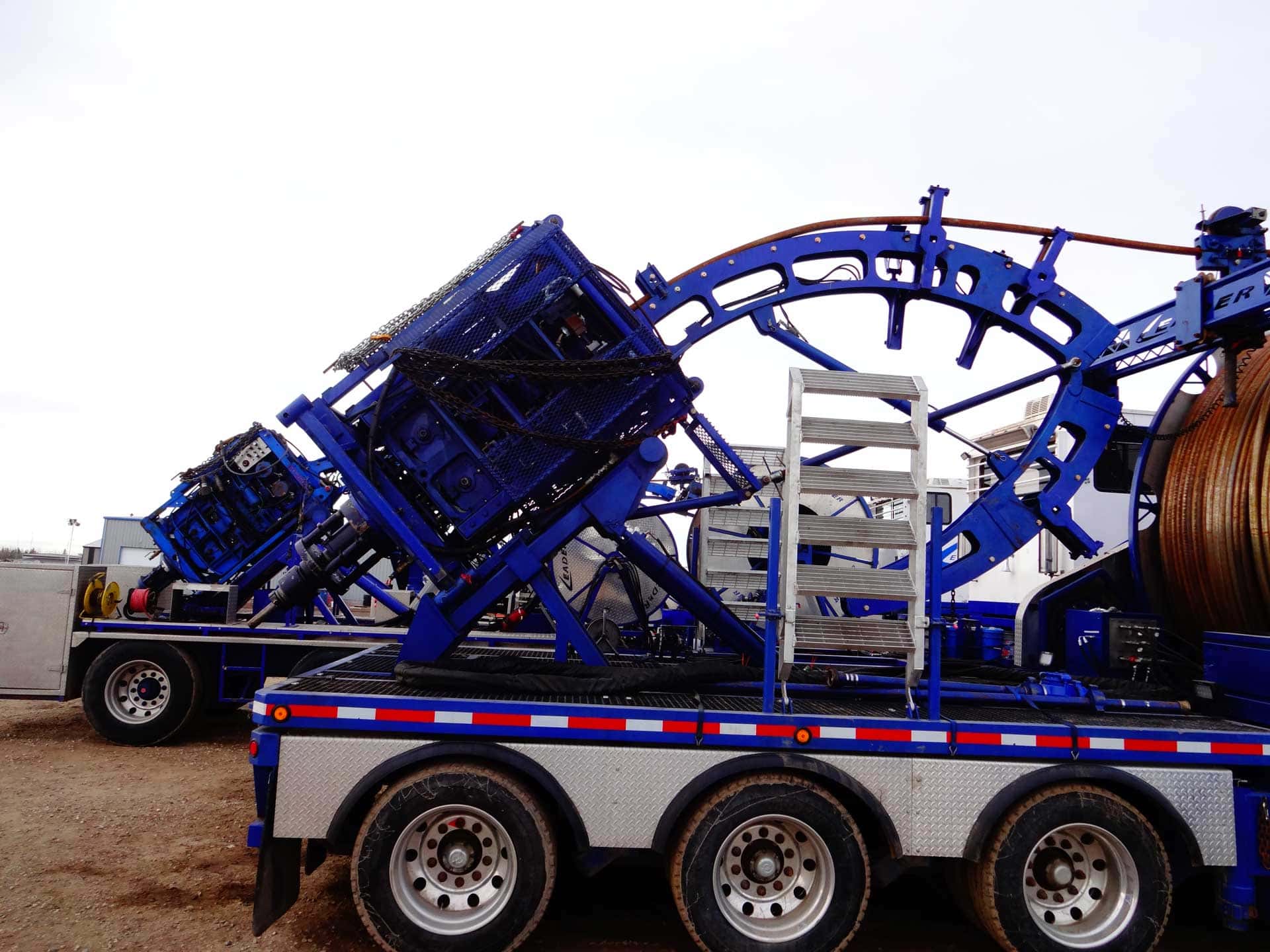
Coiled tubing is a specialized but increasingly important part of Alberta’s oil and gas service industry.
The technology allows a continuous length of steel tubing to be deployed into an oil or natural gas well without assembling conventional jointed pipe one section at a time. Coiled tubing can be used for cleanouts, milling, well interventions, stimulation support, nitrogen operations and abandonment work.
Its importance has increased as Alberta producers have moved toward longer horizontal wells, particularly in western and northwestern Alberta.
Choosing the top coiled tubing companies is not as simple as ranking them by size. Several providers are privately owned, comparable Alberta fleet information is not always publicly available and acquisitions have changed the competitive landscape.
For that reason, this article does not claim to provide an exact ranking from largest to smallest. Instead, it highlights several established coiled tubing providers with verified operations serving Alberta.
STEP Energy Services
STEP Energy Services is one of the most recognizable coiled tubing providers operating in Alberta.
Headquartered in Calgary, STEP provides coiled tubing, hydraulic fracturing, fluid pumping and nitrogen services across North America. The company began with a focus on deep capacity coiled tubing and continues to make extended reach intervention a major part of its business.
STEP describes itself as North America’s largest deep capacity coiled tubing provider.
This capability has become particularly relevant as horizontal wells have grown longer. Reaching farther into these wells creates challenges involving tubing weight, friction and equipment capacity.
STEP has responded by developing larger capacity equipment and technologies intended for extended reach operations.
The company also provides electronic line capabilities and real time intervention monitoring, allowing information from an operation to be evaluated while the work is taking place.
STEP has a substantial Alberta footprint. In addition to its Calgary head office, the company lists Alberta locations in the Grande Prairie area, Blackfalds and Red Deer.
For Alberta producers developing long horizontal wells, particularly in the western portion of the province, STEP is one of the major coiled tubing providers to know.
Calfrac Well Services
Calfrac Well Services is another major Calgary based oilfield service company with established coiled tubing operations in Alberta.
Calfrac is widely associated with hydraulic fracturing, but coiled tubing is also an important part of its Canadian service offering.
Its coiled tubing services include applications such as well interventions, milling and abandonment work.
The company has invested in technology that provides operators with information during coiled tubing operations. This includes real time monitoring capabilities designed to provide better visibility into wellbore conditions and fluid returns.
Calfrac’s physical presence across Alberta is one of its strengths.
The company currently lists operations in Grande Prairie, Clairmont, Red Deer and Medicine Hat, in addition to its Calgary corporate headquarters and technology centre.
It also maintains dedicated coiled tubing contact operations for Grande Prairie and for the Red Deer and Medicine Hat regions.
This geographic coverage allows Calfrac to serve several distinct Alberta producing areas rather than concentrating exclusively on one region.
Trican Well Service and Iron Horse Energy Services
Trican Well Service became considerably more important to the Canadian coiled tubing market through its acquisition of Iron Horse Energy Services.
The transaction was completed in August 2025.
This is an important correction when discussing Alberta’s major coiled tubing companies today. Iron Horse should not be presented as an independent competitor without explaining that it is now owned by Trican.
Trican described Iron Horse at the time of the acquisition as a provider of fracturing and coiled tubing services operating across the Western Canadian Sedimentary Basin.
The acquisition brought Trican established coiled tubing expertise alongside its existing pressure pumping business.
Iron Horse had developed experience in several important Western Canadian producing areas, including the Cardium, Montney, Viking and other formations.
For Alberta producers, the combination is significant because it places coiled tubing capabilities within one of Canada’s larger well service organizations.
It also illustrates the consolidation occurring within Alberta’s completion services industry.
Rather than treating Trican and Iron Horse as two unrelated companies in a current list, it is more accurate to view the Iron Horse operation as part of Trican’s broader service platform.
Bear Coil
Bear Coil provides an interesting contrast to Alberta’s larger publicly traded service companies.
Based in Grande Prairie, Bear Coil specializes in coiled tubing and related well intervention services and serves customers in Alberta and British Columbia.
Its location places the company close to one of the busiest areas for modern natural gas and liquids development in Western Canada.
Bear Coil advertises coiled tubing capabilities for bridge plug milling, frac port milling, wellbore cleanouts, nitrogen operations, velocity strings, hydrate removal, abandonment and wellbore remediation.
The company also emphasizes equipment designed for deep wells and extended reach applications.
This focus is particularly relevant around Grande Prairie, where increasingly long horizontal wells create demanding intervention requirements.
Bear Coil demonstrates an important feature of Alberta’s oilfield service sector.
The market is not controlled exclusively by large national companies.
Regional specialists can compete by concentrating on particular services, maintaining equipment suited to local well designs and building experience in the producing areas surrounding their operating bases.
Why Grande Prairie Is So Important to Coiled Tubing
Grande Prairie appears repeatedly when researching Alberta coiled tubing operations.
That is not a coincidence.
Northwestern Alberta has become one of the province’s most important areas for natural gas and liquids development. The Alberta side of the Montney has attracted significant drilling activity, while other formations in the region also support a large oilfield service economy.
Modern development commonly involves horizontal wells drilled from multiwell pads.
As those wells become longer, the equipment required to complete and later intervene in them must evolve as well.
This creates demand for deep capacity coiled tubing equipment, specialized downhole tools, experienced crews and sophisticated engineering.
As a result, Grande Prairie and nearby Clairmont have become important operating locations for companies serving this market.
Calgary Still Plays an Important Role
Much of the physical coiled tubing work takes place far outside Calgary, but Calgary remains closely connected to the sector.
STEP, Calfrac and Trican are all headquartered in Calgary.
Engineering, equipment planning, finance, corporate management and technology development can therefore take place in Calgary even when the equipment itself is working near Grande Prairie or elsewhere in Western Canada.
This relationship is common throughout Alberta’s oil and gas industry.
Calgary functions as the corporate and technical centre while field bases place equipment and crews closer to producing areas.
What Is Coiled Tubing Used for in Alberta?
Coiled tubing is valuable because it can perform many different types of well intervention work.
One common application is cleaning material from a wellbore.
Another is milling equipment left in the well following completion operations.
Coiled tubing can also be used to circulate fluids, deploy certain downhole tools, perform nitrogen operations and assist with well abandonment.
The exact equipment required depends on the well.
A relatively straightforward intervention on an older conventional well is very different from attempting to reach deep into a modern horizontal well.
That is why equipment capacity and engineering experience matter when evaluating providers.
Longer Horizontal Wells Are Changing the Business
One of the biggest forces shaping Alberta’s coiled tubing sector is extended reach drilling.
Producers are continually looking for ways to recover more hydrocarbons while making better use of surface infrastructure.
Longer horizontal sections can allow more reservoir to be contacted from the same drilling pad.
However, longer wells also create new challenges.
Getting coiled tubing farther along a horizontal well becomes increasingly difficult as friction builds between the tubing and the wellbore.
Service companies have responded with larger reels, different tubing configurations, specialized downhole technology and improved modelling.
This means the competitive advantage in coiled tubing increasingly involves more than simply having equipment available.
Engineering capability, tubing management, reliability and experience with extended reach operations can be equally important.
Coiled Tubing Is Also Important for Mature Alberta Wells
Not every coiled tubing job involves a new Montney well.
Alberta has been producing oil and natural gas for generations, which means the province also has a large population of mature wells.
Those wells can require intervention during their productive lives.
Eventually, some will require abandonment.
Coiled tubing can play a role in certain abandonment and remediation operations, creating another source of demand for service providers.
This is important because Alberta’s oilfield service industry is gradually becoming more diversified between work associated with new development and work associated with maintaining or closing existing infrastructure.
How Should Alberta Producers Compare Coiled Tubing Providers?
There is no credible way to declare one company the best choice for every Alberta well.
The appropriate provider depends on the operation.
For an extended reach horizontal well, depth and lateral reach capability can be critical.
For other work, equipment availability, pumping support, local crews and experience with a particular type of intervention may matter more.
Operators can also consider safety performance, equipment condition, engineering support, tubing integrity programs and experience in comparable wells.
Location matters as well.
Having equipment and experienced personnel positioned close to an active producing region can improve logistics and responsiveness.
Who Are the Top Coiled Tubing Companies in Alberta?
Based on currently verifiable operations, several names stand out.
STEP Energy Services has a major position in deep capacity and extended reach coiled tubing and maintains multiple Alberta operating locations.
Calfrac Well Services combines coiled tubing with a substantial Alberta pressure pumping presence and operates from several locations across the province.
Trican Well Service strengthened its position in coiled tubing through its completed acquisition of Iron Horse Energy Services.
Bear Coil represents the specialized Grande Prairie based segment of the market and focuses closely on coiled tubing and well intervention.
There are other contractors capable of performing specialized work in Alberta, and the market continues to change through acquisitions, equipment additions and shifting drilling activity.
For that reason, any list claiming to rank every Alberta provider precisely from largest to smallest should be treated cautiously unless comparable current fleet and operating data are available.
Alberta’s Coiled Tubing Industry Is Becoming More Specialized
The direction of the industry is clear.
Alberta producers are drilling increasingly sophisticated wells, particularly in the western part of the province.
Those wells create increasingly difficult intervention requirements.
At the same time, thousands of mature wells across Alberta require maintenance, remediation and eventually closure.
Coiled tubing sits at the intersection of these two markets.
Companies must be capable of working on some of Canada’s newest and longest horizontal wells while also supporting an enormous inventory of existing oil and gas infrastructure.
That combination should keep coiled tubing an important part of Alberta’s oilfield service industry.
Calgary will remain important as the corporate and engineering centre for several major providers, while Grande Prairie and other field service centres will remain critical locations for equipment and crews.
As Alberta well designs continue to evolve, the companies capable of safely reaching farther into increasingly complex wells are likely to become even more important to the province’s energy industry.