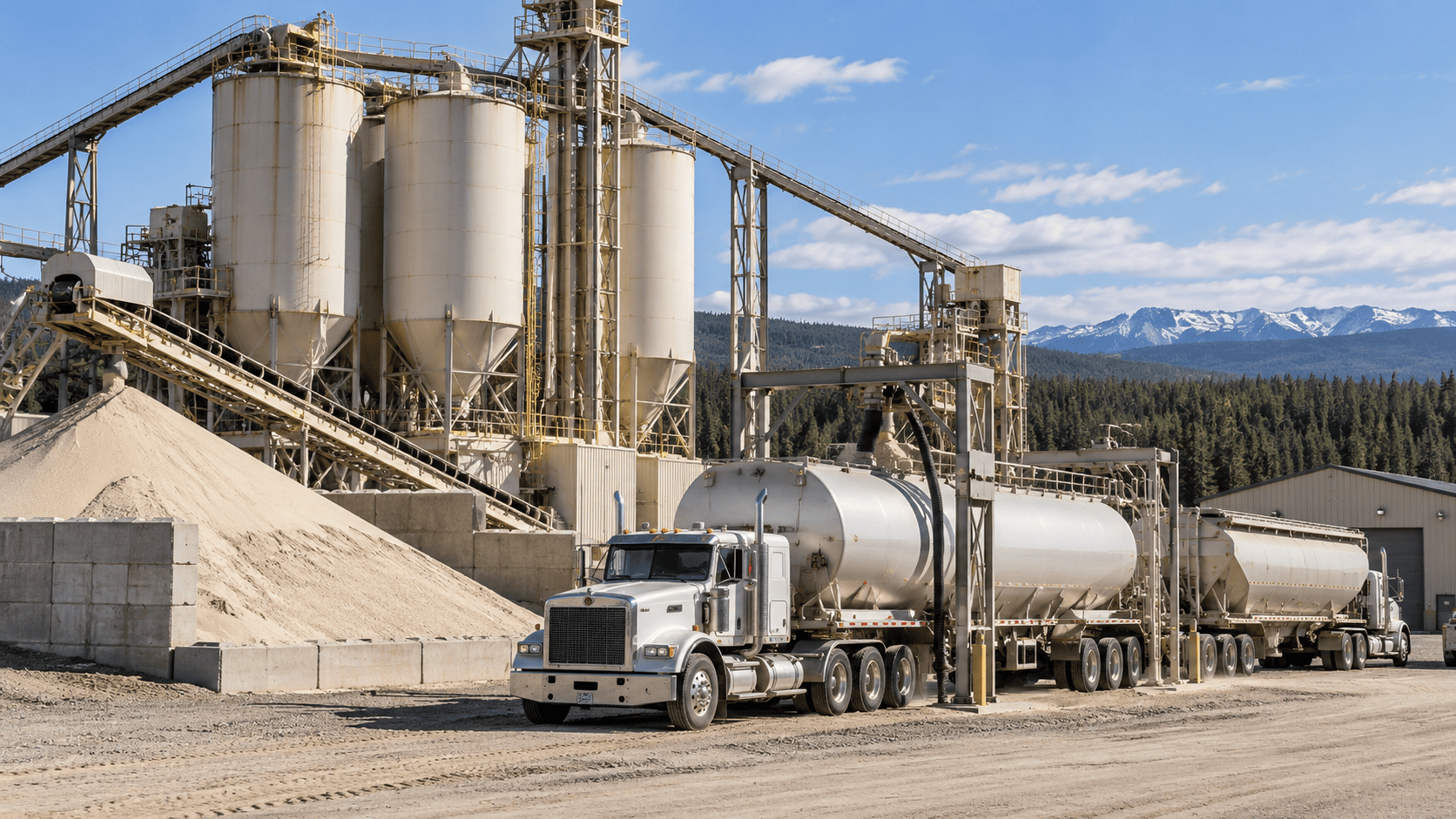
Frac sand is one of the most important materials used in hydraulic fracturing operations across Alberta.
Every year, oil and natural gas producers require substantial quantities of specialized sand to complete horizontal wells in formations such as the Montney, Duvernay, Cardium and other unconventional reservoirs.
Unlike ordinary construction sand, frac sand must meet demanding technical requirements.
The grains must have suitable size distribution, shape, strength and cleanliness to withstand the conditions encountered during hydraulic fracturing and subsequent oil and natural gas production.
Once pumped underground with fracturing fluid, the sand helps keep fractures open, allowing hydrocarbons to move through the reservoir toward the wellbore.
As Alberta’s unconventional oil and natural gas industry has developed, demand for frac sand has supported a specialized network of mining companies, processing facilities, rail terminals, trucking contractors and wellsite storage providers.
Some businesses produce frac sand from deposits within Alberta.
Others import premium Northern White sand from the United States and distribute it through rail terminals.
There are also companies that specialize in transporting, storing and handling proppant during hydraulic fracturing operations.
These businesses perform different functions, but all contribute to the supply chain supporting modern well completions.
This guide examines 20 companies involved in frac sand supply, proppant production, transportation, transloading and related services in Alberta.
The companies are grouped by their actual operations rather than ranked by size.
An important distinction is that not every company listed mines or sells frac sand. Some operate terminals or provide transportation services for materials purchased from separate producers.
Understanding those differences is essential when selecting a supplier for an Alberta drilling and completion program.
What Is Frac Sand and Why Is It Used?
Frac sand is a specialized granular material used as a proppant during hydraulic fracturing.
Hydraulic fracturing involves pumping fluid into a geological formation at sufficient pressure to create or extend fractures in the rock.
The fluid carries proppant into those fractures.
When pumping pressure is reduced, the proppant helps prevent the fractures from closing completely.
This creates conductive pathways that allow oil or natural gas to flow toward the producing well.
Without suitable proppant, many of the fractures created during the treatment would lose conductivity as formation stresses act on the rock.
Frac sand is particularly important in tight formations where natural permeability is too low to support economical production without stimulation.
Properties of High Quality Frac Sand
Suitable frac sand must possess several important characteristics.
Grain size: Frac sand is classified into different size ranges, commonly including 20/40, 30/50, 40/70 and 100 mesh.
Crush resistance: Sand must withstand the expected stresses without generating excessive fine particles that can restrict flow.
Roundness and sphericity: Grain shape influences packing behaviour, handling and fracture conductivity.
Purity: Excessive amounts of clay, silt or other contaminants can affect treatment performance.
Turbidity: Testing helps determine the presence of suspended fine material.
Acid solubility: This provides information about certain impurities and material characteristics.
Conductivity: The proppant must help maintain pathways through which reservoir fluids can move.
The required specifications depend on the reservoir and completion design.
A product suitable for one formation may not be the most economical or technically appropriate choice for another.
Major Frac Sand Producers and Proppant Suppliers in Alberta
The following companies produce, supply or coordinate the supply of frac sand for the Western Canadian oil and natural gas industry.
Several have mining and processing operations within Alberta, while others support the province through imported products or integrated distribution networks.
1. Source Energy Services
Source Energy Services is one of the most significant frac sand suppliers serving the Western Canadian Sedimentary Basin.
Headquartered in Calgary, the company specializes in producing, distributing, transporting and storing proppant used during hydraulic fracturing.
Source operates frac sand production facilities in Wisconsin and Alberta.
Its Wisconsin facilities supply Northern White sand, while its Peace River operation produces domestic Canadian frac sand.
Northern White sand is widely recognized for its material properties and has historically been an important component of Canadian hydraulic fracturing operations.
Frac Sand Production
Source supplies several proppant gradations, including 20/40, 30/50, 30/70, 40/70 and 100 mesh products.
These products are selected according to the reservoir conditions and fracturing treatment.
The company’s Peace River operation provides a domestic sand supply option for Western Canadian customers.
Domestic production can reduce dependence on long rail movements from the United States when the local sand meets the required specifications.
Alberta Distribution Network
One of Source’s major strengths is its network of strategically located terminals.
Its Western Canadian facilities include substantial storage and transloading infrastructure serving major oil and natural gas producing regions.
The Wembley terminal is particularly important to Montney development around Grande Prairie.
Source has also operated a major frac sand terminal at Fox Creek, supporting Duvernay completion activity.
The company’s broader terminal network allows proppant to be stored closer to drilling and completion operations.
Wellsite Sand Storage
Source also provides its proprietary Sahara mobile sand storage and handling system.
Sahara equipment allows frac sand to be delivered, stored and transferred during completion operations.
Wellsite storage is important because hydraulic fracturing fleets consume large quantities of sand over relatively short periods.
A shortage of proppant can interrupt pumping operations and create substantial delays.
Source combines production, rail transportation, terminal storage, trucking and wellsite handling into an integrated service.
For Alberta producers requiring large volumes of sand across multiple wells, the company offers one of the province’s most extensive proppant supply networks.
2. Sil Industrial Minerals
Sil Industrial Minerals is an Edmonton based industrial sand producer supplying frac sand and other specialized silica products.
The company has operated in the industrial minerals business since 1971.
Sil produces Canadian silica sand for hydraulic fracturing, industrial processing, filtration and other applications.
Its frac sand operations are particularly relevant to Alberta producers seeking locally sourced material.
Alberta Frac Sand Products
Sil supplies multiple sand gradations for oilfield use.
Its published product range includes 12/20, 16/30, 20/40, 30/50, 30/70, 40/70 and 100 mesh, along with other size classifications.
This range gives customers different options for reservoir and completion requirements.
Larger grains can provide desirable conductivity under suitable conditions, but their strength, placement and transport characteristics must be considered.
Smaller particles can be useful in fracture networks requiring finer proppant.
The appropriate product depends on engineering analysis rather than grain size alone.
Transloading and Transportation
Sil maintains a network of Western Canadian transload locations.
Its Alberta locations include Dimsdale near Grande Prairie, Marlboro near Edson and Fox Creek.
These locations provide access to several major producing regions.
Sil also operates transportation equipment to support delivery.
The combination of domestic sand production and regional distribution can help reduce the transportation complexity associated with moving material from distant mines.
Sil is particularly relevant to operators looking for Canadian frac sand supported by Alberta based logistics capabilities.
3. Peaskie Minerals
Peaskie Minerals is an Alberta industrial minerals producer with extensive operations associated with the Opal area north of Edmonton.
The business developed from Mill Creek Sand and Gravel, which began operating in 1980.
Today, Peaskie produces silica sand for hydraulic fracturing and other industrial applications.
The company has expanded its frac sand production to serve unconventional oil and natural gas development across Alberta and northeastern British Columbia.
Opal Frac Sand Operations
Peaskie mines and processes domestic sand at its Opal facilities.
The sand is prepared for use in hydraulic fracturing operations and related industrial markets.
One advantage of its location is the ability to supply Alberta producers without relying entirely on imported sand.
In a June 2025 company update, Peaskie reported that annual production had increased to approximately 1.1 million tonnes during 2024.
The company also outlined plans to expand capacity.
These expansion figures represent announced targets and should not automatically be treated as achieved production volumes.
Transportation and Distribution
Peaskie has developed logistics operations serving Edson, Grande Prairie and Beaverlodge.
Its distribution network helps connect sand production in Central Alberta with major completion activity in the northwest.
The company also established dedicated transportation and transloading businesses to support its growing mineral production.
These operations are associated with the broader Peaskie business and should not be counted as unrelated independent sand producers.
Peaskie is an important option for producers and fracturing contractors seeking domestic frac sand backed by an expanding Alberta distribution network.
4. Wayfinder Corp.
Wayfinder Corp. is an Alberta proppant company specializing in frac sand supply and integrated proppant management.
The company focuses on supplying sand while coordinating the logistics required to move material from production facilities to hydraulic fracturing operations.
Wayfinder’s principal domestic sand operation is its Big Molly facility in the Lac Ste. Anne region.
Big Molly Frac Sand Facility
Big Molly produces Canadian frac sand for Western Canadian oil and natural gas development.
Its Alberta location provides access to producing regions such as the Duvernay and other Central Alberta formations.
Locally produced sand can be attractive when transportation distances represent a substantial portion of the delivered proppant cost.
However, operators must still confirm material quality and suitability for the intended completion.
Total Proppant Management
Wayfinder describes its business around total proppant management.
This approach extends beyond simply supplying sand.
It involves coordinating material selection, inventory, transportation and delivery requirements.
A hydraulic fracturing project may require thousands of tonnes of proppant delivered according to a detailed pumping schedule.
The supplier must coordinate equipment, storage capacity and available transportation to avoid interruptions.
Wayfinder’s model is intended to address those requirements.
The company is especially relevant to producers seeking a local Alberta sand source combined with broader proppant management services.
5. Badger Mining Corporation and AMI Silica
Badger Mining Corporation is a major American industrial sand producer with a longstanding presence in the Western Canadian frac sand market.
The company operates sand production facilities in the United States and supplies material used in hydraulic fracturing and other industrial applications.
Badger has historically served Canadian customers through rail distribution and transloading arrangements.
Northern White Sand Supply
Badger produces silica sand from its American operations.
Its products are used in oil and natural gas completions where the sand characteristics match the reservoir requirements.
The company has previously supplied Alberta customers through facilities associated with Rocky Mountain House and Sexsmith.
These distribution arrangements help provide imported proppant to Central and Northwestern Alberta.
AMI Silica Ownership
Badger’s Canadian business changed substantially in recent years.
In April 2024, Badger completed the acquisition of Athabasca Minerals through a court approved transaction.
In August 2025, Badger announced that it had acquired the remaining 50 percent interest in AMI Silica.
This brought AMI Silica fully under Badger’s ownership.
The acquisition strengthened Badger’s Canadian distribution and operating capabilities.
It is important not to describe the historical Athabasca Minerals business, AMI Silica and Badger as three completely independent competing suppliers.
Badger is particularly relevant to customers evaluating imported Northern White sand and the Canadian infrastructure associated with its expanded operations.
6. Target Products
Target Products is a Canadian manufacturer and supplier of industrial sand, specialty aggregates and other construction and industrial materials.
Frac sand is one of its established product categories.
The company supplies TARGET Frac Sands for hydraulic fracturing operations.
Frac Sand Products
Target’s frac sand products are washed, dried and classified to meet specified particle size requirements.
The company markets these products for vertical and horizontal oil and natural gas wells.
Target also emphasizes quality control testing during production.
The shape, size and strength of its materials are intended to support hydraulic fracturing applications.
Alberta Distribution
Target maintains Alberta sales and distribution operations, including Calgary and Morinville.
Its published frac sand product information identifies bulk bag supply options.
This makes Target a potentially useful supplier for customers requiring packaged quantities of material.
The available product configuration should be confirmed directly, particularly where a large hydraulic fracturing operation requires continuous bulk deliveries.
Target is best considered a specialized industrial materials supplier rather than a company operating the same extensive integrated mine, rail and wellsite logistics network as Source Energy Services.
7. Canadian Silica Industries
Canadian Silica Industries is an industrial sand business associated with the LaPrairie Group.
The company has supplied silica sand for hydraulic fracturing and other industrial applications.
Its operations have included mineral production assets in the Peace River area of Alberta and Brevort, Michigan.
Proppant Products
Canadian Silica Industries has identified several frac sand gradations within its product range.
These include 12/20, 16/30, 20/40, 30/50, 40/70 and 100 mesh products.
The company’s materials have been used in hydraulic fracturing operations across North America.
Relationship With Source Energy Services
An important change occurred in April 2022.
Source Energy Services entered into an agreement to assume the operations, distribution and sale of domestic frac sand from Canadian Silica Industries’ Peace River facility.
The LaPrairie Group continues to identify the Peace River mine as operated by Source Energy Services.
That distinction matters when comparing suppliers.
Canadian Silica Industries remains relevant to Alberta’s frac sand resource and production history, but customers seeking sand from the Peace River facility should understand Source’s operational and commercial role.
The two businesses should not be assumed to offer completely separate commercial supplies from the same mine.
8. StrataCAN Solutions
StrataCAN Solutions is a Calgary based company specializing in integrated proppant supply systems.
Its business model focuses on coordinating sand resources, production, transportation, inventory management and wellsite delivery.
Rather than presenting itself simply as a conventional bulk sand distributor, StrataCAN emphasizes designing supply arrangements around individual completion programs.
Regional Proppant Supply
StrataCAN’s approach includes sourcing regional sand resources that meet specific technical requirements.
Regional sourcing can reduce transportation distances when suitable deposits are available.
The company also emphasizes damp sand production and associated delivery systems.
Damp sand supply requires attention to material handling because moisture influences transportation weights, storage arrangements and equipment compatibility.
Integrated Logistics
StrataCAN coordinates logistics and wellsite material handling as part of its service offering.
Its model is designed to link resource selection with production schedules, transportation planning and delivery to the fracturing blender.
The company is particularly relevant to producers evaluating alternative regional proppant supply arrangements.
Specific mine availability, gradations, capacity and contract terms should be confirmed for each project rather than assuming that every proposed regional supply system is already operating at commercial scale.
Frac Sand Transloading and Wellsite Storage Companies in Alberta
Frac sand must be transported from a processing facility to the location where it will be pumped into a well.
For imported sand, this often involves rail transportation followed by storage at a regional terminal.
The material is then loaded into trucks for delivery to the completion site.
Other operations use direct truck transportation from Alberta mines.
The following companies provide important transportation, terminal and material handling services.
They are part of the proppant supply chain, but they should not be confused with businesses that own sand reserves or manufacture proppant.
9. Di Corp Sand Transloading
Di Corp is an established Canadian industrial supply and services company with specialized frac sand transloading operations.
Its sand transloading business provides the infrastructure required to transfer large quantities of proppant from railcars to storage facilities and trucks.
Alberta Transload Facilities
Di Corp identifies facilities at Sexsmith, Rocky Mountain House and Huallen.
These locations serve different oil and natural gas producing areas.
Sexsmith supports the Grande Prairie region and nearby Montney activity.
Rocky Mountain House provides access to Central Alberta, including Cardium producing areas.
Huallen supports completion operations in Northwestern Alberta.
Rail and Truck Handling
Di Corp’s terminals include specialized systems for receiving, storing and loading frac sand.
Equipment includes rail unloading conveyors, storage silos, truck loading lanes, weighing systems and dust collection infrastructure.
The company also provides terminal development and operating expertise.
Di Corp has worked with sand producers and fracturing service companies through commercial arrangements.
It is primarily a transloading and terminal operator rather than an independent manufacturer of frac sand.
For companies importing sand by rail, reliable transloading capacity is an important part of maintaining the completion schedule.
10. ForeSite Logistics
ForeSite Logistics is a Grande Prairie based company specializing in frac sand transportation and wellsite material handling.
The business supports hydraulic fracturing operations across Northwestern Alberta and Northeastern British Columbia.
Its principal focus is the movement and handling of proppant during completion operations.
Frac Sand Transportation
ForeSite provides sand transportation using specialized trailers.
Its equipment includes hopper and pneumatic trailers suited to different unloading arrangements.
The selected trailer must be compatible with the sand storage system at the destination.
Wellsite Handling
ForeSite also provides modular equipment and operating support for frac sand requirements.
Its services can include equipment and crews according to the customer’s needs.
This is useful when a fracturing contractor requires additional storage or sand handling capability without purchasing permanent equipment.
ForeSite is particularly relevant to Montney development because its Grande Prairie location provides access to major well completion activity.
The company should be considered a proppant logistics specialist rather than a frac sand mining company.
11. TR Transport
TR Transport is an Alberta oilfield transportation company based in Bentley.
The company specializes in moving materials and equipment for hydraulic fracturing operations.
Frac sand transportation and storage represent important parts of its business.
Specialized Sand Trailers
TR Transport operates pneumatic sand trailers and hopper bottom equipment.
Its published equipment inventory includes pneumatic units, larger hopper configurations and sand containers.
Different trailer types provide flexibility when supplying various wellsite storage arrangements.
Sand Storage Equipment
TR Transport also offers portable sand storage equipment for use at completion sites.
The company identifies storage container and plant configurations designed to hold substantial quantities of sand.
Its Bentley facility also includes sand storage and loading infrastructure.
This allows TR Transport to provide services beyond ordinary trucking.
The business is particularly relevant to hydraulic fracturing contractors requiring a combination of transportation, temporary storage and supporting oilfield equipment.
12. Northwoods Oilfield Hauling
Northwoods Oilfield Hauling is a Grande Prairie based transportation company specializing in oilfield logistics.
The business operates within the Landtran Group of Companies.
Its main service area includes Alberta and British Columbia.
Frac Sand Hauling
Northwoods specializes in transporting frac sand to hydraulic fracturing operations.
The company operates equipment suitable for moving proppant between terminals and wellsites.
Its transportation services support completion contractors operating throughout Northwestern Alberta.
Oilfield Logistics
Northwoods also provides transportation for other oilfield materials and equipment.
The company has experience supporting well servicing businesses and large oilfield projects.
Its regional presence is particularly useful for customers requiring transportation into the Grande Prairie and northeastern British Columbia producing areas.
Northwoods does not primarily manufacture frac sand.
Its role is ensuring that material purchased from a supplier reaches the required location according to the completion schedule.
13. Bexson Transport
Bexson Transport is an oilfield transportation business based in Grande Prairie.
The company specializes in hauling frac sand and other materials used by oilfield service companies.
Its operating territory includes Alberta, British Columbia, Saskatchewan and other Western and Northern Canadian regions.
Hydraulic Fracturing Support
Bexson provides transportation for sand used in completion operations.
The company also moves cement, industrial gases, equipment and other products associated with oilfield activities.
This broader transportation capability can be useful when a hydraulic fracturing project involves several types of materials.
Remote Location Deliveries
Many Alberta wellsites are located on resource roads and remote industrial access routes.
Delivering heavy bulk materials to these locations can require specialized driving experience, dispatch planning and appropriate equipment.
Bexson emphasizes its ability to serve remote locations and manage large transportation requirements.
Its Grande Prairie base places it near an important concentration of Montney production and completion activity.
14. Bizi Transport
Bizi Transport is a Western Canadian transportation company headquartered in Blackfalds, Alberta.
The company provides freight services with a particular focus on oil and natural gas industry transportation.
Frac sand hauling is one of its advertised specialties.
Frac Sand Transportation
Bizi transports proppant and other bulk oilfield materials.
Its services also include transportation of nitrogen, chemicals and sulphur.
This range of capabilities allows the company to work with multiple types of oilfield service customers.
Central Alberta Operations
Blackfalds is located near Red Deer, an important regional centre for well servicing and hydraulic fracturing operations.
From this location, transportation contractors can support producing areas throughout Central Alberta.
Bizi is particularly relevant to customers requiring road transportation rather than mine production or rail terminal services.
The required trailer equipment, delivery volumes and operating areas should be confirmed when arranging proppant transportation.
15. Orich Transport
Orich Transport is an Alberta transportation company providing specialized hauling for energy and industrial customers.
The company has operated since 2007 and includes frac sand transportation among its core services.
Dry Frac Sand Transportation
Orich provides bulk transportation for dry frac sand.
Its equipment includes hopper bottom trailers suitable for moving sand to oilfield operations.
The company emphasizes transportation scheduling and equipment availability during active completion programs.
Wet Frac Sand Transportation
Orich also advertises services for transporting wet frac sand.
This is a distinct transportation requirement.
Wet sand contains additional moisture, which affects shipment weight and material handling.
Equipment selection must account for the total load, unloading method and destination storage arrangement.
Wet sand supply systems can also require different processes compared with conventional dry sand deliveries.
Orich is relevant to producers and service companies evaluating both dry and wet proppant transportation.
16. LJ Services
LJ Services is an Alberta oilfield services and transportation company based in Redcliff near Medicine Hat.
The business specializes in frac sand hauling and related equipment services.
Pneumatic Sand Transportation
LJ Services operates pneumatic trailers for hauling frac sand.
Pneumatic systems use compressed air to move dry granular materials from trailers into suitable receiving equipment.
This approach is commonly used where a completion site has storage vessels designed for pneumatic unloading.
The company advertises different trailer configurations to accommodate transportation requirements.
Southern Alberta Operations
Redcliff provides access to Southeastern Alberta and transportation routes serving neighbouring provinces.
LJ also supplies picker and hotshot services.
These additional capabilities can be useful for customers requiring equipment transportation alongside bulk materials.
The company’s core contribution to the proppant market is transportation rather than sand production.
17. Oillink Trucking
Oillink Trucking is an Edmonton based transportation company serving Alberta’s oil and natural gas industry.
Its operations include frac sand hauling, specialized oilfield transportation and general freight services.
Proppant Deliveries
Oillink advertises transportation services for frac sand and proppant.
The company supports the movement of materials to oilfield locations across Alberta.
Its wider fleet also serves customers requiring other forms of industrial transportation.
Edmonton Logistics
Edmonton provides access to important oilfield transportation corridors.
These routes connect the region with Nisku, Red Deer, Whitecourt, Grande Prairie and Northern Alberta.
A transportation contractor based in Edmonton can support material movements between terminals, industrial suppliers and producing regions.
Oillink is best considered a logistics provider rather than a frac sand producer.
18. Olaco Inc.
Olaco is a Western Canadian transportation company offering heavy hauling and specialized freight services.
Frac sand transportation is included in its advertised service portfolio.
The company serves customers across Alberta, British Columbia and Saskatchewan.
Sand Hauling Services
Olaco provides transportation for frac sand over short and longer distances.
Its services are intended for businesses requiring materials delivered to specific industrial or oilfield locations.
The company also provides heavy equipment transportation, pilot vehicle services and hotshot deliveries.
Oilfield Transportation
The combination of sand hauling and other transportation services allows Olaco to support a broader range of oilfield activity.
However, its principal role in the proppant industry remains the movement of materials.
Customers requiring complete sand supply should separately establish which company is responsible for the proppant itself.
19. Royal Force Logistics
Royal Force Logistics is an Edmonton based logistics company providing specialized transportation services.
The business was established in 2022 and advertises frac sand transportation for oilfield customers in Alberta and British Columbia.
Last Mile Sand Delivery
Royal Force focuses on the transportation of frac sand to wellsites.
This is commonly described as the last mile of the proppant supply chain.
Once sand reaches a regional storage or transloading location, it must still be transported to the specific completion site.
That movement requires coordination with the pumping schedule, storage equipment and receiving crews.
Fleet and Dispatch Support
Royal Force promotes specialized transportation equipment and shipment tracking.
These capabilities are relevant when completions crews require consistent material deliveries.
The company is best suited to customers requiring transportation and logistics services rather than proppant manufacturing.
20. Rai Trucking
Rai Trucking is an Edmonton area transportation company offering specialized hauling for oilfield and industrial customers.
Its advertised services include the movement of frac sand and other materials required during drilling and completion operations.
Frac Sand Hauling
Rai provides transportation of proppant to oilfield locations.
This service supports the movement of frac sand between supply points and hydraulic fracturing sites.
The company also provides transportation for drilling fluids, tubular products, industrial equipment and other materials.
Oilfield Supply Logistics
Rai’s broader transportation services may be relevant when a project requires several categories of equipment and materials.
For example, a completion contractor may need frac sand delivered along with related equipment and industrial supplies.
Combining transportation arrangements can simplify certain logistics activities.
Rai should be viewed as a transportation contractor rather than a company mining or processing frac sand.
Understanding the Different Types of Proppant Used in Alberta
Not every hydraulic fracturing operation uses the same proppant.
Different materials offer different combinations of strength, conductivity, cost and transportation characteristics.
The most common categories are described below.
Northern White Frac Sand
Northern White sand is a premium natural silica sand historically produced in parts of the northern United States, particularly Wisconsin and surrounding regions.
It is used in hydraulic fracturing because suitable deposits contain quartz grains with desirable physical properties.
Northern White sand has been an important imported product for Canadian completion operations.
Source Energy Services and Badger Mining are examples of suppliers with Northern White sand operations.
The principal disadvantage of imported sand can be transportation cost.
Moving material over long distances by rail and truck can represent a substantial part of the delivered price.
Domestic Canadian Frac Sand
Domestic frac sand is produced from deposits within Canada.
Alberta producers include companies operating mines and processing facilities in locations such as Peace River, Opal and Lac Ste. Anne.
Domestic sand can offer transportation advantages when it is produced near completion activity.
However, locally produced material should not automatically be considered interchangeable with imported Northern White sand.
Grain characteristics and quality must still meet the engineering requirements of the particular well.
Wet or Damp Frac Sand
Wet frac sand contains more moisture than conventional dried products.
Some modern proppant supply arrangements are designed around delivering damp sand without using the same level of conventional drying and processing.
This can reduce certain processing and handling requirements.
However, moisture creates additional considerations involving transportation weight, freezing, material movement and compatibility with the fracturing equipment.
A wet sand system must be designed around those conditions.
It is not simply a matter of delivering ordinary wet aggregate to a frac site.
Resin Coated Sand
Resin coated sand consists of sand grains covered with a specialized coating.
Some coatings are designed to improve grain performance or reduce proppant flowback.
Different coating systems have different properties and applications.
Resin coated products may be selected for particular reservoir or production challenges.
They generally involve additional processing and can cost more than ordinary natural frac sand.
Not every Alberta frac sand producer manufactures resin coated products.
Ceramic Proppants
Ceramic proppants are engineered materials manufactured for hydraulic fracturing applications.
They can provide higher strength or other specialized characteristics compared with certain natural sands.
Ceramic proppants may be useful in demanding reservoir conditions.
International suppliers such as CARBO manufacture specialized ceramic proppant products.
However, the existence of an international ceramic proppant product line does not establish that a company maintains local manufacturing capacity or inventory in Alberta.
Availability and technical suitability must be confirmed through the relevant supplier.
Where Frac Sand Suppliers Operate in Alberta
Several Alberta communities play important roles in the production, transportation and storage of frac sand.
The main operating regions are connected to both mineral resources and hydraulic fracturing activity.
Frac Sand Suppliers in Calgary
Calgary is an important headquarters and commercial centre for the proppant industry.
Source Energy Services and StrataCAN Solutions maintain their headquarters in the city.
Target Products also has an Alberta sales location in Calgary.
Although major sand mines may be located elsewhere, Calgary is important for commercial agreements, supply planning and engineering.
Large producers often negotiate sand supply contracts from corporate offices while the physical material moves through regional terminals.
Frac Sand Suppliers in Edmonton
Edmonton is an important centre for mineral processing businesses and oilfield logistics.
Sil Industrial Minerals is headquartered in the city.
The wider Edmonton region also supports trucking companies such as Oillink and Royal Force Logistics.
Peaskie’s Opal operations are located north of Edmonton.
The region provides industrial infrastructure, skilled labour and transportation connections that support Alberta’s frac sand industry.
Frac Sand Suppliers in Grande Prairie
Grande Prairie is one of Alberta’s most important markets for frac sand.
The surrounding Montney formation supports extensive horizontal drilling and hydraulic fracturing activity.
Source Energy Services operates major infrastructure in the Wembley area.
Sil has distribution infrastructure near Grande Prairie.
Peaskie serves the region through its distribution network.
Di Corp operates transloading infrastructure at Sexsmith and Huallen.
ForeSite Logistics, Northwoods Oilfield Hauling and Bexson Transport provide specialized transportation and material handling services.
The concentration of suppliers makes Northwestern Alberta a major regional hub for proppant logistics.
Frac Sand Suppliers in Fox Creek and Whitecourt
Fox Creek is particularly important to hydraulic fracturing activity associated with the Duvernay.
Source and Sil have maintained frac sand distribution infrastructure serving the region.
Whitecourt is also an established service centre for petroleum operations.
Sand transported into the region may originate from Alberta mines or imported sources.
The appropriate supply point depends on product availability, transportation costs and the location of the completion site.
Frac Sand Suppliers in Red Deer and Central Alberta
Red Deer and surrounding communities support hydraulic fracturing activity throughout Central Alberta.
Bizi Transport is based in nearby Blackfalds.
TR Transport operates from Bentley.
Di Corp’s Rocky Mountain House terminal supports sand distribution to Central Alberta producing areas.
These businesses play different roles within the supply chain.
Some manage bulk materials, while others provide trucking and portable storage equipment.
Frac Sand Suppliers in Peace River
Peace River is an important region for domestic frac sand production.
Source Energy Services operates the domestic sand facility associated with Canadian Silica Industries.
The location provides access to Northern Alberta and Northeastern British Columbia.
Sand from the region can be moved to terminals or directly to appropriate completion sites.
The economic benefit depends on transport distance, sand quality and the customer’s handling requirements.
How to Choose a Frac Sand Supplier in Alberta
Selecting a frac sand supplier involves more than comparing the price per tonne.
The operator must confirm that the material meets the completion specifications and that it can be delivered at the required rate.
Determine the Required Proppant Type
The first step is identifying the type of proppant specified by the completion design.
Options may include natural silica sand, resin coated sand or ceramic proppant.
The selection depends on reservoir stress, fluid design, fracture geometry and the intended production strategy.
A supplier offering natural frac sand may not provide a specialized ceramic product.
Confirm Sand Gradation
The supplier must provide material within the required grain size distribution.
Common sizes include 20/40, 30/50, 40/70 and 100 mesh.
Smaller mesh numbers generally indicate larger openings and coarser material.
The notation must be interpreted according to the specified sieve classification.
The operator should request the relevant sieve analysis and material documentation.
Review Crush Resistance
Crush resistance is important because proppant is subjected to formation stresses after the hydraulic fracturing treatment.
Excessive grain crushing can generate fine particles.
These particles may reduce fracture conductivity.
The required crush resistance depends on the expected conditions.
A higher strength product is not automatically the best economic choice for every well.
Check Quality Testing and Standards
The supplier should provide appropriate test documentation.
Relevant industry standards include API Standard 19C and ISO 13503 Part 2.
The 2024 edition of ISO 13503 Part 2 provides procedures for evaluating proppants and supplements the requirements of API Standard 19C.
Important properties include particle size distribution, shape and crush resistance.
The operator should confirm the applicable standard edition and acceptance criteria rather than relying solely on a general claim that a product is API compliant.
Compare Delivered Cost
The mine price is only one part of the total cost.
The delivered cost may also include rail transportation, transloading, storage, trucking and wellsite handling.
Locally produced sand can reduce transportation expense, but the actual savings depend on the route and logistics arrangements.
Imported sand may remain competitive when suppliers have efficient rail connections and large storage facilities.
The correct comparison is usually the total cost of suitable proppant delivered to the required location.
Evaluate Transportation Capacity
Large hydraulic fracturing operations consume substantial quantities of sand.
The supplier must have sufficient transportation capacity to support the pumping schedule.
An interruption in sand deliveries can cause the fracturing fleet to stop.
The operator should review trucking availability, dispatch arrangements, terminal inventory and contingency plans.
Confirm Wellsite Storage Compatibility
Some completion sites use pneumatic storage vessels.
Others use containerized systems, large silos, conveyor equipment or alternative arrangements.
Not every type of sand trailer can unload into every storage system.
The supplier and transportation contractor must coordinate equipment compatibility.
Wet sand systems require additional attention to moisture, material flow and handling arrangements.
Review Occupational Health and Safety
Frac sand commonly contains crystalline silica.
Handling dry silica sand can create respirable dust.
Exposure to this dust can cause serious occupational illness.
Alberta’s occupational health and safety requirements address respirable crystalline silica, including exposure limits and requirements for appropriate controls.
Suppliers and contractors should have suitable procedures for dust containment, material transfer, worker protection and exposure management.
Enclosed handling, effective dust collection and appropriate work practices are particularly important at terminals and wellsites.
Confirm Commercial Arrangements
Operators should establish which company is responsible for each part of the supply chain.
A sand producer may sell material at the mine.
A separate terminal company may handle storage and loading.
Another contractor may provide the trucks.
A fourth business may manage the sand storage equipment at the wellsite.
Alternatively, an integrated supplier may assume responsibility for several of these functions.
The contract should clarify product ownership, delivery terms, quality documentation and responsibility for interruptions.
Frequently Asked Questions About Frac Sand Suppliers in Alberta
Who Are the Major Frac Sand Producers Serving Alberta?
Source Energy Services, Sil Industrial Minerals, Peaskie Minerals, Wayfinder and Badger Mining are important names in the market.
They differ in their mining locations, product ranges and distribution capabilities.
StrataCAN also participates in the market through integrated proppant supply systems.
Which Companies Produce Frac Sand in Alberta?
Companies associated with domestic Alberta frac sand production include Source Energy Services, Sil Industrial Minerals, Peaskie Minerals and Wayfinder.
Their operations serve different producing regions and customer requirements.
Which Companies Supply Northern White Sand?
Source Energy Services and Badger Mining are established suppliers associated with Northern White frac sand.
Their products are supported by North American mining and logistics operations.
Which Companies Supply Frac Sand Around Grande Prairie?
Source Energy Services, Sil Industrial Minerals, Peaskie Minerals and Badger Mining are relevant suppliers serving the region.
Di Corp provides transloading services.
ForeSite Logistics, Northwoods Oilfield Hauling and Bexson Transport support frac sand transportation and handling.
Who Supplies Frac Sand for Montney Wells?
The Montney is served by several producers and suppliers, including Source, Sil, Peaskie, Wayfinder and Badger.
The appropriate supplier depends on the well’s completion design, sand specification and location.
Who Supplies Frac Sand for Duvernay Wells?
Source Energy Services, Sil Industrial Minerals, Wayfinder and other suppliers serve completion activity in the Duvernay region.
Fox Creek is an important sand distribution location.
Supply arrangements depend on individual projects.
What Is the Difference Between Frac Sand and Proppant?
Frac sand is one type of proppant.
Proppant is the broader term for materials used to hold hydraulic fractures open.
Other proppants include ceramic materials and resin coated products.
Is Canadian Frac Sand as Good as Northern White Sand?
The answer depends on the individual products and reservoir requirements.
Some domestic sand products may be suitable substitutes for imported sand in particular applications.
However, mineral properties differ between deposits.
The correct comparison requires laboratory testing and an evaluation of the completion design.
Is 100 Mesh Frac Sand Better Than 40/70?
Neither is automatically better.
The materials have different particle size distributions.
Their suitability depends on fracture characteristics, fluid design, transport requirements and reservoir conditions.
Some completion designs use multiple proppant sizes during different treatment stages.
What Is Wet Frac Sand?
Wet or damp frac sand contains moisture and is handled through a supply system designed to accommodate that moisture.
It may reduce some conventional drying requirements.
However, the transportation and wellsite equipment must be compatible with the material.
Which Companies Transport Frac Sand in Alberta?
Examples include ForeSite Logistics, TR Transport, Northwoods Oilfield Hauling, Bexson Transport, Bizi Transport, Orich Transport, LJ Services, Oillink Trucking, Olaco, Royal Force Logistics and Rai Trucking.
These are transportation or logistics providers rather than all being sand producers.
Who Operates Frac Sand Transload Facilities?
Source Energy Services, Sil Industrial Minerals, Peaskie Minerals and Di Corp operate or are associated with frac sand distribution and transloading infrastructure in Alberta.
The ownership and operating arrangements vary.
Can Frac Sand Be Transported Directly From an Alberta Mine?
Yes.
When the transportation distance and loading arrangements are suitable, frac sand can be trucked from a domestic mine or processing facility directly to a terminal or wellsite.
Imported sand is more commonly associated with longer rail movements before final delivery.
Is Badger Mining the Owner of AMI Silica?
Yes.
Badger announced the acquisition of the remaining 50 percent interest in AMI Silica in August 2025.
AMI Silica should therefore not be treated as an unrelated independent competitor to Badger.
Does Canadian Silica Industries Still Operate the Peace River Mine?
Source Energy Services assumed operations, distribution and sales of frac sand from the Canadian Silica Industries Peace River facility through an agreement announced in 2022.
The relationship should be considered when identifying the commercial supplier of material from that operation.
What Standards Are Used to Test Frac Sand?
API Standard 19C and ISO 13503 Part 2 are important references for proppant evaluation.
Testing addresses characteristics such as grain size distribution, shape and strength.
The applicable requirements should be established in the customer’s purchasing and technical specifications.
What Jobs Are Available in Alberta’s Frac Sand Industry?
The industry employs equipment operators, processing plant workers, heavy equipment operators, Class 1 truck drivers, dispatchers, maintenance technicians, laboratory technicians, logistics coordinators and engineers.
Employment opportunities depend on mining production, transportation demand and the level of hydraulic fracturing activity.
Frac Sand Supply Is a Critical Part of Alberta’s Completion Industry
Frac sand may appear to be a relatively simple material, but supplying it to modern hydraulic fracturing operations requires substantial infrastructure and technical expertise.
The sand must be mined from suitable deposits, processed, tested, classified, transported and delivered according to demanding completion schedules.
For large hydraulic fracturing programs, the volume of material involved creates significant logistical challenges.
A supplier must provide more than the correct sand specification.
It must also ensure that material is available at the right location when the fracturing fleet requires it.
Alberta has developed a specialized proppant industry to support these requirements.
Source Energy Services operates an extensive production and distribution network.
Sil Industrial Minerals provides domestic frac sand and regional transportation infrastructure.
Peaskie Minerals has expanded its locally sourced sand production and distribution capabilities.
Wayfinder supplies Alberta frac sand through its integrated proppant management business.
Badger Mining provides an established imported sand supply network and has expanded its Canadian operations through AMI Silica.
Target Products supplies specialized frac sand materials.
Canadian Silica Industries remains associated with important mineral assets and the Peace River production business operated by Source.
StrataCAN focuses on developing integrated regional proppant supply arrangements.
Di Corp provides specialized rail transloading infrastructure.
ForeSite Logistics, TR Transport, Northwoods, Bexson, Bizi, Orich, LJ Services, Oillink, Olaco, Royal Force Logistics and Rai Trucking contribute transportation and material handling capabilities.
Together, these businesses support a major part of Alberta’s hydraulic fracturing supply chain.
The industry’s requirements continue to evolve as operators develop longer horizontal wells, optimize completion designs and evaluate alternative domestic sand sources.
Increasing competition between imported sand, locally produced dry sand and regional damp sand supply systems is influencing how producers evaluate their proppant requirements.
Transportation costs, technical quality, inventory availability and delivery reliability remain central considerations.
For Alberta oil and natural gas producers, selecting an appropriate frac sand supplier begins with understanding the reservoir and the completion design.
The next step is confirming that the supplier and its logistics partners can deliver the specified proppant reliably and economically.
From the sand mine to the fracturing blender, every part of the supply chain contributes to the successful completion of an oil or natural gas well.