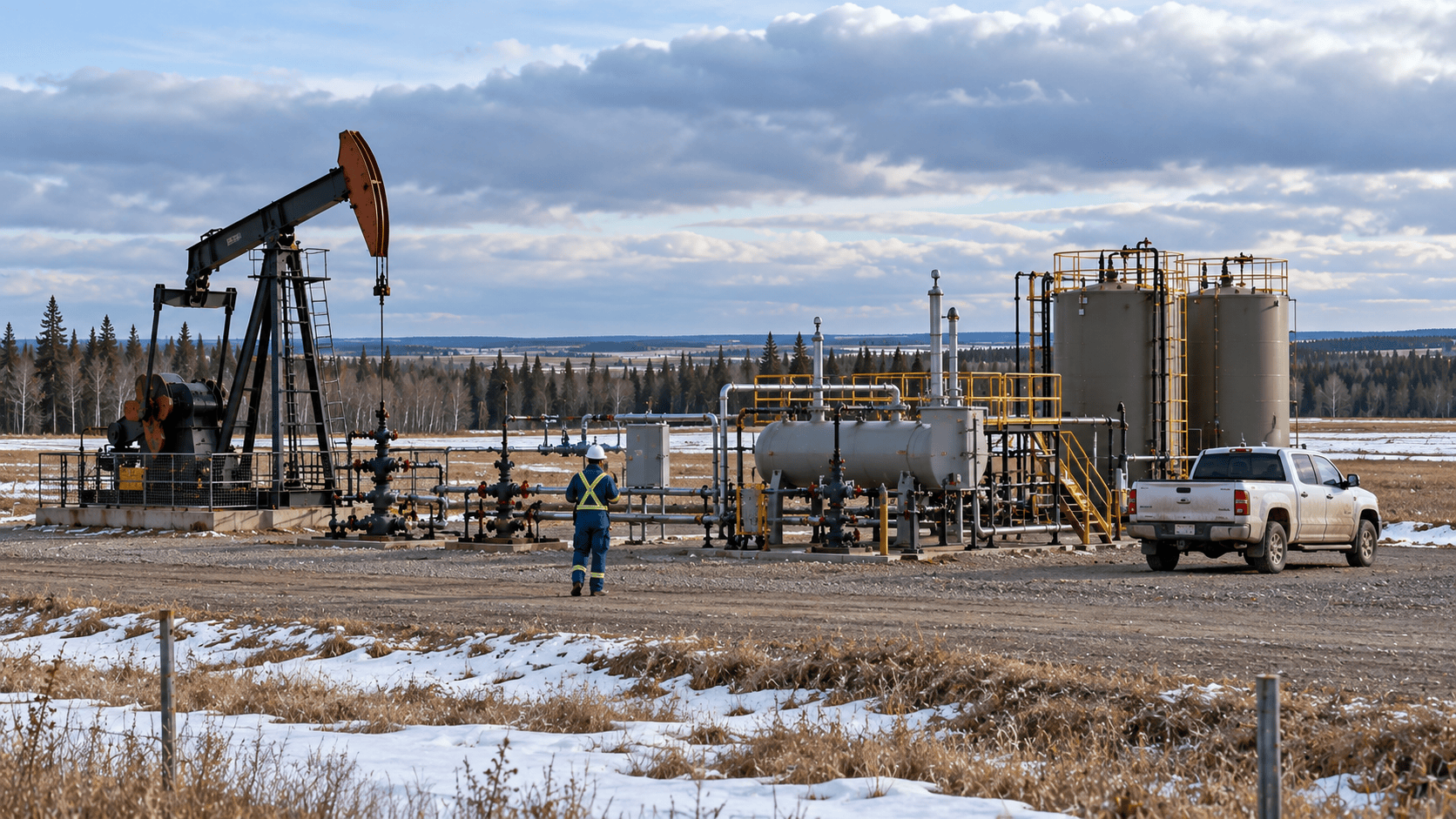
Not every oil and gas company developing Alberta’s petroleum resources trades on a stock exchange.
Some of the province’s producing wells, processing facilities and undeveloped oil and natural gas properties are owned by private companies whose names are less familiar than those of major publicly traded producers.
These businesses operate across Alberta, from the Montney and Duvernay in the northwest to conventional oil fields around Leduc, Drayton Valley, Provost and Lloydminster.
Some private producers have relatively small operations concentrated around a few properties. Others produce substantial volumes of oil and natural gas, manage extensive infrastructure and operate development programs comparable with those of larger public companies.
Their business strategies can also differ significantly.
Some acquire mature producing wells and attempt to improve their performance. Others invest in horizontal drilling, hydraulic fracturing and new processing facilities. A number are backed by private investment firms that provide capital for acquisitions and development.
Companies such as Cygnet Energy, Parallax Energy, Acerta Energy, Aspenleaf Energy, Longshore Resources and Karve Energy are examples of private businesses participating in Alberta’s oil and gas industry.
Privately held natural gas producers, including Canlin Energy and Ember Resources, also manage substantial production and infrastructure.
This guide profiles 13 private oil and gas companies with Alberta operations or development activities, explains their main producing areas and examines the different approaches they use to develop petroleum resources.
The companies are organized by their operating focus rather than ranked by production or financial size.
Because private businesses generally publish less financial information than publicly traded producers, this guide focuses on verifiable assets, services, ownership and operating regions rather than attempting to rank companies using inconsistent production figures.
What Is a Private Oil and Gas Producer?
A private oil and gas producer is a business whose ownership is not publicly traded through shares listed on a stock exchange.
Its shares may be held by founders, management, investment funds, private corporations or a combination of investors.
The company can still own oil and natural gas wells, employ field operators, hire drilling contractors and operate large processing facilities.
Private ownership does not necessarily mean the company is small.
Some privately held Alberta producers have grown through acquisitions into substantial operating businesses.
Others remain deliberately focused on a small group of producing properties.
The main difference is how ownership and capital are structured.
Publicly traded companies typically raise equity capital through public markets and publish detailed financial reports for shareholders.
Private companies may obtain financing through institutional investors, private equity funds, lending arrangements and internally generated cash flow.
They generally have fewer public financial reporting obligations.
This can make it more difficult to determine exactly how much oil or natural gas a particular private company produces.
However, information about its operations can still be found through company announcements, regulatory records, industry disclosures and publicly available project information.
Private Oil and Gas Companies Developing the Montney and Duvernay
Some of Alberta’s most significant privately owned producers operate unconventional reservoirs.
The Montney and Duvernay have become important because horizontal drilling and hydraulic fracturing allow companies to develop petroleum resources that would be difficult to produce using older conventional methods.
These projects can require substantial capital and extensive surface infrastructure.
1. Cygnet Energy
Cygnet Energy is a privately held oil and natural gas producer headquartered in Calgary.
The company is focused on developing unconventional resources in the Western Canadian Sedimentary Basin.
Its principal Alberta operations include the Simonette and Placid areas, where it develops Montney and Duvernay reservoirs.
These formations produce natural gas, condensate and other liquids, with the production mix varying according to the location and geological interval.
Cygnet’s strategy involves developing substantial resource positions while maintaining access to gathering and processing infrastructure.
Cygnet’s Acquisition of Kiwetinohk Energy
A major change occurred in December 2025 when Cygnet completed its acquisition of Kiwetinohk Energy.
Kiwetinohk had been a publicly traded producer with substantial natural gas and liquids production in Alberta.
The acquisition brought Kiwetinohk’s properties and existing operations into Cygnet.
Following the transaction, Cygnet reported a combined production base exceeding 44,000 barrels of oil equivalent per day.
This demonstrates that privately owned oil and gas companies can operate at a considerable scale.
The acquisition also expanded Cygnet’s access to production infrastructure and future development opportunities.
Kiwetinohk is no longer a separate publicly traded producer following the transaction.
What Cygnet Produces
Cygnet’s wells produce natural gas, condensate and other petroleum liquids.
Its operations involve horizontal drilling and multistage hydraulic fracturing.
The company also manages the production facilities and pipelines required to move hydrocarbons from the wellsite.
For Alberta oilfield contractors, Cygnet is relevant to drilling, well completions, gas gathering and facility maintenance work.
Its operations are concentrated in the broader west central Alberta unconventional development region.
2. Parallax Energy
Parallax Energy is a privately owned oil and natural gas producer headquartered in Calgary.
The company focuses on the Duvernay light oil window in Central Alberta.
Its operations are associated with the Joffre, Sylvan Lake and surrounding areas.
Parallax has developed a substantial position in the eastern portion of the Duvernay.
This part of the formation is particularly important for light oil production.
Parallax Acquired Vesta Energy
Parallax completed its acquisition of Vesta Energy in December 2024.
Vesta had been a privately owned producer with significant Duvernay assets.
The transaction added established producing wells, undeveloped lands and supporting infrastructure.
At the time, Parallax reported a production base exceeding 17,000 barrels of oil equivalent per day, with much of the production consisting of light oil.
Vesta’s former assets are now part of Parallax rather than a separate independent business.
Light Oil Development
Parallax’s development strategy focuses on horizontal wells drilled into the Duvernay.
These wells generally require hydraulic fracturing to improve production.
The company also operates associated production infrastructure.
In 2026, Alberta Energy Regulator records continued to identify Parallax as an applicant and operator associated with Duvernay development.
The company has also been involved in discussions and transactions concerning nonoperated ownership interests in its producing assets.
A nonoperated investor may own a share of production without directly managing the field.
Parallax remains the operating business responsible for its wells and development programs.
For Alberta’s oilfield service industry, Parallax represents a private producer involved in technically demanding light oil drilling and completions.
3. Artis Exploration
Artis Exploration is a privately held oil and natural gas exploration and development company headquartered in Calgary.
The company focuses on resource opportunities in Western Canada, particularly the eastern Duvernay.
Artis was established in 2015 and has been supported by private investment capital.
In 2018, the company announced a substantial investment from Warburg Pincus to support its development activities.
East Duvernay Exploration
The eastern Duvernay has attracted interest from companies seeking light oil and associated natural gas liquids.
Developing this formation requires a detailed understanding of geological conditions because well productivity can change significantly across the reservoir.
Artis has assembled a significant land position in the area.
The company evaluates resource opportunities and development programs associated with its properties.
Alberta Energy Regulator notices in 2026 identify Artis in applications involving oilfield infrastructure.
These regulatory records confirm ongoing activity associated with the company, although an application alone does not establish that a proposed facility has been constructed.
How Artis Differs From Larger Producers
Artis emphasizes identifying and developing resource opportunities rather than operating a broad portfolio of unrelated petroleum fields.
Its business is particularly associated with geological evaluation, drilling opportunities and unconventional reservoir development.
The company publishes less operational information than major publicly traded producers.
It is therefore more appropriate to describe Artis as a private exploration and development company than to assign it a current production ranking without verified figures.
Private Conventional Oil Producers in Alberta
Conventional petroleum production remains an important market for privately owned businesses.
These companies often develop formations with established production histories.
Some use modern horizontal drilling to access oil that could not be recovered economically through earlier development methods.
Others buy mature fields and improve production using better equipment or reservoir management.
4. Longshore Resources
Longshore Resources is a privately held oil and natural gas producer headquartered in Calgary.
The company is supported by investment capital from ARC Financial.
Its operations focus on conventional oil development in Central Alberta and western Saskatchewan.
Longshore is particularly associated with the Mannville formation.
Mannville Oil Development
The Mannville contains several sandstone reservoirs that have supported conventional oil production for many years.
Longshore has developed specialized horizontal drilling methods to improve recovery from these formations.
The company describes its approach as horizontal multiperforation technology.
The technique involves using horizontal well designs and selected completion methods to improve access to the productive reservoir.
Longshore has developed a substantial inventory of wells using this approach.
Its operating regions include Provost, Macklin and Redwater.
Provost and Redwater are located in Alberta, while Macklin is in Saskatchewan.
This distinction matters because Longshore’s operations span the provincial boundary.
A Focus on Existing Infrastructure
Longshore’s development strategy relies partly on producing areas where petroleum infrastructure already exists.
This can reduce the amount of new infrastructure required for certain drilling programs.
The company also evaluates acquisitions and potential dispositions of selected properties.
In 2026, Longshore marketed a nonproducing Mannville land position in the Sugden area.
The proposed sale involved undeveloped mineral interests rather than an operating field with existing production.
Longshore remains an example of a private producer using modern drilling methods to develop conventional petroleum resources.
5. Karve Energy
Karve Energy is a privately owned Calgary based oil producer focused on the Viking formation.
Its principal operating areas include Consort and Hamilton Lake in eastern Alberta.
The Viking is a well established light oil producing formation.
Horizontal drilling and improvements in completion technology have allowed companies to develop additional opportunities within the reservoir.
Viking Light Oil Production
Karve concentrates on producing light oil from the Viking.
The company has developed its land position through drilling programs and acquisitions.
Its business focuses on understanding reservoir characteristics and selecting well designs appropriate for the formation.
Viking wells differ significantly from deep Montney or Duvernay wells.
They generally target shallower reservoirs and may require different drilling equipment and completion designs.
This makes the Viking attractive to specialized producers with experience in the formation.
Acquisitions and Development
Karve has expanded its asset position through transactions involving Point Break Resources and High Ground Energy.
The company has maintained a focused strategy rather than diversifying into many unrelated producing regions.
Its operations support drilling, well servicing, artificial lift and production maintenance in eastern Alberta.
Karve demonstrates how a private producer can establish a substantial business around one geological formation.
6. West Lake Energy
West Lake Energy is a privately held oil and natural gas company headquartered in Calgary.
The company focuses on conventional petroleum development in Western Canada.
Its Alberta assets have included producing regions around Lloydminster, Provost and Brazeau.
These areas contain heavy oil, medium oil and light oil reservoirs.
Conventional Oil Production
West Lake develops petroleum resources using conventional and horizontal drilling.
The company has also acquired properties to expand its producing portfolio.
Its strategy includes identifying additional drilling opportunities within established fields.
Acquiring existing production can provide access to pipelines, batteries and other infrastructure.
However, these assets also require maintenance and eventual well abandonment.
West Lake’s operating model therefore involves both developing petroleum resources and managing existing facilities.
Brazeau Belly River Properties
West Lake expanded into the Brazeau region through its acquisition of Boulder Energy in 2021.
That transaction added light oil production and undeveloped opportunities in the Belly River.
The company has also held heavy oil assets in eastern Alberta.
Some of its Cold Lake area properties were subsequently transferred to other operators.
This illustrates why historical acquisition announcements should not be treated as a complete description of a company’s current asset ownership.
West Lake remains a privately held intermediate producer, with its current corporate presence confirmed through its company information.
For service companies, its business is connected to conventional drilling, production optimization and existing well maintenance.
7. Acerta Energy
Acerta Energy is a privately owned Calgary based oil and natural gas producer focused on conventional light oil development.
The company established a substantial Alberta production business during 2026.
Acerta’s growth has been driven by acquisitions of existing petroleum properties.
Its strategy involves building a portfolio of producing assets with opportunities for further drilling and production improvement.
Acerta’s Growth in 2026
Acerta completed a major expansion through its acquisition of Astara Energy on September 28, 2026.
Astara had been a privately owned Alberta oil and natural gas producer.
The transaction added producing wells and development opportunities across Southern and Central Alberta.
Acerta reported approximately 13,500 barrels of oil equivalent per day of combined production at closing.
The acquired production included a significant volume of light and medium crude oil.
What Happened to Astara Energy?
Astara’s former assets are now part of Acerta following the completed transaction.
The two businesses should not be counted as separate independent producers when evaluating current ownership.
Acerta’s portfolio includes conventional producing assets, gathering systems and development opportunities.
The company also has a relationship with Trafigura involving financing and commodity marketing.
Why Acerta Is Important
Acerta demonstrates how private oil and gas producers can grow rapidly without being listed on a stock exchange.
Instead of raising public equity for each new development, the company has used private financing and asset acquisitions to build its operations.
For Alberta contractors, Acerta’s business creates opportunities involving drilling, service rigs, artificial lift and production facilities.
8. Aspenleaf Energy
Aspenleaf Energy is a privately held oil and natural gas producer headquartered in Calgary.
The company focuses on acquiring and developing conventional petroleum properties in Western Canada.
Its principal interests include light oil and liquids rich natural gas.
Aspenleaf has significant operations in Alberta.
Swan Hills Operations
Swan Hills is one of Aspenleaf’s important operating areas.
The region has a long history of conventional petroleum production.
Existing fields contain established wells and infrastructure.
Aspenleaf has been involved in operating and developing petroleum properties in this region.
In May 2025, the company temporarily shut in production near Swan Hills as a precaution during a major wildfire in the surrounding area.
The incident illustrates how environmental and access conditions can affect field operations even when the producing equipment itself has not failed.
Leduc and Woodbend
Aspenleaf also operates in the historic Leduc and Woodbend petroleum producing area.
This region played a major role in the development of Alberta’s modern petroleum industry.
Aspenleaf has been involved in revitalizing established producing properties while addressing historical well closure obligations.
Its operations include conventional oil production and management of existing facilities.
The company also has activities associated with Twining.
Balancing Production and Well Closure
One distinguishing feature of Aspenleaf’s business is its emphasis on managing mature petroleum assets.
Older fields can contain productive wells and opportunities for further development.
They can also contain inactive wells that require abandonment and reclamation.
A private producer acquiring these assets must consider both the remaining petroleum value and the cost of its environmental obligations.
Aspenleaf is an example of a company operating in this part of Alberta’s petroleum industry.
Privately Owned Heavy Oil Producers in Alberta
Heavy oil production provides another important market for private companies.
Some businesses focus on conventional heavy oil wells.
Others develop the Clearwater or related formations using horizontal and multilateral drilling.
The operating methods are often different from those used in light oil and natural gas development.
9. Caltex Trilogy
Caltex Trilogy is a privately owned oil and natural gas company headquartered in Calgary.
The company focuses on heavy oil development in Alberta.
Its management team has extensive experience building and operating Western Canadian petroleum businesses.
Caltex Trilogy is associated with a group that previously developed and sold other Caltex companies.
A New Caltex Business
The current Caltex Trilogy business should not be confused with the former Caltex Resources operation that was sold in 2021.
Several members of the management team previously worked at Caltex Resources.
The current business is a separate private company.
Caltex Trilogy concentrates on developing heavy oil assets using methods suited to the reservoir.
Eastern Alberta Heavy Oil
Caltex has operating interests in the Cold Lake oil sands region.
Regulatory records identify the company as the operator or applicant associated with heavy oil and bitumen production wells.
Its properties include areas around Fort Kent.
The company has also been involved in transfers of petroleum assets from other producers.
Caltex’s operations are particularly relevant to horizontal heavy oil drilling and production.
This type of development can involve multilateral wells, artificial lift and fluid handling equipment.
The company provides another example of a private Alberta producer concentrating on petroleum opportunities that differ from large steam assisted oil sands projects.
10. Spur Petroleum
Spur Petroleum is a privately owned oil and natural gas company headquartered in Calgary.
Its operations focus on the Clearwater heavy oil play in northern Alberta.
Spur has developed an established business producing heavy oil from the formation.
The Clearwater has attracted considerable investment because multilateral horizontal drilling has improved the economics of producing certain heavy oil reservoirs.
Clearwater Development
Spur operates wells and associated infrastructure in the Clearwater.
The company uses horizontal drilling to access suitable producing intervals.
In parts of the formation, oil can be produced without requiring continuous steam injection.
The production method depends on geological and reservoir characteristics.
Spur’s operations require drilling rigs, artificial lift equipment, fluid handling systems and supporting infrastructure.
McMullen Thermal Pilot Proposal
Spur has also been evaluating the possibility of thermal development at McMullen.
The company acquired the asset from Cenovus in 2024.
During 2026, Spur submitted applications to the Alberta Energy Regulator relating to a proposed thermal pilot.
The proposal involves evaluating recovery methods that differ from the primary cold heavy oil development used in other Clearwater properties.
The proposed pilot should not be confused with an operating commercial thermal project.
Any development would depend on the required approvals and subsequent investment.
Spur is an example of a private heavy oil company combining established production with evaluation of additional recovery technologies.
Private Natural Gas Producers in Alberta
Natural gas is another important area for privately owned petroleum companies.
Some businesses operate deep unconventional gas wells.
Others concentrate on conventional or shallow natural gas production.
The companies below demonstrate very different approaches to producing gas.
11. Canlin Energy
Canlin Energy is a privately held natural gas producer headquartered in Calgary.
The company operates throughout the Western Canadian Sedimentary Basin.
Its Alberta producing regions include the Foothills, West Central Alberta, the Peace River Arch and southeastern Alberta.
Canlin’s portfolio also includes properties and infrastructure in British Columbia.
Natural Gas Weighted Production
Canlin describes itself as a natural gas weighted intermediate producer.
Its business includes conventional and unconventional natural gas production.
The company operates numerous wells and associated infrastructure.
Its corporate information identifies production capability of approximately 30,000 barrels of oil equivalent per day.
This illustrates that private companies can operate at an intermediate scale.
Natural Gas Processing
Canlin owns and operates gas processing infrastructure.
Its facilities include plants capable of handling both sweet and sour natural gas.
Sweet gas generally contains little or no hydrogen sulphide.
Sour gas contains hydrogen sulphide and requires suitable processing and handling systems.
Canlin also operates gathering pipelines and other infrastructure.
These facilities are important because producing wells must have access to systems capable of processing and transporting their gas.
Private Ownership
Canlin is owned by a group of private investors that includes Far East Energy International, Can China Global Resource Fund and Mercuria.
The company is not publicly traded.
Its business provides an example of how international private investment can support Canadian petroleum production.
Canlin’s Alberta operations require gas plant maintenance, well servicing, pipeline work and production optimization.
12. Ember Resources
Ember Resources is a privately owned Calgary based natural gas producer.
The company specializes in shallow natural gas development.
Its principal operations are concentrated in the Horseshoe Canyon coalbed methane fairway in Alberta.
Ember operates a large inventory of shallow gas wells and gathering infrastructure.
Horseshoe Canyon Coalbed Methane
Coalbed methane is natural gas stored within coal formations.
The Horseshoe Canyon formation contains significant natural gas resources in Central and Southern Alberta.
These wells differ from the deep horizontal wells used in the Montney and Duvernay.
Ember’s business emphasizes producing natural gas from relatively shallow geological intervals.
Its operations include extensive established well and pipeline infrastructure.
A Focus on Existing Production
Ember concentrates on maintaining production from a large number of wells.
Some wells can be optimized through recompletions or relatively modest intervention work.
Other opportunities may involve drilling additional shallow wells.
The company also operates natural gas gathering and compression infrastructure.
These systems are necessary to move production from individual wells into the broader gas transportation network.
Ember has a financial and strategic partnership with Brookfield Corporation.
The company remains privately held.
How Ember Differs From Other Gas Producers
Ember’s approach differs considerably from that of a private producer drilling deep Duvernay light oil wells.
Its principal challenges involve managing a large inventory of relatively shallow natural gas wells.
This includes well maintenance, gathering systems, compression and operating costs.
Ember is an important example of a specialized private producer in Alberta’s mature natural gas industry.
13. Caledonian Midstream
Caledonian Midstream is a privately held Alberta energy company involved in upstream petroleum production and associated infrastructure.
Although its name suggests a company focused entirely on gas processing or pipelines, Caledonian also holds producing oil and natural gas interests.
The business operates in the Southwestern Alberta Foothills.
Producing Oil and Natural Gas Assets
Caledonian’s petroleum assets include established oil and natural gas production.
The region contains conventional reservoirs with long development histories.
Companies operating these properties often rely on existing gathering and processing infrastructure.
The economics of these assets can depend heavily on well maintenance, production optimization and the cost of keeping facilities operating.
A Significant 2026 Royalty Transaction
In September 2026, Atlas Energy announced that it had acquired a gross overriding royalty on Caledonian’s working interest in producing properties in Southwestern Alberta.
The transaction was valued at approximately $15 million.
A gross overriding royalty provides the royalty holder with an interest in revenue from the applicable production under the terms of the agreement.
It does not automatically transfer operatorship of the wells.
Caledonian remained the identified private producer associated with the assets in the transaction announcement.
This is an example of a privately owned producer using a royalty arrangement involving existing production.
Such arrangements can provide capital while allowing the underlying producing assets to remain in operation.
Caledonian provides another example of the diversity of Alberta’s privately owned petroleum industry.
Where Do Private Oil and Gas Companies Operate in Alberta?
Private producers are active across much of the province.
Their operations tend to reflect the geological formations and infrastructure available in particular regions.
Private Producers in Grande Prairie and Northwestern Alberta
Northwestern Alberta contains significant Montney and Duvernay development.
Private companies operate in areas such as Simonette, Placid and surrounding producing regions.
Cygnet is an important example of a privately held producer developing natural gas and liquids resources.
Other private producers maintain interests in conventional and unconventional fields throughout the region.
These operations require drilling, hydraulic fracturing, gas processing and pipeline infrastructure.
Private Oil Companies in Central Alberta
Central Alberta is particularly important because it contains several producing formations.
Parallax develops Duvernay light oil.
Artis has exploration and development activities associated with the eastern Duvernay.
Aspenleaf operates mature petroleum properties around Leduc and other locations.
Longshore has conventional oil interests in the broader Central Alberta region.
These businesses support activity involving both new wells and existing production.
Private Oil and Gas Producers Near Provost
Provost and surrounding eastern Alberta communities contain conventional oil producing formations.
Karve develops the Viking.
Longshore has Mannville operations in the region.
West Lake has historical and continuing interests in conventional petroleum assets across Eastern Alberta.
Acerta also owns producing properties in Central and Southern Alberta.
These areas are particularly relevant to companies specializing in horizontal drilling, artificial lift and conventional well servicing.
Private Heavy Oil Producers in Northern Alberta
Northern Alberta’s heavy oil fields contain both established production and undeveloped resources.
Spur is associated with Clearwater development.
Caltex Trilogy operates heavy oil properties in the broader Cold Lake region.
Different producers use horizontal wells, multilateral drilling and other recovery methods.
The type of equipment required depends on the formation and production method.
Private Natural Gas Producers in Central and Southern Alberta
Canlin and Ember have substantial natural gas operations in Alberta.
Ember specializes in shallow coalbed methane production.
Canlin has a broader portfolio involving conventional and unconventional gas properties and processing infrastructure.
These operations generate demand for gas compression, gathering pipelines, instrumentation and well maintenance.
How Private Alberta Oil and Gas Companies Are Financed
Private producers use several methods to fund acquisitions and drilling programs.
Understanding these arrangements helps explain why some companies grow quickly while others concentrate on existing production.
Private Equity Investment
Private equity firms provide capital to businesses in exchange for ownership interests.
In Alberta’s oil and gas industry, these investments can support the purchase of producing assets and future drilling programs.
Cygnet and Longshore are examples of producers with relationships involving private energy investment firms.
The investment firm is not necessarily responsible for operating the wells.
The producer’s management team generally handles day to day business decisions and field operations.
Debt Financing
Private producers can also borrow funds to finance acquisitions and development.
This may involve bank facilities, secured notes or other debt arrangements.
Acerta used financing arrangements alongside existing funds to support its acquisition strategy.
Debt provides capital without necessarily requiring new ownership shares to be issued.
However, the company must be able to meet interest and repayment obligations.
Cash Flow From Production
Existing producing wells generate revenue when oil and natural gas are sold.
After operating costs and other obligations, some of this cash can be reinvested into drilling, equipment and infrastructure.
A company with substantial established production may be able to fund some development without relying entirely on outside investors.
Asset Sales and Royalties
Private producers can also raise capital by selling selected properties or creating royalty interests.
A company may choose to sell undeveloped land that is not central to its plans.
Another may enter into a royalty arrangement involving existing production.
The objective may be to obtain capital while retaining other assets or operating interests.
The commercial and financial implications depend on the transaction terms.
What Services Do Private Oil and Gas Producers Hire?
Private producers are important customers for Alberta’s oilfield service companies.
Their projects may be smaller than those of major corporations, but many require the same specialized technical services.
Drilling Companies
Private producers developing the Viking, Mannville, Duvernay or Montney hire drilling contractors to construct new wells.
The rig selection depends on the required depth, well design and geological conditions.
A shallow Viking well may require different equipment from a deep Duvernay horizontal well.
Hydraulic Fracturing Contractors
Some private producers use hydraulic fracturing to stimulate their wells.
This is particularly important in unconventional formations.
The treatment design depends on reservoir characteristics and the type of completion.
Cementing Companies
Cementing contractors install cement around casing during well construction.
They also perform remedial cementing and abandonment work.
Private producers developing new wells and managing older fields both require cementing services.
Service Rig Contractors
Service rigs are needed to maintain existing wells.
The work can include pump changes, tubing replacement, workovers and well abandonment.
Private companies operating mature conventional fields may require recurring service rig work.
Artificial Lift Suppliers
Many Alberta oil wells require pumps to move petroleum fluids to the surface.
Different artificial lift systems are used according to well conditions.
Suppliers provide pumping equipment, replacement parts and maintenance services.
Oilfield Equipment Rentals
Private producers may rent equipment for individual drilling or completion programs.
Common products include tanks, generators, rig mats, light towers and temporary office trailers.
Renting equipment can reduce the need for capital spending on assets that are required only temporarily.
Pipeline and Facility Contractors
New production often requires gathering pipelines, separators, tanks and processing facilities.
Existing infrastructure also needs inspection and maintenance.
Private producers may hire specialized construction and mechanical contractors for this work.
Environmental and Abandonment Companies
Private producers have regulatory obligations relating to their wells and facilities.
These responsibilities include managing inactive wells and carrying out abandonment and reclamation when required.
Acquiring mature properties can transfer significant future closure responsibilities to the acquiring company.
Environmental and abandonment costs are therefore important parts of private producer economics.
How Private Producers Differ From Public Oil and Gas Companies
Private ownership can affect the way a company operates and communicates with the market.
However, ownership structure alone does not determine whether a producer is efficient or successful.
Financial Reporting
Public companies normally release regular financial statements and operational disclosures.
Private companies may publish less financial information.
As a result, it can be difficult to compare production and operating costs across private producers.
Investment Decisions
A privately held company may have a relatively concentrated group of shareholders.
This can allow management to pursue a development strategy without the same level of public market attention.
However, private investors and lenders still impose financial expectations and restrictions.
Acquisitions
Private producers often grow through asset purchases.
A management team may identify opportunities to acquire properties that a larger producer no longer considers central to its business.
The acquired assets can then be developed or operated within a more focused company.
Field Operations
Private and public producers face many of the same technical challenges.
Both must manage geological uncertainty, production declines, commodity prices, equipment reliability and environmental obligations.
The Alberta Energy Regulator’s requirements apply according to the operations and licences involved, not simply whether the company is publicly traded.
How to Verify a Private Oil and Gas Company in Alberta
Private company information can sometimes be difficult to evaluate.
An older website or company listing may continue appearing online even after an acquisition.
A business may also own petroleum interests without operating the wells.
Several distinctions are useful.
Confirm the Current Company Name
Ownership changes can affect which business should be identified as the current producer.
Kiwetinohk was acquired by Cygnet.
Vesta became part of Parallax.
Astara was acquired by Acerta.
These historical companies should not be counted as separate current ownership groups.
Distinguish the Operator From the Investor
A private equity fund may own shares in a producer.
That does not necessarily mean the fund operates the wells.
Similarly, a nonoperated working interest owner may receive production revenue without managing the field.
The licensed operator is an important reference when researching who is responsible for field activities.
Review Regulatory Records
The Alberta Energy Regulator maintains information about well licences, facilities, applications and drilling activity.
These records can help confirm whether a business is associated with particular petroleum operations.
However, a licence or application does not necessarily confirm that a new well is producing.
A proposed project should not be described as operational until there is evidence it has entered service.
Distinguish Current Production From Future Plans
Private companies sometimes announce substantial development opportunities.
The existence of drilling locations or undeveloped resources does not mean those wells have been drilled.
Similarly, a proposed processing plant may require permits and investment decisions before construction begins.
It is important to separate current activity from future possibilities.
Frequently Asked Questions About Private Oil and Gas Producers in Alberta
What Are Some Privately Owned Oil and Gas Companies in Alberta?
Examples include Cygnet Energy, Parallax Energy, Acerta Energy, Aspenleaf Energy, Longshore Resources, Karve Energy, West Lake Energy, Caltex Trilogy, Spur Petroleum, Canlin Energy, Ember Resources, Artis Exploration and Caledonian Midstream.
Their asset types, operating regions and production scale differ.
Are Private Oil and Gas Companies Always Small?
No.
Some private producers operate substantial production and processing infrastructure.
Cygnet, for example, became a much larger privately held producer following its acquisition of Kiwetinohk Energy.
Canlin also operates a significant natural gas business.
Which Private Oil Producers Operate in Central Alberta?
Parallax, Aspenleaf, Longshore, Acerta, West Lake and Artis have operating or development interests associated with Central Alberta.
Their target formations and production methods differ.
Which Private Companies Produce Heavy Oil in Alberta?
Spur Petroleum and Caltex Trilogy are examples of privately owned businesses focused on heavy oil development.
West Lake has also operated heavy oil assets in Alberta.
Which Private Alberta Companies Produce Natural Gas?
Canlin Energy and Ember Resources are established private natural gas producers.
Cygnet also produces significant natural gas alongside condensate and other liquids.
Are There Private Montney and Duvernay Producers?
Yes.
Cygnet has important Montney and Duvernay assets in Central and Northwestern Alberta.
Parallax specializes in the eastern Duvernay light oil window.
Artis has exploration and development interests associated with the eastern Duvernay.
Who Owns Kiwetinohk Energy?
Cygnet Energy completed its acquisition of Kiwetinohk in December 2025.
Kiwetinohk’s former producing assets became part of Cygnet.
What Happened to Vesta Energy?
Parallax completed its acquisition of Vesta Energy in December 2024.
Vesta’s former Duvernay assets are now part of Parallax.
Is Astara Energy Still Independent?
No.
Acerta Energy completed its acquisition of Astara in September 2026.
Astara’s producing assets became part of Acerta’s portfolio.
Which Private Oil Companies Operate Near Leduc?
Aspenleaf Energy has established operations in the historic Leduc and Woodbend petroleum region.
Other private producers operate conventional properties in nearby Central Alberta fields.
Which Private Producers Are Active Around Provost?
Longshore, Karve and West Lake have interests associated with the broader eastern Alberta conventional oil region.
The exact location and current ownership of individual properties should be confirmed before arranging field work.
Do Private Oil and Gas Companies Hire Oilfield Contractors?
Yes.
Private producers hire drilling companies, service rigs, fracturing contractors, cementing companies, pipeline businesses and many other suppliers.
The amount of work available depends on each company’s current budget and approved projects.
Are Private Oil and Gas Companies Regulated Differently?
Private producers must comply with the applicable Alberta petroleum regulations, including requirements relating to drilling, production, environmental protection, well integrity and closure.
Private ownership does not remove those obligations.
Can the Public Invest in Private Oil and Gas Companies?
Private company investment opportunities are generally more restricted than purchasing shares of a publicly traded company.
Ownership may be available only through private offerings or transactions subject to securities laws.
Some private companies accept investment only from qualifying investors.
Others do not offer investment opportunities to the general public.
The Role of Private Producers in Alberta’s Energy Industry
Private oil and natural gas companies are an important part of Alberta’s petroleum sector because they bring different approaches to resource development.
Some specialize in formations that require detailed geological knowledge.
Others acquire existing wells and attempt to improve their performance.
Private investment firms provide capital for certain acquisitions and development programs.
Management teams can build substantial businesses without listing their shares on a public stock exchange.
The companies profiled in this guide demonstrate the range of those strategies.
Cygnet has built a substantial Montney and Duvernay production business through acquisitions.
Parallax concentrates on eastern Duvernay light oil development.
Artis focuses on resource exploration and development.
Longshore and Karve specialize in conventional oil formations.
West Lake and Acerta operate portfolios assembled through acquisitions and development.
Aspenleaf concentrates on established producing assets and the opportunities associated with mature fields.
Caltex Trilogy and Spur focus on heavy oil.
Canlin and Ember operate important natural gas businesses using very different reservoir and operating methods.
Caledonian holds established producing interests in Southwestern Alberta.
These companies also illustrate how private ownership can change over time.
A private producer may eventually be purchased by a larger company.
A publicly traded company may be acquired and become privately held.
Two private companies may combine their assets under a new ownership structure.
Those transactions can change which business controls producing wells and hires contractors.
For Alberta oilfield workers and service companies, the important question is not simply whether a producer is private or public.
It is where the company operates, what it produces and whether it is investing in drilling, production improvements or infrastructure.
A private producer developing new Duvernay wells creates different service requirements from a business maintaining mature shallow gas production.
Both can be important customers for Alberta contractors.
From Calgary’s corporate offices to petroleum fields around Grande Prairie, Red Deer, Leduc, Provost, Cold Lake and Southern Alberta, privately owned producers continue to develop and maintain an important part of the province’s oil and natural gas resources.
Their operations may receive less public attention than those of major energy corporations, but they remain a significant source of petroleum development, field employment and contracting activity across Alberta.